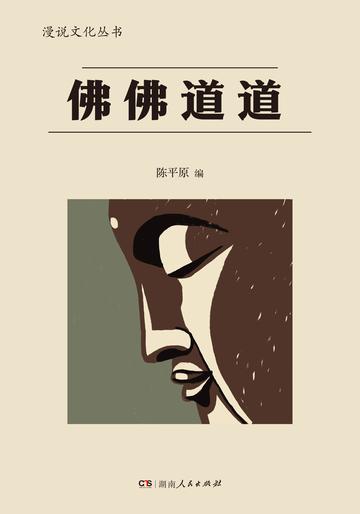
This collection of essays about Buddhism and Taoism focuses on the short pieces written by May Fourth New Literature writers based on Buddhism and Taoism. In addition to paying attention to reality, gaining insight into society, and hoping to use Buddhism and Taoism to transform the nation and save the nation, there are also works on self-cultivation, life insights, seeking spiritual comfort, and remembering the ancestors of the Buddhist world.
Nowadays, there is a popular meme on the Internet: "Between going to work and going to school, I chose to burn incense; between asking for help and seeking for myself, I chose to seek help from Buddha." The "May Fourth" generation of young people more than a hundred years ago also made a similar choice. At the beginning of the 20th century, China was suffering a lot, with warlords fighting, social turmoil, moral decay, spiritual poverty, economic recession, the failure of the Revolution of 1911, and the ebb of the May Fourth Movement. The awakened generation of young people were depressed, so they relied on the Buddhist view of suffering and the impermanence of life to carry their pessimism and seek spiritual comfort in Buddhism.
It is human nature to pray for blessings, make wishes, and expect good things, and it is not a big deal to escape from the world. Just like checking in at a temple, burning incense and worshiping Buddha, it does not mean passive retreat from the world, nor does it mean playing with things to lose one's ambition.
If the literati pay attention to Buddhism and Taoism, it would be wrong to say that they have escaped into Buddhism. In the words of Master Hongyi, it is "to do the worldly work with a transcendent spirit", and the articles by Xu Dishan and Liang Qichao have become classics for self-cultivation: "I wish you to be a boundless treasure canopy that can shade all sentient beings in the world... May you have six hands, twelve hands Hundreds of hands, thousands of hands, countless good things in the world can be accomplished by his wishful hands. "Liang Qichao: "There is nothing in the world that is joyful, worrying, surprising, or joyful. Worry, surprise, and joy are all in the human heart."
There is no distinction between Buddhism and Taoism, there is always a difference between good and evil. The happiest thing is to do good and read books.
Reader comments
Some of the literati mentioned in the book, such as Master Hongyi and Liang Qichao, have really inspiring articles. However, I kind of hate those people who only know how to seek refuge in Buddha when faced with difficulties. We should still face life positively and do more practical things. Overall, this is a book worth reading.
Some of the literati mentioned in the book, such as Master Hongyi and Liang Qichao, have really inspiring articles. However, I kind of hate those people who only know how to seek refuge in Buddha when faced with difficulties. We should still face life positively and do more practical things. Overall, this is a book worth reading.