Calling All the Bosses, Please Change Your Marriage! ! !
I want to watch content similar to "Her Royal Highness also wants to kill the Demon King today". I want to see a change of marriage, I want to see a change of marriage, I want to see a change of marriage! ! !
5.6MViews413Books1dUpdated
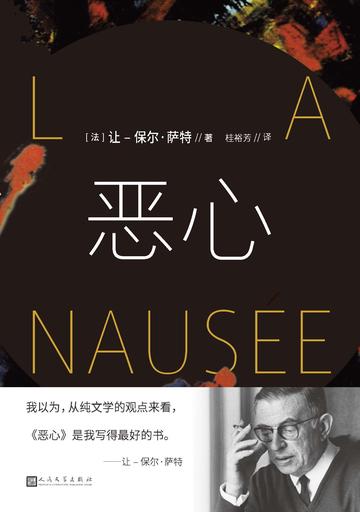


This book is very enlightening. It reminds me of my own experience when I first gave birth to a baby. Facing the arrival of a new life, I sometimes felt confused and helpless. I can also relate to the struggle and confusion that the protagonist in the book has in the process of exploring existence and freedom. This is not only a book about philosophy, but also a profound reflection on life. I recommend it to everyone!
You may not understand it, but what you understand after reading it is basically your own feelings. When the author uses a lot of pen and ink to describe the changes and distortions of "things" in his heart, I feel it is a bit abstract and I can't quite understand what he wants to express. However, it also aroused some thoughts. These "thinkings" allowed me to see myself more clearly, which was helpful, but not particularly helpful, because I read this book not only to resonate, but also to see some things that I was not aware of yet.
Don't read the translation. Some words are the translator's feelings, not the author's. The beginning is
When watching, when will you finish reading the progress? When I finally finished reading it, I felt disappointed. The protagonist's perception of the world resonated with me, this sense of absurdity, confusion, meaninglessness and strangeness. A profound understanding of existence: existence dissolves the past and meaning, existing in every isolated moment. It only circulates in its own infinity and redundancy. It is everywhere but meaningless, spreading infinitely but self-enclosed. It has no history or future and belongs only to the present moment. The same is true for the ups and downs of human beings. "All existences are born without reason, continue due to weakness, and die due to accidents." Existence precedes essence, and it pulls thoughts. Finally, the protagonist leaves the city. He wants to clear away the meaningless and complicated parts and become more compact and pure "precise existence" to face freedom and create meaning.
How should I put it, there is no logic, just like my own random thoughts. Only I can understand my own random thoughts. I am very tired from reading. But my understanding of existence has deepened, and I am not the only one who sometimes feels deeply lonely and falls into special self-doubt. So this is the peculiarity of what makes humans human. I feel that I have more confidence to face the confused future, and I am increasingly accepting of my past self. Don't go too far in pursuit of adventure. In fact, as long as you start telling the story, you will give it legend. So you might as well tell your life as a story, and you may discover many beautiful things that you once ignored. You will also forgive yourself. I hope I can be happy for a longer time, which requires continuous efforts on my part.
Birth and death are accidental, and people are "thrown" into an existence without reason. Roquandin had an epiphany in Bouvier Park - the world had no reason to exist, and everything was "thrown" here, including himself. This stripping away of necessity triggers "nausea": when you realize that you are just cells accumulated by chance, without any preset essence, and that all meanings are acquired fictions, the uncomfortable feeling of having nowhere to escape grows. Crab should be the embodiment of disgust. It is an absolutely heterogeneous existence that cannot be included in any meaning. It is always a reminder that underneath "humanity" is just a pile of accidental and rotten meat. The three historical illustrations seem "special", but Sartre asks: an assassination and a stone are equally accidental on the existential level. Anne, who had not seen each other for four years, was relatively speechless when they met face to face - no words were necessary because there was never an inevitable connection. Sartre's way out is not to escape disgust, but to create necessity in chance: existence precedes essence, and people shape themselves into meaning through action. Writing this text is a rebellion in itself.
I persisted and read this book. While reading, I felt like my body was withdrawn from the real world, and I felt like I was floating in space. It gave me some existential thoughts.
His mental state gave me a feeling that he was so advanced that he was crazy. I didn't quite understand his thoughts. What was disgusting about him? What adventure? No matter what he saw clearly, the most valuable thing was to return to life and accept himself in this blank ruin of his. Maybe it will be a sunny day tomorrow.
This book is super nice
Sartre and Camus were rivals in philosophy, and both won the Nobel Prize for Literature.
It's worth seeing, it's eye-catching [smile]
If you really have trouble understanding the word "disgusting", you can try switching to "isolated"