Stats
Synopsis
Reader comments
In booklists 8
Looking for Some High-Quality Books Where You Can Learn Knowledge
I want to read a book similar to "The Pyramid Principle". There is no limit to the content. Reading it can broaden your horizons, increase your knowledge, and learn something.

Come in If You Want to Learn Real Skills.
I want to read a book similar to "The Art of Testing Chinese Characters". If you want to learn real skills, come in and you are guaranteed to learn something.
Books That Can Be Used in Real Life
It's not the kind of storyline that just tells discussions, or the kind of writing that's very good, like Das Kapital
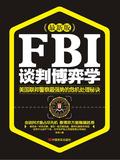
Have You Ever Watched the One Where You Can Bet Your Life with Qi Xia📖
I want to read a book similar to "Game Theory".
I Am Looking for Books to Improve Myself, Whether It Is About Knowledge or How to Deal with People.
I want to read a book like "Rich People Think Differently from You".

Are There Any Books That Girls Can Read That Can Improve Their Status?
Looking for Books Suitable for Students in the Second and Third Grade of Junior High Schoolᶻz ₍^_ ̫ _^₎
Now that I'm in my second year of junior high school, I'll look for some academic or literature books, which cover all subjects, preferably ones that junior high school students can understand.
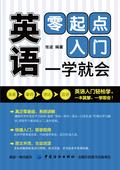
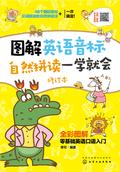
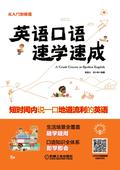
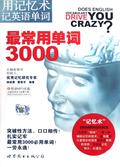
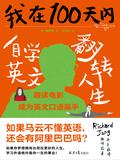
Are There Any Books for Learning English and Mathematics from Scratch?
The earlier the better, I really don't understand English at all, and I know some of the simplest questions in mathematics.
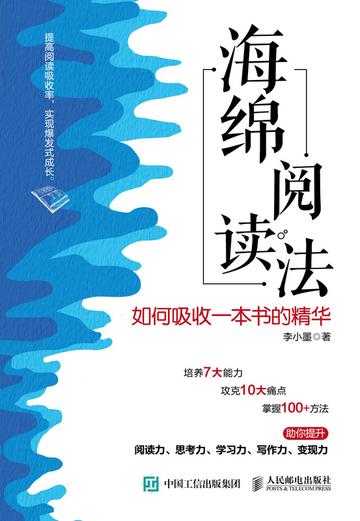
After reading the sponge reading method, the summary of the sponge reading method is: 1. Have strong reading motivation and clear reading goals before reading; 2. Understand the core concepts; 3. Collect golden sentences; 4. Memory association and divergence; 5. Solve doubts; 6. Output practice; the book also inspired me how to think and practice at the same time, the old me = (my previous thoughts, opinions, practices) + certain views in the book = the new me (I will make new decisions in the future) How to change and practice output); and the classification of books into staple food reading, gourmet reading, sweet food reading, and vegetable reading; and finally teach us how to establish our own knowledge framework, such as reading with a certain topic as the main line within a certain period of time, and thinking about the required abilities such as professional abilities and general abilities to help us choose the books we need. After selection, we need to divide the books into intensive reading, speed reading, and elimination for reading. In conclusion, the book Sponge Reading Method has benefited me a lot and it is a book worth reading.
In my opinion, this book can be said to be the master of reading methods. 1. Reading through this book, you can find that the author has a really wide range of reading, and at the same time, he explains the content very thoroughly with extensive quotations, and truly builds the reading method into a knowledge system. 2. At the same time, I found that books corroborate each other. For example, this book refers to the "staple food" classification method of "How to Read a Book"; I also found that it has similarities with the divergent mind mapping method of "Cornell Note-taking Method"; and there are also insights that are similar to "Speed Reading Method". Not only in terms of reading methods, I also found a concept "MECE" that is shared with another book "IQ Tax". There is also the saying that when reading philosophy books, you need to use an introduction and a general history in series. This is consistent with "Hegel believed that philosophy is the history of philosophy, and to study philosophy you need to study the entire history of philosophy." In "What Philosophers Have Done", which corroborates each other, and even includes flow, energy management, etc. Maybe this is association. I find that the more I read the more I can relate. 3. I also discovered that "listening together will lead to understanding". If I don't understand something in other books, if I read it in another book that talks about the same content, I sometimes have an epiphany and establish a correct perspective. Just like "From Internal Consumption to Flow" said that "only 10% of the potential of the human brain has been developed" is an outright fallacy. This book also said that "21 days to develop a habit" is wrong, and even reminds me of the proof that "Yuan Zhen is not a scumbag" in "The Stranger". The instillation of multiple correct viewpoints overwrites previously erroneous viewpoints. 4. In addition, this book also has new insights for me. It also echoes "Build your own language system" in "How to Read a Book". "When I wanted to escape from a life full of stress and anxiety, I used the words "lay flat" and "putting it on the wall" to describe myself. "Don't Think About That Elephant" and "Peach Blossom Temple Song" made me suddenly realize that I cannot use these two words, because these two words are created based on the set of values standards that pursue worldly success. Once I use these two words These two words activate and strengthen the values of secular success, so they make me feel guilty, guilty, self-deprecating and self-dwarfing. My state is not self-abandonment. It is particularly appropriate to use the perspective of Liang Yongan, a professor of the Chinese Department of Fudan University, to describe my state: lying down has become a new pursuit for young people. In the new era. Under the concept, they felt that their life was not reasonable and they needed to stop and think about whether their life was right. Tang Bohu and Tao Yuanming prepared a spiritual home for the people at that time. The name of this spiritual home was "Guiyin" or "Pastoral". When I used these words, I felt like it. "I wish I could die in a drunken life, not bowing before a chariot", rather than dwarfing myself. I deeply feel that if we want to express our own views on life, we must invent our own discourse system. This insight has given me a deeper understanding of life and life, so I highly recommend everyone to read books. " Finally, I once again lamented the completeness of this book and accurately expressed my vague feelings. I am now in the stage of "casting a wide net", which made me suddenly become enlightened from a hazy state in some aspects, strengthened my own methods, and solved the actual problems.
Very good book, very helpful. A lot of content has inspired me not only in reading, but also in learning ability, self-management ability, and changes in life and life. It is very practical and worth reading again and again.
It's in stock. Not only does the title of the book sound good, it's really practical. I've been reading it for the past two days and I'm going to try out my favorite book I've read before. I've been depressed before and am accumulating the amount of reading I've read, but my memory is very bad. It's so sad. Reading this book makes me feel a little at ease. I won't say anything else. Let's keep going [laughs]
The book is quite comprehensive and systematic, and it strictly follows the "what, why, and what" idea to complete each chapter. The first few chapters are more practical, but the latter chapters are relatively empty, and have similar meanings to other similar books. Overall, it is still rewarding. What is more important in reading is to have a purpose, a plan, and an output.
Thanks to the author, thanks for this book. It made me let go of some obsessions in my mind: if you want to read, you must read it carefully and carefully, otherwise it is better not to read and not start, as if you have obsessive-compulsive disorder. But this book gave me a lot of relief. Yes, people are good and bad, things are good and bad, and so are books. Books worth reading can be read intensively, carefully, even over and over, and take notes. But some books can only be read briefly. In short, for individuals, their personal needs are different, so they must have different reading methods for different books. Of course, they cannot be generalized to read them carefully. You have to make choices and make choices when reading a book.
It took me seven days to read this book intermittently, and the total reading time was just over four hours. The structure of this book is very clear, and some parts can be read quickly as the author said. But you still need to take notes, mainly to quickly extract key content, and to organize and repeat your memory after reading. Some things in books are not only suitable for reading, but can also be tried in life. Generally speaking, this book contains a lot of useful information about reading, which is especially suitable for friends who want to read but like to give up reading.
The book introduces many practical methods. What's more worth mentioning is that not only can you gain gains in reading, but it can also help the growth of other abilities. It is a good guide worth practicing. I hope everyone can learn the methods mentioned in the book, integrate them into their own blood, and turn them into their own abilities!
It can be seen from this book that the author reads a lot and reads efficiently. It mainly talks about intensive reading of a book. Currently I see how to read - underline for the first time, take reading notes in the book - impressions, golden sentences, questions, author's point of view, etc. How to think, read output, very practical.
Let me give you a recommendation. There are many people who cannot read and understand a book. This book is a gift to you. Only by reading a good book can you change your life. If it touches you, this book is suitable.
I haven't read much at the moment, and I'm preparing to use this theory to practice reading and taking notes. I will first write according to the nine elements. After reading so far, I have realized seven reading abilities, six general reading stages, and three major categories of reading purposes, such as problem solving and cognitive expansion. There is the first level of reading notes: nine-element notes There is a second layer of reading notes: the underlying logic of the mind map There is a third level of reading notes: higher level output There is a fourth level of reading notes: multiple books combined
Only excerpt the inspiration that burst out while reading and the truly useful core information, and do not make invalid excerpts. - Format: Write the key content in the main text, and mark the book title at the end of the notes to facilitate traceability; - Annotation: Use a red pen to circle the keywords and break the large piece of important information into smaller knowledge points - there are more core contents hidden in the important information, and then use stars to grade: - Practical knowledge points: fight★ - Extremely important, life-changing knowledge: hit multiple stars★ - Excerpts without stars are equally valuable, but the importance is measured by yourself. If they can be excerpted, they already have value. - Review: only re-read the compiled reading notes, do not read the original book over and over, and grasp the key points faster, more accurately, and more ruthlessly; - Processing logic: Reading is the first time to absorb, taking notes is the second time to sort out, drawing keywords and breaking down knowledge points is the third time to refine; if you have time, write a draft first and then copy and mark it to complete the fourth processing. If you don't have time, three processings are enough to digest the knowledge; - Long information processing: Use mind maps to sort out knowledge points, page numbers, and paragraphs that are too long, in line with the memory rules of the brain that don't like lengthy information. The above is my reading and note-taking method. For reference by interested parties.
The book talks about many practical reading methods, how to take notes, how to read different books, why you should read different books, and how to build a knowledge system. There is also a lot of practical information, which explains the reading habit in a comprehensive way. For me, reading should be a continuation of my knowledge and practice, so that I can improve myself. As the book says, what is the difference between reading this book and before reading it.
It not only talks about how to read every page of the book at the micro level, but also talks about how to build a knowledge system at the macro level, and also talks about how to develop reading habits. The most useful part for me is how to develop reading habits. It can be read by both old book fans and novices.
This is the first time I read this book. The first time I read it, I was very tired! I looked at the back, forgot about the front, and thought about going back to look for it, but it turned out that there was too much content and I couldn't find it immediately. Fortunately, the author has given reading notes for each chapter, which are full of useful information. You need to read it more than twice before you can close the book and remember the contents. If combined with a mind map, it will be easier to understand and remember. The author focuses on reading and writes many usable reading methods, gradually becoming more mature.
This book provides a systematic reading method and provides solutions to various problems in the reading process. It feels very practical. The experience shared by the author Li Xiaomo is very down-to-earth and easy to understand. I especially like the parts in the book about taking reading notes and establishing a knowledge system, which helped me a lot
This book provides a systematic reading method and provides solutions to various problems in the reading process. The experience shared by the author Li Xiaomo is very down-to-earth and easy to understand. The parts in the book about taking reading notes and establishing a knowledge system are very practical.
This book is easy to understand, and the narrative is not cumbersome at all. It uses a lot of examples to explain to us, which is easy to remember and understand. It can be seen that the author's knowledge is particularly rich. The article also mentioned many books, which aroused my interest and I will read them when I have time. It is indeed a practical book. The three-level reading notes let me know how to read a book intensively, how to gain from the book and then affect ourselves.
I chose this book because I was attracted by the vulgar name, and it happened to be the problem I wanted to solve. After reading it for the first time, I felt that this book is full of useful information, all of which are practical methods, universal note templates, three-layer reading notes, learning to think independently, how to read quickly, how to build your own knowledge system, develop reading habits, etc., You can find them all in this book The confusion you encountered in reading, and my current confusion is that I can't read fast and remember. After reading this book, I learned 1. Improve the eye movement rate 2. Speed up reading according to semantic unit reading, and the need to build a knowledge system when reading. This will help us remember, apply and live in life. For me who is slow to read and can't remember. , So helpful.
There are opinions, arguments, and methods. Why study? How to study? How to read books well? It gives some practical and tangible methods that the author has been deeply involved in for a long time and combined with his own reading and growth experience. Worth learning and learning from. This is a very good guide book on how to read.
It's a long way from 'knowing' to doing it.
I'm the kind of person who reads for quantity. Every time I finish a book, I don't care how much I can digest and absorb, and I just start reading the next one. Although some books touch me deeply, it only affects me at that time, and then everything is returned to the author. Reading this book is like an enlightenment. I hope that I can apply the author's reading methods, and one day in the future I can become that person who can quote scriptures and speak in perfect sentences.
After reading a little bit, I feel that it is very helpful to me. It is suitable for students like me who have poor input (read slowly and forget quickly) and poor output (don't know how to take reading notes, have limited independent thinking ability and cannot realize them). I hope I can find a solution suitable for me in the book, and become better at reading and more motivated to read.
A very good book explaining reading. The key to practicality is to use it. Insights without action are of little significance.
Not bad, relatively comprehensive. What impresses me deeply is that no book is an island. The author encourages us to spread our thoughts, connect ourselves, think more, grasp every doubtful place, and constantly export and internalize knowledge. The shortcoming is that it is a bit verbose, and a lot of content appears repeatedly. It would be nice if it could be more streamlined! Finally, I wish you all a happy reading and that everyone can read books that are helpful to them!
It is very practical. It has new understanding and changes for people like me who have difficulty in reading and memory and read blindly.
I am studying nine major categories, and there are many points that I don't know. The author also further demonstrated the charm of reading. I had no idea about my previous reading and learning. Now I know how to use techniques to help myself improve my learning ability. Thank you very much!
I have read several books before that teach how to read books, but most of them focus on the reading method of a single book. This book is a three-dimensional systematic reading that not only covers how to choose and read books, but also teaches us how to build our own knowledge system based on the seven abilities and how to use reading!
It provides a good method for people who have no reading habit and gives the underlying reasons. It is simple and easy to read, and people who don't like reading can also read it easily. Anyone who wants to develop a reading habit must read this book.
It's very interesting and really solved my pain points in reading. So before I finished reading the electronic version, I immediately bought the paper version for intensive reading, and planned to use all the author's methods. Thanks to the author for his selfless contribution