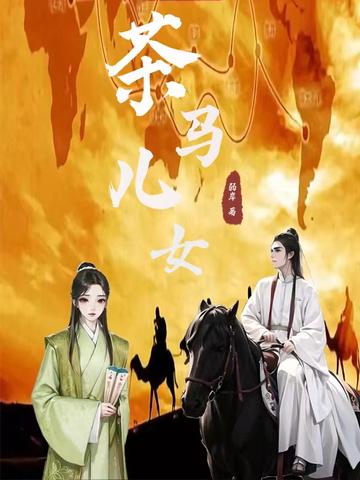
In the early years of the Jiajing era, fifteen-year-old Yu Benyuan follows his father to the Yuanma Temple in Shaanxi, where he spends more than twenty years practicing medicine among the frontier troops.
As he battles epidemics among military horses and establishes a government-run veterinary school, he works alongside his comrades Xiao Liguang, Qu Boer, Hu Yeer, and others. After searching a thousand miles for fine horses and laboring for more than a decade, they succeed in breeding a new strain of military horse.
The sisters Cao Meiying, daughters of a tea merchant fallen on hard times, form a fateful bond with the Yu brothers and the siblings Qu Boer and Qu from the Western Fan people. Han and Fan men and women together create a legendary tale of tea-horse trade.
Younger brother Yu Benheng and childhood friend Shen Xuliang ultimately take a path that converges with that of elder brother Benyuan. Together, they write the enduring veterinary classic, The Collection of Yuan and Heng on Treating Horses and Cattle.
The relationships among Yu Benyuan, Yu Benheng, Cao Meiying, Shen Xuliang, and the other characters are intricately entwined, and their fortunes rise and fall dramatically.
The professional details in the novel about the Yu father and sons treating illnesses in horses and cattle, prescriptions, and animal husbandry are all drawn from the original text of the great Ming veterinary work, The Complete Yuanheng Treatise on Treating Horses and Cattle, giving the story a rich traditional cultural flavor.
There are really not many books on 🍅 that are not about entrepreneurship. This is a pure historical novel by the author. There is no time travel, no golden fingers, and no system. It captures a small wave in the long history. Starting from the relatively unpopular perspective of horse medicine, it vividly shows the social picture of that era. The story has twists and turns, and the characterization is very successful, especially the role of Mei Ying, which is very impressive. Author, you are awesome💪🏻Come on
Not bad, the historical restoration is very high, and the plot is step-by-step without skipping a beat.
I take the time to read a few chapters every day, and I have caught up with the author. I can post more.
I personally like this kind of purely historical novels, but they are hard to find. I hope the author sticks to his own style, keep up the good work.
Although I haven't finished reading it, the plot is okay and relatively novel, and the author's writing style and knowledge reserve are worthy of praise.
To be honest, the author may care too much about the detailed description, and in some places it seems too redundant, which is a bit boring. However, the selection of materials is still very innovative, so keep up the good work.
It has a unique approach, the writing is fluent, the characters are flesh-and-blood, the plot is remarkable, the background, environment, local customs and customs are all described very well. It is a good book.
There are quite a lot of characters in the article, which is a bit group portrait, without blindly highlighting the halo of the protagonist. The plot is gradual and the story is reasonable, which is not bad.
It seems quite impressive, and I really want to know the follow-up. However, this book does not require speed, but quality first.
Although it is not a refreshing novel, it has a unique flavor and strong narrative, and requires careful reading.