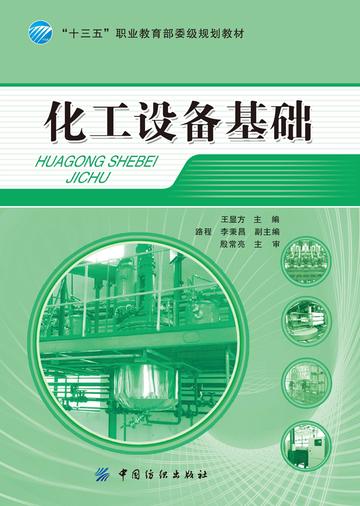
"Fundamentals of Chemical Equipment" starts from the ability needs of modern chemical enterprises for front-line practitioners, based on the requirements of higher vocational education for the training objectives of chemical non-mechanical professionals, and based on the actual work of chemical engineering students. It is compiled based on the principle of moderate theory and emphasis on application. The editors include teachers active in the front line of higher vocational education and corporate engineers, which can better meet the professional competency needs of modern enterprises for operators.
"Basics of Chemical Equipment" is divided into five chapters, namely basic knowledge of chemical equipment, chemical containers, heat exchangers, tower equipment, and reactors. The content covers the main production equipment of chemical plants and provides the necessary knowledge reserves for front-line technicians in the chemical industry. Each chapter explains the equipment overview, classification, structure, operation, maintenance, etc., Which is highly practical and eliminates excessive mechanical analysis and design calculations in traditional textbooks. The content is easy to understand and easy to master.
This textbook is mainly aimed at students majoring in non-mechanical chemical engineering (applied chemical technology, organic chemical production technology, biochemical technology, industrial analysis and inspection, etc.). It can also be used as learning and training materials for chemical plant workers and technicians.
Reader comments
The knowledge in the book is all necessary in chemical production, and it eliminates complex mechanical analysis and design calculations, allowing people to understand various equipment faster. I think of a friend of mine who works in a chemical plant. He needs this kind of knowledge reserve. I think this book is not only suitable for students, but also for workers and technicians.





The knowledge in the book is all necessary in chemical production, and it eliminates complex mechanical analysis and design calculations, allowing people to understand various equipment faster. I think of a friend of mine who works in a chemical plant. He needs this kind of knowledge reserve. I think this book is not only suitable for students, but also for workers and technicians.