Introduction
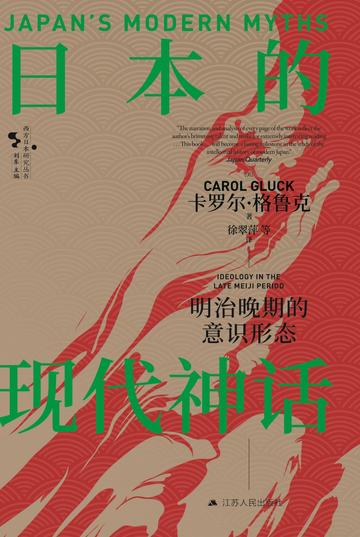
Ideology plays a pivotal role in Japan's modern history. Not only did the elite of Japanese imperialism (1890-1945) work hard to influence people to "go with the wind," but historians of modern Japan later viewed these as one of the fundamental causes of World War II. This book examines how this ideology evolved. Carol Gluck argues that the process of formulating and communicating new national values is inconsistent with what is usually assumed. By immersing readers in the conversations and ideas of the late Meiji era, Professor Gluck recreates the diversity of ideological discourses experienced by the Japanese at the time, ultimately shedding new light on the politics and national ideas of Japanese imperialism.
Reader comments
The book mentioned that "the formation of ideology does not happen overnight", which reminded me that the same is true in our lives. Many things take time to settle. Just like raising a child, it takes patience and time. This reminds me of the book The Chrysanthemum and the Sword, which is also an in-depth study of Japanese culture. I recommend you take a look, maybe you will get some new inspiration!
The book mentioned that "the formation of ideology does not happen overnight", which reminded me that the same is true in our lives. Many things take time to settle. Just like raising a child, it takes patience and time. This reminds me of the book The Chrysanthemum and the Sword, which is also an in-depth study of Japanese culture. I recommend you take a look, maybe you will get some new inspiration!