Introduction
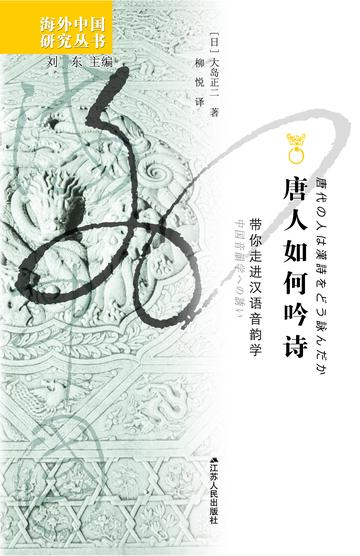
In Japan, there are many people who like Tang poetry. So in the Tang Dynasty, when poetry was at its peak, how did people chant the poems of Li Bai, Du Fu and others? This book takes the process of restoring the pronunciation of Chang'an poet Du Mu's "Jiang Nanchun" as an example. It explains in detail how to restore the pronunciation at that time by introducing the basic knowledge of Chinese phonology such as four tones, fanqie, rhyme script, and rhyme diagrams, as well as the research results of Gao Benhan, Ma Bole and others on ancient Chinese pronunciation. At the end of the book, there are also phonological diagrams for reciting 10 famous poems such as Du Fu's "Spring Hope", Li Bai's "Qiupu Song", and Meng Haoran's "Spring Dawn" using the pronunciation of the time.
Reader comments
This book is really interesting! It introduced the basic knowledge of Chinese phonology in an easy-to-understand way, and gave me a deeper understanding of the pronunciation of Tang poetry. I particularly like the example of the pronunciation restoration of Du Mu's "Jiang Nanchun" in the book. It feels like I have traveled back to the Tang Dynasty. Moreover, the book also mentioned many overseas research results on China, which broadened my horizons. In short, this is a good book worth reading and recommended to friends who are interested in Chinese culture and language!




This book is really interesting! It introduced the basic knowledge of Chinese phonology in an easy-to-understand way, and gave me a deeper understanding of the pronunciation of Tang poetry. I particularly like the example of the pronunciation restoration of Du Mu's "Jiang Nanchun" in the book. It feels like I have traveled back to the Tang Dynasty. Moreover, the book also mentioned many overseas research results on China, which broadened my horizons. In short, this is a good book worth reading and recommended to friends who are interested in Chinese culture and language!