The Collection of Historical Materials on the Nanjing Massacre is a major scholarly undertaking. Collecting and organizing the materials, as well as translating, editing, and publishing documents in English, Japanese, German, Italian, Russian, and other languages, is an extremely complex and demanding task. For this reason, the volumes can only be published gradually in batches. Closely related materials have sometimes been placed in different volumes and published at different times, but this was unavoidable. We ask our readers for their understanding.
We hope this collection will provide researchers and readers at home and abroad with as much historical material as possible, rich in content and comprehensive in scope. However, because the sources are so varied, they include firsthand accounts and eyewitness reports from perpetrators, victims, and third parties, as well as memoirs, archival documents, newspaper and periodical materials, and other sources. Their accounts of the Nanjing Massacre do not always agree. Some accounts may even contain contradictions or errors, or express inaccurate views because of the authors’ positions, perspectives, or limitations in understanding. This is hardly surprising. Accounts of a catastrophe that shocked the world could never be entirely uniform.
Preserving historical sources in their original form is a professional and scholarly duty for historians. We have therefore included all materials exactly as they were, without alteration, and made them available to researchers, who can examine and analyze them when using them in order to reach sound conclusions consistent with the historical facts.
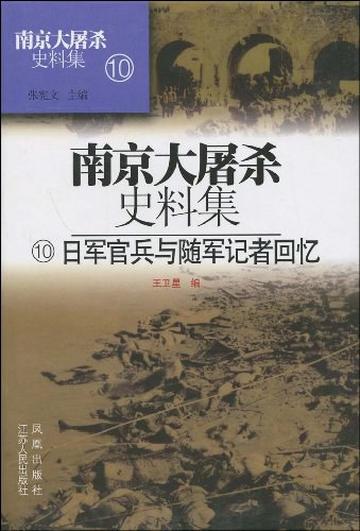
Zhang Chunru became depressed after writing the book "Nanjing Massacre". Faced with the facts and photos of the massacre, she suffered from insomnia and collapse. I felt the same way when reading this book. I felt depressed, angry, and breathless. I stopped uttering words of condemnation. It was like there were stones in my throat and I was choked with sobs. I couldn't believe that this was done by people called "human beings."
This book is very rich in content. It shows the Nanjing Massacre from different perspectives through the memories of Japanese officers and soldiers and reporters accompanying the army. It reminds me of Zhang Chunru's "Nanjing Massacre". Both books provide important information for the study of that period of history. As parents, I think we have the responsibility to let our children understand history and not forget the national humiliation.
Keep history in mind and pay back with blood!