"Collection of Historical Materials on the Nanjing Massacre" is a large-scale academic project. The collection, arrangement of historical materials, and the translation, editing and publication of English, Japanese, German, Italian, Russian and other documents are very complex and arduous tasks, so they can only be published in batches. It is unavoidable to arrange the publication of similar historical materials in different volumes. We apologize for this. We hope that this collection of historical materials can provide as much historical information as possible with rich and comprehensive content to the vast number of historical researchers and readers at home and abroad. However, due to the wide range of sources of materials, including personal experiences and eye-witness materials of the perpetrators, victims, and third parties, as well as recall materials, various archival materials, newspaper materials, etc., It is not surprising that there are inconsistencies in the description of the Nanjing Massacre, and even due to the narrator's position, observation angle, or cognitive limitations, there are contradictions in the description, and there are also some wrong or incorrect views. It is impossible for the voices to be completely unanimous about such a tragedy that shocked the world. Preserving the original appearance of historical materials is a professional ethics and academic norm that historians should have. Therefore, we collect the historical materials as they are without any changes and provide them to historical researchers for them to examine and analyze when using them to draw scientific conclusions that are consistent with historical facts.
Reader comments
This book is very rich in content. It shows the Nanjing Massacre from different perspectives through the memories of Japanese officers and soldiers and reporters accompanying the army. It reminds me of Zhang Chunru's "Nanjing Massacre". Both books provide important information for the study of that period of history. As parents, I think we have the responsibility to let our children understand history and not forget the national humiliation.
Zhang Chunru became depressed after writing the book "Nanjing Massacre". Faced with the facts and photos of the massacre, she suffered from insomnia and collapse. I felt the same way when reading this book. I felt depressed, angry, and breathless. I stopped uttering words of condemnation. It was like there were stones in my throat and I was choked with sobs. I couldn't believe that this was done by people called "human beings."
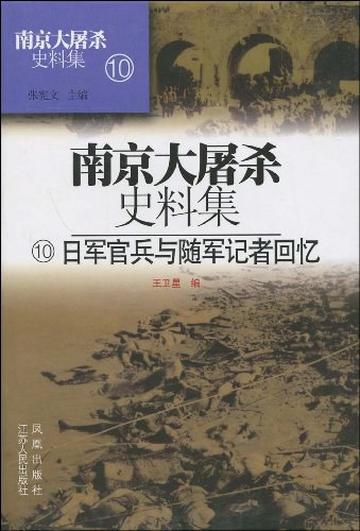
This book is very rich in content. It shows the Nanjing Massacre from different perspectives through the memories of Japanese officers and soldiers and reporters accompanying the army. It reminds me of Zhang Chunru's "Nanjing Massacre". Both books provide important information for the study of that period of history. As parents, I think we have the responsibility to let our children understand history and not forget the national humiliation.
Zhang Chunru became depressed after writing the book "Nanjing Massacre". Faced with the facts and photos of the massacre, she suffered from insomnia and collapse. I felt the same way when reading this book. I felt depressed, angry, and breathless. I stopped uttering words of condemnation. It was like there were stones in my throat and I was choked with sobs. I couldn't believe that this was done by people called "human beings."
Keep history in mind and pay back with blood!