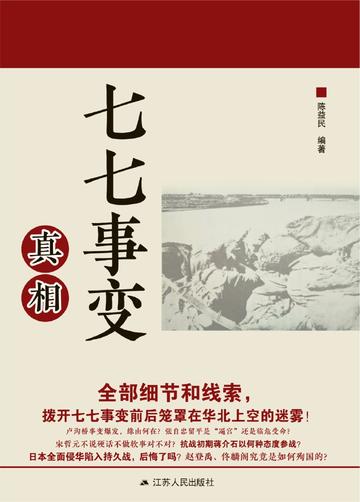
Based on historical sources about the July 7 Incident, this book addresses the major disputed questions surrounding it. In particular, it carefully examines the key disagreements between China and Japan over how the incident should be interpreted: Who was responsible for the outbreak of the Sino-Japanese War? What was Chiang Kai-shek’s attitude toward joining the war in its early stages? How should Song Zheyuan’s peace talks with the Japanese after the incident be judged? And more. Neither a specialized history nor a mere compilation of sources, this is a historical work built primarily on excerpts from documents, supplemented by analysis and commentary.
The course of the July 7 Incident may seem clear, but it remains contested. The same person is described in different ways, and the same event is recorded differently. As the starting point of eight years of resistance, this is a major historical event that should not be shrouded in endless conflicting accounts. It deserves a convincing and authoritative conclusion. Drawing on a wealth of historical materials and surveying different interpretations, this book works to distinguish truth from falsehood and examine the July 7 Incident from every angle, restoring the historical truth.
Editor’s Recommendations
Uncover every detail and clue, and dispel the fog that shrouded North China before and after the July 7 Incident!
What led to the Marco Polo Bridge Incident?
Did Zhang Zizhong remain in Beiping to “force Song Zheyuan’s hand,” or was he called upon in a crisis?
Was Song Zheyuan right to avoid tough talk while refusing to give ground?
What was Chiang Kai-shek’s attitude toward joining the war in its early stages?
Did Japan regret becoming bogged down in a protracted war after launching its full-scale invasion of China?
How exactly did Zhao Dengyu and Tong Linge die for their country?
Centered on historical sources about the July 7 Incident, this book draws on telegrams, newspaper and periodical reports, letters and diaries, eyewitness recollections, documents and archives from the Nationalist government, as well as Japanese archives, memoirs, and military histories. Carefully selected excerpts from these original sources provide a concise account of the incident from beginning to end. Using historical evidence, the book addresses the main disputed questions, especially the major differences between Chinese and Japanese interpretations: Who was responsible for the outbreak of the Sino-Japanese War? What was Chiang Kai-shek’s attitude toward joining the war in its early stages? How should Song Zheyuan’s peace talks with the Japanese after the incident be judged? Did Zhang Zizhong stay in Beiping to “force Song Zheyuan’s hand,” or was he “called upon in a crisis”? Did Japanese forces “enter” China or “invade” it? Why did the Japanese army expand its invasion after the July 7 Incident, and what disastrous consequences followed? The book gathers accounts from all sides as events unfolded, then adds the editor’s commentary and judgments on the historical facts. Neither a specialized history nor a mere compilation of sources, it is a historical work built primarily on document excerpts, supplemented by analysis and commentary.
About the Author
Chen Yimin earned a master’s degree in history from Nankai University and formerly served as editor-in-chief of Tianjin People’s Publishing House. He has long focused on the history and culture of Republican-era China. His published works include Words in the Margins of Books. He has also compiled a number of historical and educational books, including the Old News series, the Great Writers of the Republic: Essays series, and the Rereading Xu Zhimo series.