Slogan
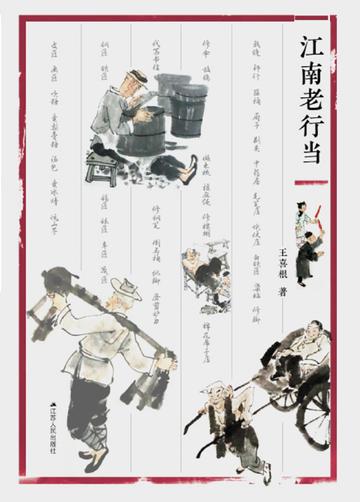
"Old Trades in Jiangnan" consists of more than one hundred short essays, which are not only the author's personal experience and thinking, but also a reflection of the passing years. It is the life memory of an individual who has experienced it, a short history of an old trade in the south of the Yangtze River, and a collection of essays that reveal the imprint of the times.
Content introduction
This book is a picture book about traditional culture. The book is divided into four parts: traces of various industries, food aftertaste, market photos, and melodious rural charm, with a total of 160 articles. At the same time, each article is equipped with a black and white line drawing, which complements the simple and solid language of the article. The whole book focuses on the theme of "Old Trades in the South of the Yangtze River" and describes all aspects of work, industry, products, etc., Such as weighing, selling velvet flowers, boat help, pot making, etc. In "Baizi"; bathhouses, nunneries, slag washing, etc. In "Market"; Kangshan taro, wheat silkworms, fried rice candy, etc. In "Food"; crabs, steaming, scraping qiliu, etc. In "Country Rhythm", awakening the old plot in the heart.
Reader comments
This book is like a time machine, taking me back to the old days of Jiangnan. The detailed descriptions of various old trades in the book made me feel like I was actually there. I especially like the part "Tracing Hundreds of Industries". The pot-making craftsmanship impressed me deeply. "The shape is like a pot and the rhyme is like poetry." This sentence perfectly explains the essence of pot-making. This book is not only a record of the old trade, but also the inheritance of traditional culture. It is worth reading!


This book is like a time machine, taking me back to the old days of Jiangnan. The detailed descriptions of various old trades in the book made me feel like I was actually there. I especially like the part "Tracing Hundreds of Industries". The pot-making craftsmanship impressed me deeply. "The shape is like a pot and the rhyme is like poetry." This sentence perfectly explains the essence of pot-making. This book is not only a record of the old trade, but also the inheritance of traditional culture. It is worth reading!