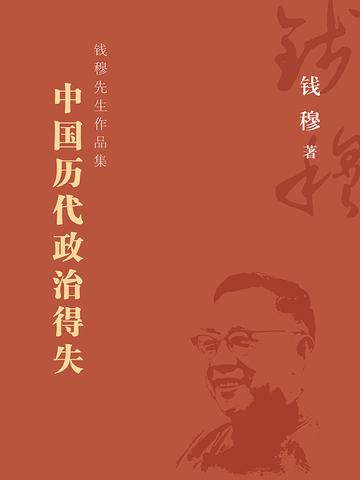
Political Gains and Losses in China's Past Dynasties
中国历代政治得失
- Status
- Completed
- Length
- 100k Words
- Genre
- Historical
- Updated
- 2y ago
- Source
- Fanqie
Stats
Tags
Synopsis
Reader comments
In booklists 43
Explore more →
Nobel Prize for Literature, Mao Dun Literature Prize, Lu Xun Literature Prize and Other Literary Works
I want to read a book similar to "One Sentence is Worth Ten Thousand Sentences: Collector's Edition".

This Is the Novel That Chinese People Should Read
We are both Chinese, and you will definitely get excited after reading this

Looking for a Period Novel Similar to Xia Xiaolan and Song Youxiang, with Good Writing Style
I want to read a book like "Rebirth in 1980: My Wife is a Little Hot".
9.9 High Score! a Great Book to Read Eight Times!
I want to watch content similar to "70 Space: A Girl Who Traveled Through Time and Was Reborn as a Mom". Various themes
This Is Probably the Longest Book in History!
I started watching it in elementary school and I'm still watching it in college.
The Prince Strives for the Throne, the Emperor's Mind
Not too fast
Have You Ever Read a Book That Allows You to Gamble Your Life with Qi Xia?
I want to read a book similar to "Game Theory".

After Reading This Novel, I Was Extremely Shocked. I Read It Many Times.
All types are available, male or female.
China's True History
I want to read a book similar to "Five Thousand Years of China". This is not a fictional historical novel, but a true story that is supported by factual evidence.
Are There Any Teaching Aid Books?
I want to read a book similar to "Half-hour Comic History of China 5". For example, the above
Is There Any Red Literature with a Larger Pattern?
The Pinnacle of Historical Novels of Various Dynasties.
Works with a score of 9 or above are preferred.
My Number One Historical Novel About Tomato
I want to read a book similar to "Making the Surname Langya". Traveling through time is not like treating guests to dinner, traveling through time is killing people every step of the way. The plot is lively and interesting, and the supporting characters' IQs are online. The protagonist kills indiscriminately at the critical moment of life and death. Historically accurate. The emotional line is natural


The Masterpiece of Tomato Novels 10.0! Tomato Must-Read Novel! Cool Ceiling!
I want to read a book similar to "Perfect Redemption".
An In-Depth Article That Can Be Called a Masterpiece
Just like the three-body

Looking for Various Study Books
No matter the industry, no type, no difficulty
Excellent Historical Book! Is There Any? !
There's no need to look numb at all the pretentious and cool articles!
The History Is True and Has Not Been Tampered With.
History is more shaping, the characters are vivid, history is not distorted, and the writing is refreshing, such as the * dynasties, large and small, wars, civil servants and military generals are loyal and good, and are presented in history

9.9 High Score, Super Exciting and Watchable
I want to watch content similar to "Famine in the 1960s and Going to the Countryside in the 1970s". Various categories
Literary Classics, Reading Classics
I want to read a book similar to "The Chief Assistant of the Empire: Zhang Juzheng".
The Book That Saved History and Geography
I want to read a book similar to "A Half-Hour Comic History of China (Five Volumes)". Similar to this
A Must-Read for Chinese Language and Literature Majors
Are there any books that can actually help improve your writing and expression skills?
Philosophy, the Kind of Masterpiece That Is Enough to Burn Your Brain and Make You Forget About Food and Drink (Regardless of Sects)
Confucianism, Taoism and Buddhism
It was a treasure for me, who only had a simple study of history, and it saved me from some stereotyped impressions and thoughts. It can be said that the person Mr. Qian Mu targeted in his preface was me [laughing and crying] [laughing and crying]
Books inherently reflect the author's views. We read a book to broaden our horizons or inspire our thinking. If we open a book just to criticize the author's views, wouldn't it be a small gain but a big gain? Our country has a long history, and many systems have evolved from inception to maturity, from functioning well to gradually failing and being abandoned. Many of these experiences are worthy of our observation and speculation, as well as our reflection and reference. The various political cultures in a country cannot be divorced from its economic background. The change of regimes does not completely overthrow the former, but develops on the basis of the former. Therefore, we must pay attention to history, obtain inspiration and enlightenment from historical trajectories, combine it with current practice, combine it with the past, and look to the future based on the present.
I studied history in college, and I read this book when I was in college. Rewatching it again makes me feel inexplicably happy. Reading history can improve our perspective and deepen our thinking in the vast history.
Have a more comprehensive understanding of the traditional view of history. You cannot generalize everything. Learn to think and be logical, instead of taking the views of others or the public as your own view of history. The more you read and the more comprehensive you think, the closer you can get to the historical truth.
A book every "second grader" should read, with typical examples
Mr. Is a great talent. He can objectively analyze the political characteristics of dynasties. I have benefited a lot from reading it.
It objectively briefly describes the political systems of several dynasties, describes their changes, expresses their religious principles, and allows historical development to be concretely presented before our eyes. Although the text is short, it contains rich content that can only be known after reading it. The book also expresses some of the author's thoughts on history, which still has a strong reference significance for China today!
As for Mr. Qian Mu's book, his analysis of the Chinese dynastic system is somewhat innovative, such as scholarly politics, confusion in the concept of political territory, imperial power and prime ministerial power, and a very reasonable refutation of the total denial of traditional culture. Of course, there are certain limitations of the times. For example, an analysis of the system and essence of the Yuan and Qing Dynasties shows that the ruling aristocrats of the Qing Dynasty were not Manchus but bannermen, especially the Eight Banners, and the Eight Banners not only included Manchus. There are also positions that go first, deliberately protecting tradition, weakening the authoritarian nature, especially over-idealizing "scholar politics" and weakening class conflicts. However, there are many subjective inferences, some of which are inconsistent with later research evidence. Of course, this is just a problem of the limitations of the times. This book is okay, but readers are advised to view it dialectically, especially the Ming and Qing Dynasties.
It's refreshing. It's just a rough introduction. It would be great if there were more details.
Being able to have a relatively rigorous logic to discuss history is already a masterpiece. Moreover, it shows the direction of the content and focuses on the opinions of the times, which is a masterpiece.
The advantages and disadvantages of the political systems of the past dynasties have progressed and regressed, but it is really difficult to find comparisons in the vast literature. This book by Qian Lao can be summarized very well and is easy to understand. In fact, affected by the environment of the times, the ancients would also "teach students in accordance with their aptitude" and make targeted political ideals and implement them. Therefore, when dealing with history, one must take the essence and discard the dross. Furthermore, if you narrow down to the society around you, you can also reflect and find a path that suits you. This is my biggest gain from reading this book.
Although there is personal bias, it does not affect the general popularization of science. When looking at history, we must not only look at it from the perspective of modern times, but also from the perspective of the time. The design of every system is determined by repeated discussions and trade-offs by a group of people. It was good in the early days, but as the times change, people are too busy with things, and they will gradually become corrupt. Liberal arts is about human nature, science is about entropy.
I have heard of Qian Mu for a long time, and this is the first book I have read. Enlightenment, enlightenment, clearing the clouds and seeing the sun, opening up the two channels of Ren and Governor
It objectively interprets history from a different perspective. It is very innovative and the description is detailed and credible. It is a good book worth re-reading.
Qian Mu can be regarded as a master of the Republic of China in historical research, but he also has a consistent problem with masters of the Republic of China. He likes to mix in private goods and use the past to satirize the present. He looks like a person from the Republic of China, but in fact he still has the thoughts of an ancient scholar-bureaucrat.
Mr. Qian was undoubtedly very serious in his studies, citing classics and classics at his fingertips, and had great national sentiments. However, it was possible that he was too emotionally invested, and sometimes he inevitably lost sight of the objectivity that a historian should have. For example, they are more tolerant of prime ministers who have ruined their families and established a country. However, the cabinet and the Military Aircraft Department, which are responsible for the situation, are too scornful. Likes and dislikes are based on emotions, so don't say what is right!
It's worth reading, but it's mixed with personal information later.
Qian Mu's views have an obvious tendency of scholars to love the past, and they judge the quality of a system without considering the pros and cons based on reality. This is the only way to understand the actual political reality of ancient times, and his evaluation is not worthy of mention.
It is suggested that Tomato should not use general scoring standards to measure these masterpieces, but should develop another standard system, including a large number of serious literature. It is an extremely ironic situation when you see that extremely precious works like Mr. Qian Mu's (although they are compiled lecture notes), which have made great contributions to social development, are not rated as well as some cool articles.
Mr. Qian Mu's comments on historical political systems are extremely essence, but at the same time, his understanding is limited by the times. This just tells us that we should not be too arbitrary in our treatment of history.
By analyzing the political systems of the Han, Tang, Song, Ming and Qing dynasties, we can understand them in a relatively objective way.
The logic is clear and the historical facts are reasonable, but it is highly subjective due to the standpoint. When reading, you should pay more attention to the relevant aspects of historical facts and treat the author's views rationally.
Classic, understand the historical changes of royal power and prime ministerial power. You can go deeper. Write in depth based on the major changes at that time, including when the dynasty failed and when it was established, as well as the route of change.
Very nice. The political system is one of the most important "software" of the complex system of human society. In fact, in addition to the political system in the narrow sense, this book also discusses the examination system, tax system, various economic systems, and the national defense military service system. The context is clear and the logic is smooth.
I can't understand. I'm getting better gradually. Little enlightenment, small enlightenment, great enlightenment and great enlightenment.
Thank you teacher, I wish you a monthly income of 100,000 and a long life.
Not bad, come on, come on
Very rewarding and highly recommended.
It is a good book, but it is limited by the times and the author's position and origin. There will inevitably be some bias. This is an unavoidable objective situation, so if you read some opinions that are contrary to yours, just keep calm and read on.
The master is the master