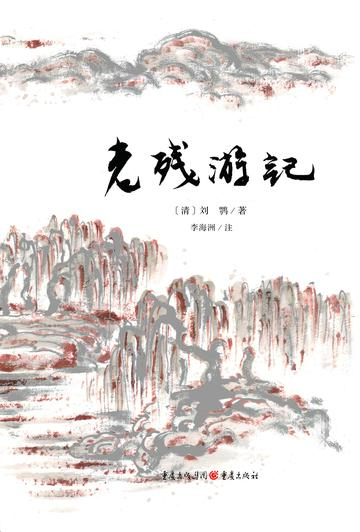
This book is written about the experiences and actions of a quack doctor Tie Ying (also known as Lao Can) during his travels.
The old cripple makes a living by practicing medicine, and wanders around the world while ringing his bells. He was a man of indifference and did not enter officialdom, but he cared about the fate of the country and the nation. He also had a clear sense of right and wrong and was chivalrous and courageous. He sympathized with the suffering of the people and did his best to save the people from the fire and water. Following Lao Can's footsteps, we can clearly see the social life in Shandong in the late Qing Dynasty in the book, and we can also discover some social contradictions in the old days.
Reader comments
I was leaning on the railing and watching the snow when I suddenly saw two volumes of "Lao Can's Travels" on my desk, one old and one new. The corners of the old scroll are rolled up like a lotus, and the new scroll is bound with gold thread like a koi carp. Unconsciously, I sighed: The wonderful books in the world are like the rising moon, and the work of the continuation of Diao is like the noise of jackdaws at night.
The fragrance of the ink in this volume is still there, and the master's writing style is like a dragon playing with a pearl. The opening chapter is a parable of a large ship, and the cracking of the sails hides signs of a thousand-year illness. The white girl who lives in Minghu Lake tells stories, and her singing can turn snow into water; the aunties from Peach Blossom Mountain talk about Taoism, and the music of their piano can communicate with ghosts and gods. What is most unforgettable is the cold flood night on the Yellow River, when the ice edges gnaw at the embankment like ghost teeth, and the officials and the people rush to rescue like ants fighting for their lives. This kind of pen and ink is like a splash of ink on a landscape with gold and fine brush strokes, and the coldness of the world is reflected in the cold tears of ice.
It's a pity that the original volume is like smoke from old jade, but the sequel is painted on new porcelain. The former writes about the human world like writing medical records, with every prescription filled with blood and tears; the latter imitates the world like a New Year picture, with the paper full of auspicious clouds but no wind and frost. For example, in the sequel, the old cripple goes straight to heaven to discuss Taoism with the gods, which has lost the beauty of "the gray line of grass and snakes, and the veins running thousands of miles". It is like painting Ming-style furniture in vermilion with gold, and the ancient meaning has been lost.
I closed the window and saw the moon reflected in the snow on the corner of the eaves, just like when I first read "Lao Can" and saw the ice of the Yellow River reflecting the torch. A good book should be like a piece of jade, but if you continue to polish it, it will destroy its authenticity. If Sir, if you know what's going on, you might want to imitate Wang Xiaoyu and sing "Black Donkey Duan", then slap your wake-up wood and say, "Everyone, please leave today!"
Lao Can's story reminds me of "Xu Xiake's Travels". They both witnessed many wonderful things during their journey. I feel like I am a bit like an old disabled person, full of curiosity about the world. Moreover, this book allowed me to understand the society in the late Qing Dynasty, and I seemed to be able to see the lives of people in that era. I really hope that I can use my own strength to help those in need like Lao Can!
I was leaning on the railing and watching the snow when I suddenly saw two volumes of "Lao Can's Travels" on my desk, one old and one new. The corners of the old scroll are rolled up like a lotus, and the new scroll is bound with gold thread like a koi carp. Unconsciously, I sighed: The wonderful books in the world are like the rising moon, and the work of the continuation of Diao is like the noise of jackdaws at night. The fragrance of the ink in this volume is still there, and the master's writing style is like a dragon playing with a pearl. The opening chapter is a parable of a large ship, and the cracking of the sails hides signs of a thousand-year illness. The white girl who lives in Minghu Lake tells stories, and her singing can turn snow into water; the aunties from Peach Blossom Mountain talk about Taoism, and the music of their piano can communicate with ghosts and gods. What is most unforgettable is the cold flood night on the Yellow River, when the ice edges gnaw at the embankment like ghost teeth, and the officials and the people rush to rescue like ants fighting for their lives. This kind of pen and ink is like a splash of ink on a landscape with gold and fine brush strokes, and the coldness of the world is reflected in the cold tears of ice. It's a pity that the original volume is like smoke from old jade, but the sequel is painted on new porcelain. The former writes about the human world like writing medical records, with every prescription filled with blood and tears; the latter imitates the world like a New Year picture, with the paper full of auspicious clouds but no wind and frost. For example, in the sequel, the old cripple goes straight to heaven to discuss Taoism with the gods, which has lost the beauty of "the gray line of grass and snakes, and the veins running thousands of miles". It is like painting Ming-style furniture in vermilion with gold, and the ancient meaning has been lost. I closed the window and saw the moon reflected in the snow on the corner of the eaves, just like when I first read "Lao Can" and saw the ice of the Yellow River reflecting the torch. A good book should be like a piece of jade, but if you continue to polish it, it will destroy its authenticity. If Sir, if you know what's going on, you might want to imitate Wang Xiaoyu and sing "Black Donkey Duan", then slap your wake-up wood and say, "Everyone, please leave today!"
Lao Can's story reminds me of "Xu Xiake's Travels". They both witnessed many wonderful things during their journey. I feel like I am a bit like an old disabled person, full of curiosity about the world. Moreover, this book allowed me to understand the society in the late Qing Dynasty, and I seemed to be able to see the lives of people in that era. I really hope that I can use my own strength to help those in need like Lao Can!