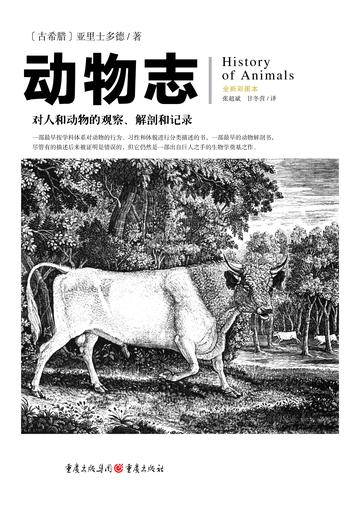
Aristotle spent twelve years traveling along the Mediterranean coast and islands in the Mediterranean, collecting, observing, dissecting and recording various aquatic and terrestrial animals. These first-hand materials provided him with a solid foundation for writing "Animals". In 335 AD, Aristotle founded the Lyceum in Athens. Zoology was the basic course of the Lyceum. Students from various city-states provided him with numerous animal specimens and assisted him in dissection and drawing. Aristotle's lecture experience at Lyceum greatly enriched the scope of Animalia. The original meaning of "zoology" in Greek is "records and descriptions of various animals." The book consists of nine volumes and 49 chapters, recording the physiological structure, living habits, movement patterns and reproductive activities of animals. It is a meticulous, lively and interesting biological classic, showing the "animal world" in the eyes of people during the ancient Greek period.
Reader comments
I think this book "Animals" is so interesting! Aristotle's observations are so detailed, and his descriptions of animals are like showing a real animal world before my eyes! It reminds me of Fabre's "Insects", which is also so vivid and interesting. Just like Fabre said, "In this small green world, I don't know how many busy little lives will continue to exist." "Animals" made me have more awe and curiosity about life.
After reading this book, I feel that Aristotle is an early Fabre




I think this book "Animals" is so interesting! Aristotle's observations are so detailed, and his descriptions of animals are like showing a real animal world before my eyes! It reminds me of Fabre's "Insects", which is also so vivid and interesting. Just like Fabre said, "In this small green world, I don't know how many busy little lives will continue to exist." "Animals" made me have more awe and curiosity about life.
After reading this book, I feel that Aristotle is an early Fabre