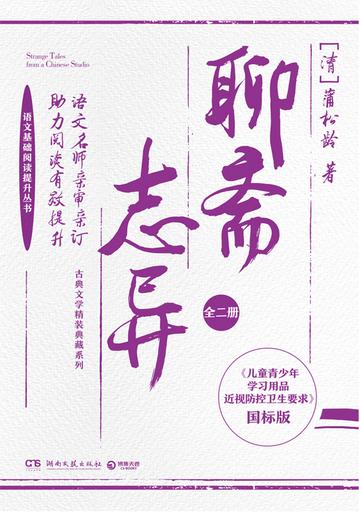
"Strange Stories from a Chinese Studio", abbreviated as "Liao Zhai" and commonly known as "The Legend of the Ghost Fox", is a collection of short stories in classical Chinese written by Pu Songling, a novelist of the Qing Dynasty in China. These short stories either reveal the darkness of feudal rule, criticize the corruption of the imperial examination system, or resist the constraints of feudal ethics. They have rich and profound ideological content. There are many works describing the theme of love in the whole book, and they express a strong anti-feudal etiquette spirit. This book depicts a strange and fantastic world for readers. It depicts fox fairies and ghosts, reflecting all kinds of conditions in the world, and has a strong romantic color.
Reader comments
This "Strange Stories from a Chinese Studio" is really wonderful! The story written by Pu Songling is full of imagination. As I just read, Song Gong was appointed as the city god, and his filial piety also received special attention. The characters in the book have distinctive personalities, such as Song Gong's kindness and filial piety, and Emperor Guan's justice and wisdom, which are all impressive. Moreover, these stories often have profound meanings, allowing people to think about life while appreciating the stories. I think this book is not only suitable for reading by myself, but can also be used as a story to tell children to let them understand the concepts of good and evil and values in traditional Chinese culture.
This "Strange Stories from a Chinese Studio" is really wonderful! The story written by Pu Songling is full of imagination. As I just read, Song Gong was appointed as the city god, and his filial piety also received special attention. The characters in the book have distinctive personalities, such as Song Gong's kindness and filial piety, and Emperor Guan's justice and wisdom, which are all impressive. Moreover, these stories often have profound meanings, allowing people to think about life while appreciating the stories. I think this book is not only suitable for reading by myself, but can also be used as a story to tell children to let them understand the concepts of good and evil and values in traditional Chinese culture.