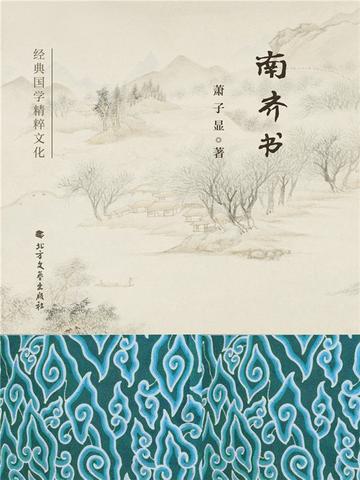
"Nan Qi Shu" was originally called "Qi Shu". In the Song Dynasty, in order to distinguish it from "Bei Qi Shu" written by Li Baiyao, it was renamed "Nan Qi Shu". The whole book has sixty volumes, of which 59 are now available, including eight volumes of chronicles, eleven volumes of chronicles, and forty volumes of biographies. The lost volume was probably a preface containing examples of the writing and a table of contents. There are also missing texts in some biographies. This book describes the historical events of the Xiao Qi Dynasty in the Southern Dynasties from the first year of Jianyuan (479) of Emperor Gao of Qi to the second year of Zhongxing (502) of Emperor He of Qi. "Book of Nan Qi (Part 1)" contains eight and eleven volumes of this era. In addition to tracing the political activities of Xiao Daocheng in the late Liu Song Dynasty, the eight volumes of Emperor Chronicles mainly record the historical events of the 23 years of the Xiao Qi Dynasty (479-502). There are eight chapters and eleven volumes in the Zhi, some of which are inherited from the Liu Song Dynasty, and some are from the founding of the Xiao Qi Dynasty. The boundaries are obvious.
Reader comments
"The Book of Nan Qi" is rich in content and records many interesting historical stories, which gave me a deeper understanding of the history of Nan Qi. The author Xiao Zixian is really amazing, he can write history so vividly! I especially like the description of the politics and society of Southern Qi in the book, which truly shows the style of that era. All in all, this is a good book worth reading.
The noble prince from the Southern Dynasties came here. After understanding the background of the dynasty, go back and read it again. It will be a different experience.
"The Book of Nan Qi" is rich in content and records many interesting historical stories, which gave me a deeper understanding of the history of Nan Qi. The author Xiao Zixian is really amazing, he can write history so vividly! I especially like the description of the politics and society of Southern Qi in the book, which truly shows the style of that era. All in all, this is a good book worth reading.
The noble prince from the Southern Dynasties came here. After understanding the background of the dynasty, go back and read it again. It will be a different experience.