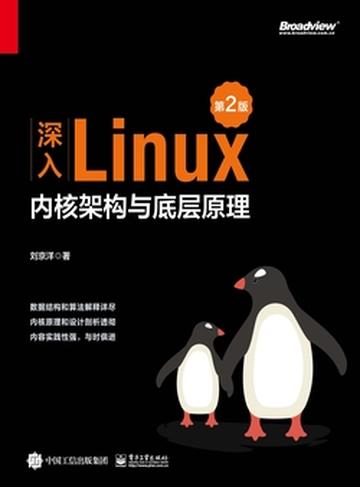
This book mainly describes the overall framework and design ideas of the Linux system, and contains many examples that can be directly operated. The purpose of writing this book is to give readers a comprehensive understanding of the logic behind the Linux system. This book has a more in-depth explanation of core and commonly used technical points, which is of great benefit to the actual use of Linux systems. At the same time, it selects key directions for in-depth source code level analysis, contains a large number of cases, and adds comparisons with similar operating systems in Windows. It involves some implementations of Fuchsia OS and Android systems, giving a clearer description of the operating system. This book is suitable for Linux system developers and embedded system developers, and can also be read by teachers and students in computer-related majors.
Reader comments
This book is very practical! It is a rare and good book for those who want to have an in-depth understanding of the Linux kernel architecture and underlying principles. The examples and source code analysis in the book are very detailed, giving people a clearer understanding of the Linux system. It feels a bit like the book "Operating System: Tsinghua University", but this one is more practical. Moreover, the author also compared other operating systems to make the content richer.
This book is very practical! It is a rare and good book for those who want to have an in-depth understanding of the Linux kernel architecture and underlying principles. The examples and source code analysis in the book are very detailed, giving people a clearer understanding of the Linux system. It feels a bit like the book "Operating System: Tsinghua University", but this one is more practical. Moreover, the author also compared other operating systems to make the content richer.