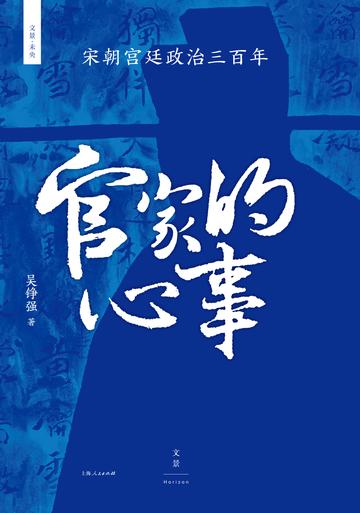
Palace intrigue ran throughout the history of Chinese imperial politics. Whether during the unified eras of the Qin and Han, Sui and Tang, and Ming and Qing dynasties, or during the periods of division, including the Three Kingdoms, Sixteen Kingdoms, Northern and Southern Dynasties, and Ten Kingdoms, each was marked by endless and brutal palace struggles. Yet in historical accounts, Song dynasty court politics seems like a refreshing exception, held up as a model of imperial rule in which brothers were respectful, husbands and wives harmonious, fathers kind, sons filial, rulers wise, and ministers virtuous.
Was it really so? Taking court politics as its lens, this book examines key events that have long sparked debate over political struggles in the Song court, such as the Chenqiao Mutiny, the Axe Sound and Candle Shadows, the Chanyuan Treaty, and the Shaoxi Coup. Breaking free from established conclusions, it seeks clues in historical sources that have not been obscured or embellished, reconstructing the shifting tides of power in the Song court and uncovering as much of the truth behind the court struggles of the Northern and Southern Song as possible. The book divides Song political history into four periods: the reigns of emperors, empress dowagers, retired emperors, and powerful ministers. It reveals the complex factional conflicts at the centers of political power in each period and their influence on the course of history, offering another perspective on the history of the Song dynasty.


There are a lot of historical materials, but the author puts too much trust in unofficial history. He believes that official history has imperial power intervention, and he needs to use unofficial history to restore "real history". But in fact, it has been written as a "collection of conspiracy theories of the Song Dynasty". If the author had not quoted historical data, it would be basically the same as a book like the Bermuda Triangle and Unsolved Mysteries.
This book is very interesting! It allows us to see that the court politics of the Song Dynasty were not as harmonious as they appeared, and there were many power struggles. The author's analysis is very thorough and gave me a deeper understanding of the history of the Song Dynasty. I think this book is a good book worth reading for people who like history.