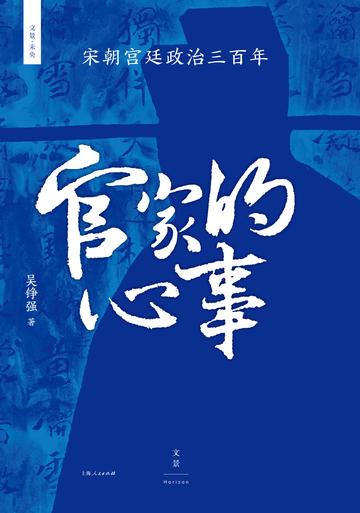
Court struggles run through the entire history of Chinese monarchy. Regardless of the unified period of Qin, Han, Sui, Tang, Ming and Qing, or the split period of the Three Kingdoms, Sixteen Kingdoms, Southern and Northern Dynasties, Ten Kingdoms, etc., All have experienced endless and cruel palace struggles. However, in the historical narrative, the court politics of the Song Dynasty is like a clean stream, and it has become a model of imperial politics in which brothers and sisters are respectful to each other, husbands and wives follow, fathers are kind and sons are filial, and the king is saintly and the ministers are virtuous.
Is this really the case? Through the perspective of court politics, this book focuses on the controversial key events in the court political struggles of the Song Dynasty, such as the Chenqiao Mutiny, the Shadow of the Ax and the Candle, the Chanyuan Alliance, the Shaoxi Coup, etc., Breaking away from the shackles of existing conclusions, trying to find clues that have not been obscured and beautified from historical materials, restore the gathering and dispersion of political power in the Song Dynasty, and explore the truth of the court struggle between the two Song Dynasties to the maximum extent. The book divides the political history of the Song Dynasty into four periods: the emperor, the empress dowager, the supreme emperor and the prime minister, revealing the complicated factional struggles in the political power center of the Song Dynasty in different periods and their impact on the historical direction, and understanding the history of the Song Dynasty from another perspective.
Reader comments
This book is very interesting! It allows us to see that the court politics of the Song Dynasty were not as harmonious as they appeared, and there were many power struggles. The author's analysis is very thorough and gave me a deeper understanding of the history of the Song Dynasty. I think this book is a good book worth reading for people who like history.

This book is very interesting! It allows us to see that the court politics of the Song Dynasty were not as harmonious as they appeared, and there were many power struggles. The author's analysis is very thorough and gave me a deeper understanding of the history of the Song Dynasty. I think this book is a good book worth reading for people who like history.