Including: four generations living under one roof, Luotuo Xiangzi, Zhenghong Banner, and teahouse.
"Four Generations Under One Roof" is divided into three parts: "Confusion", "Stealing Life" and "Famine", with nearly one million words. It is the longest work among Lao She's works. It is also the work that took the longest time to write, took the most energy and the most difficult completion process.
The work is set in the occupied area of Peiping during the Anti-Japanese War, with the life of the four generations of the Qi family living under one roof as the main line. It vividly and vividly depicts the humiliation, torture and suffering of people from all walks of life and all kinds of people, represented by the residents of Xiaoyangquan Hutong, and the process of their gradual awakening and struggle to resist. It praises their valuable national integrity as well as the Chinese nation's unyielding will to fight and determination to resist the war.
"Camel Xiangzi" tells the tragic story of Xiangzi, a rickshaw driver in the old city of Beiping, China. The profound realism of this novel lies in the fact that it not only describes the material deprivation of Xiangzi caused by the harsh living environment, but also depicts Xiangzi's spiritual decadence after his life ideals were destroyed.
"Under the Red Flag" is the posthumous work of Lao She's unfinished autobiographical novel, with a total of eleven chapters and one hundred and sixty-four pages in manuscript. On August 24, 1966, Lao She drowned himself in Taiping Lake in Beijing. This work and his life came to an abrupt end.
Lao She is a bannerman and belongs to the "Zhenghong Banner" of the "Eight Banners of Manchuria", which is also the origin of the title of the book. Lao She started writing from his birth, which was the end of the Qing Dynasty, when society was in turmoil and people's livelihood was in decline. Seeing the decline of the Qing Dynasty, the pampered disciples of the Eight Banners were also struggling... With the rise of the Boxer Rebellion and the arrival of foreigners, the peaceful life of Beijing people was broken. Each character came to life in Lao She's writings: the honest father, the kind and upright shopkeeper Wang, the mean aunt, the smart and capable second brother Fuhai, the arrogant Pastor Niu... These people of the Qing Dynasty who were in the turbulent history have all moved towards different fates...
"Teahouse" shows the social changes of nearly half a century in three periods: the Reform Movement of 1898, the warlord war, and the eve of the founding of New China. Through a teahouse, it reveals the darkness, corruption, weirdness, and all living beings in Chinese society in the past half century. There are nearly 50 characters appearing, all with distinct personalities. The dismal management of "Yutai Tea House" by owner Wang Lifa reflects the trend of Chinese society from the side.
Reader comments
Wow, these four classic novels by Lao She are so wonderful! "Four Generations Under One House" reminds me of "War and Peace", which both use war as the background and depict people's lives and destiny. I especially like Mrs. Qi in the book. His tenacity and optimism are admirable. Xiangzi in "Camel Xiangzi" made me love and pity him. His fate reminded me of Jean Valjean in "Les Misérables". Lao She's writing is really vivid, making me feel like I'm in Peiping of that era. "Under the Red Flag" and "Teahouse" are also wonderful. These works gave me a deeper understanding of Chinese history and society. You must read it, I believe you will also be impressed by Lao She's talent!
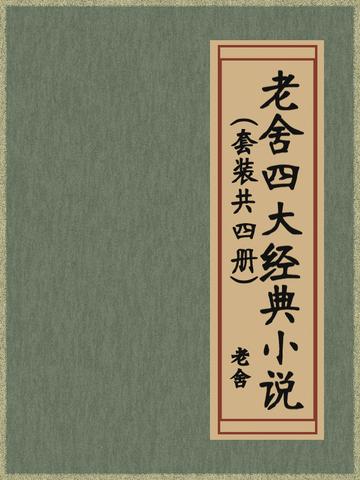
Wow, these four classic novels by Lao She are so wonderful! "Four Generations Under One House" reminds me of "War and Peace", which both use war as the background and depict people's lives and destiny. I especially like Mrs. Qi in the book. His tenacity and optimism are admirable. Xiangzi in "Camel Xiangzi" made me love and pity him. His fate reminded me of Jean Valjean in "Les Misérables". Lao She's writing is really vivid, making me feel like I'm in Peiping of that era. "Under the Red Flag" and "Teahouse" are also wonderful. These works gave me a deeper understanding of Chinese history and society. You must read it, I believe you will also be impressed by Lao She's talent!
Well written, very beautiful
Awesome, super nice
Super exciting.