The third work in Xu Hui's "100 Words" series.
As the saying goes, it grows from the ancient Chinese land. In the common sayings that have been passed down orally for thousands of years, how much of the firewood, rice, oil, salt, flowers before and under the moon are sealed that were once fresh and tangible? How much worldly wisdom, warmth and warmth of the world flow in the street talk after dinner? How come they have been kneaded, pinched, beaten and beaten by time, and are still exuding extensive vitality even today?
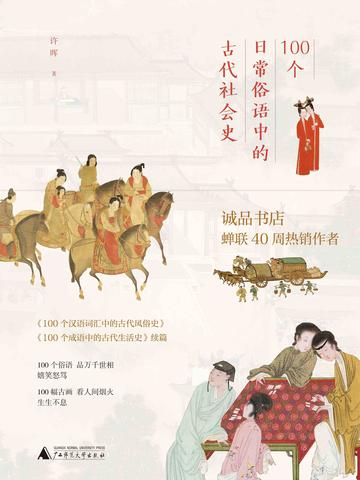
"Ancient Social History in 100 Common Sayings" traces the origins of common sayings and explores ancient social life that may be little known today. From Wu Di's children selling "dementia" in the New Year, to the lively image of "red mouth and white teeth" telling lies, from the simple truth that "five poisons" are actually good medicine, to "seeing ghosts in the day" turns out to be a reference to Qingshui Yamen. Then I realized... And among the 100 selected ancient paintings that correspond one-to-one with 100 common sayings and complement each other's meanings, vulgarity and elegance, Lower Riba people and the white snow in spring are blended together, opening up the realm of beauty for the living language.
Reader comments
This book is very interesting! The author allows us to understand many aspects of ancient society through the study of daily idioms. It is also accompanied by ancient paintings, which is really suitable for both refined and popular tastes. I especially like the explanation of the origins of the common sayings in the book. For example, the meaning of "seeing ghosts in the day" turns out to be Qingshui Yamen, which gave me a lot of knowledge. There are just some characters that are quite annoying, such as those who love to tell lies. But overall, this is a very interesting book, and I recommend you read it!
This book is very interesting! The author allows us to understand many aspects of ancient society through the study of daily idioms. It is also accompanied by ancient paintings, which is really suitable for both refined and popular tastes. I especially like the explanation of the origins of the common sayings in the book. For example, the meaning of "seeing ghosts in the day" turns out to be Qingshui Yamen, which gave me a lot of knowledge. There are just some characters that are quite annoying, such as those who love to tell lies. But overall, this is a very interesting book, and I recommend you read it!