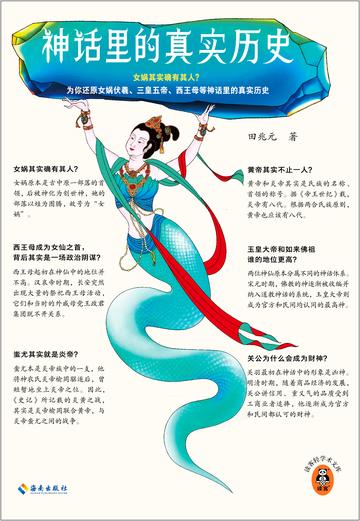
Did Nüwa really exist? Who ranks higher, the Jade Emperor or the Buddha? Open this book to uncover the real history behind the myths of Nüwa and Fuxi, the Three Sovereigns and Five Emperors, the Queen Mother of the West, and more!
A representative work by Tian Zhaoyuan, principal investigator of the National Social Science Fund project “A History of the Development of Chinese Mythology” and professor of folklore at East China Normal University. It offers a systematic account of the origins and evolution of Chinese mythology.
Behind the Chinese myths we’ve heard since childhood lie important historical realities: political conflicts, religious clashes, and social change!
Understand the intricate structure and traditions of Chinese mythology in one book: creation myths, national myths, political myths, occupational myths, religious myths, ethnic myths…
Includes 38 illustrations offering a vivid look at how mythological figures evolved over the centuries into the forms we know today.
Open this book and uncover the real history behind the myths of Nüwa and Fuxi, the Three Sovereigns and Five Emperors, the Queen Mother of the West, and more!
• Did Nüwa really exist?
Nüwa was originally the leader of a tribe in the ancient Central Plains. She was later deified as a creator god. Her tribe’s totem was the frog, hence the name Nüwa.
• Who ranks higher, the Jade Emperor or the Buddha?
The two deities originally belonged to different mythological systems. During the Song and Yuan dynasties, Buddhist gods were gradually incorporated into the Taoist mythological system, and the Jade Emperor came to be recognized as the supreme deity by both the state and the people.
• Was the rise of the Queen Mother of the West’s worship actually the result of a political conspiracy?
The Queen Mother of the West initially held a relatively low rank among the immortals. During the reign of Emperor Ai of Han, large-scale ceremonies honoring her suddenly appeared in Chang’an. The Wang Zhengjun clan, the powerful maternal relatives of the imperial family at the time, had much to do with it.
…
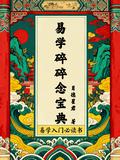
This book is really interesting! It interprets the history behind Chinese mythology in an easy-to-understand way, and gave me a new understanding of mythical figures such as Nuwa and the Jade Emperor. Moreover, the ideas in the book are very novel. For example, it was mentioned that the rise of the worship of the Queen Mother of the West may be a political conspiracy, which opened my eyes. I think this book is not only suitable for people who are interested in Chinese mythology, but can also provide new perspectives for people who study history, culture and other fields.