This book is the first release of "The Complete Works of Aristophanes" re-translated and newly launched by Professor Liu Xiaofeng. The complete collection includes 11 existing comedies by Aristophanes and is planned to be released within two to three years. Each book is published in a single line and is not large in length. The format is designed to be small in 32 pages, suitable for carrying around, turning classics from "big bricks" into "little cutes", and entering everyone's pockets from libraries, so that everyone can rub shoulders with classics and nourish their mind. This "Fortune" is actually the last work of Aristophanes. The story tells the story of an ordinary farmer who, for personal purposes, went to the sun god Apollo to ask what kind of lifestyle his son should choose, because he discovered that living a just life would make him poorer and poorer, while an unjust life would make him richer and richer. The oracle indicated that he should closely follow the person he met outside the temple and take him home. The farmer followed the literal meaning of the oracle and brought home the first blind beggar he met, only to find that the beggar was the God of Wealth... At the end of the story, the God of Wealth who restored his eyesight did not make all the righteous people rich, but made all the poor rich. However, some poor people also lived a lazy life of doing nothing after they became rich, and social order and ethics have not been well improved. In short, although the farmer succeeds at the end of the script, it actually confirms the God of Wealth's point of view: it is difficult to have both wealth and justice; it also proves the warning of the God of Poverty in the story: poverty (or lack) is the driving force for creating social wealth. This edition of "The God of Wealth" is translated by Huang Weiwei. Based on the plot, the translator roughly divided the content of the ten scenes (divided into five parts) with "the God of Wealth being healed" as the turning point, and gave section titles in each scene to present the clear structure and program of the original play.
Reader comments
"God of Wealth" is a very interesting book. It tells the story of an ordinary farmer who went to Apollo, the sun god, to ask what kind of lifestyle his son should choose. The oracle of Apollo told him to follow the first person he met home after leaving the temple. The farmer did so, only to meet a blind beggar, the God of Wealth himself. After the God of Wealth regained his sight, he did not make the righteous rich, but made all the poor rich. However, some poor people also live a lazy life of doing nothing after becoming rich, and social order and ethics have not been improved well. This book tells us that wealth and justice are difficult to have at the same time, and it also proves that poverty is the driving force for creating social wealth. I found this book very enlightening and made me think about many issues about wealth, justice and life.
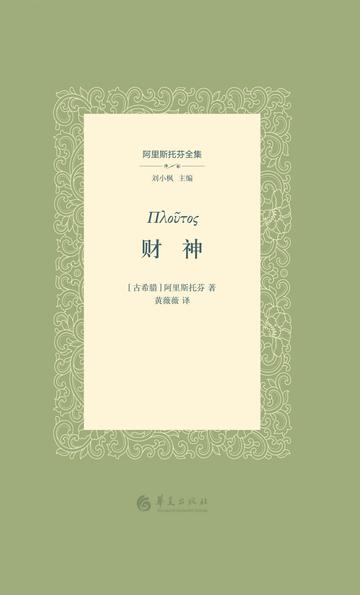





"God of Wealth" is a very interesting book. It tells the story of an ordinary farmer who went to Apollo, the sun god, to ask what kind of lifestyle his son should choose. The oracle of Apollo told him to follow the first person he met home after leaving the temple. The farmer did so, only to meet a blind beggar, the God of Wealth himself. After the God of Wealth regained his sight, he did not make the righteous rich, but made all the poor rich. However, some poor people also live a lazy life of doing nothing after becoming rich, and social order and ethics have not been improved well. This book tells us that wealth and justice are difficult to have at the same time, and it also proves that poverty is the driving force for creating social wealth. I found this book very enlightening and made me think about many issues about wealth, justice and life.