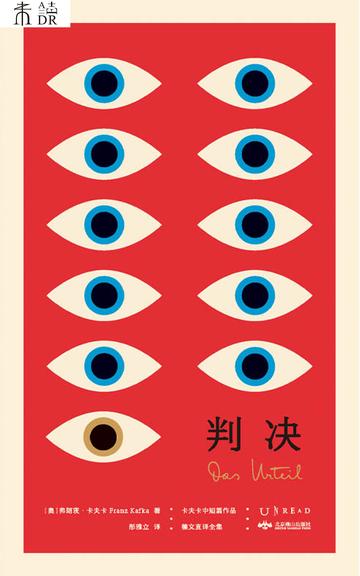
The Verdict (Complete German Translations of Kafka's Short and Medium Stories)
判决(卡夫卡中短篇作品德文直译全集)
- Status
- Completed
- Length
- 29k Words
- Updated
- 2y ago
- Source
- Fanqie
Stats
96Reads
8.6Score
5Chapters
4Listens
5.1kReads · all time
Tags
Synopsis
Reader comments
In booklists 3


Literary Masterpiece, (ㆁωㆁ)
84.9MViews562Books2dUpdated
A Must-Read for Chinese Language and Literature Majors
Are there any books that can actually help improve your writing and expression skills?
4.9MViews619Books2dUpdated
Literature Books, I Want Literature Books! ! !
Family members, I want to read literature books, books that can improve my writing skills or increase my knowledge. Beg on your knees!
3.2MViews764Books1dUpdated
Kafka spent one night writing the book The Judgment, and I also spent one night reading the book. The first half of the book is about the verdict and the second half is about the stoker (a fragment). The verdict tells the story of a strong father who denied and questioned his son in all kinds of ways. In the end, the father issued a verdict against his son's sense of freedom, "I sentence you to jump into the river and die." This may reflect the actions of Kafka's strong father in reality. We should also note that many of Kafka's books tend to be absurd realism, such as the father's sudden accusations and denials and the protagonist's sudden obedience and suicide. These are all a kind of absurdity, sudden and without reason. It is absurd from the beginning, just like the beginning of Metamorphosis, Gregor turns into a beetle. In reality, it reflects the control-driven paternalists. They are proud and indulgent, take away what they control, and always think they are right. Kafka created such paternalists. In fact, it is not a real life, but an abstract parent, which we face in real life. People like this, what we should not do is blindly obey. I hope this book will be helpful to people who face similar parents in their lives. I don't know how to describe the second half of the stoker, because I didn't understand it very well, but it does have an absurd color. For example, the protagonist (forgot his name) initially went to find the captain with the stoker and confronted him. Everyone dismissed him, but then the protagonist suddenly got the approval of the senator and found that the senator turned out to be The protagonist's uncle, if this change of identity causes other people's attitudes to suddenly change, this may reflect the sense of absurd reality, which means that if you have no identity, others will look down on you, but if you have status, others will look up to you. What is so absurd? I think it is that the protagonist suddenly gained the identity of the senator's nephew. That's all I can see. Overall, it looks good. The Kafka chronology at the end says that The Judgment is a work that established Kafka's writing style. If you want to read this type of book, you can try it.
Georg is an egotistical and conceited person, always trying to act as the perfect object in the eyes of others and organizing a self-narrative that hypnotizes him. To his friends, he actually didn't want them to enter his life, so he kept writing meaningless things to fool him. At this time, he convinced himself that his happiness would sting him. Faced with his wife's hope, he convinced himself, "I am this kind of person, so he has to accept me as I am." Obviously, he did not want his friends to attend the wedding, but as a good friend, he could not do this, so he came to his father, hoping that his father would give him the "correct" answer he wanted, because his father was not optimistic about his marriage. He acted filial and obedient to his father, even though he had not visited him for several months. He temporarily changed his mind and wanted to move his father to a new house, even though the article mentioned that it was too late to take care of his father after moving into the new house. What kind of person should a father be? In Georg's eyes, his father was a frail old man with poor health at the beginning, so he would be surprised that he could not put his father on the bed immediately, and was horrified by the image of his father standing on the bed staring at the ceiling. The so-called "covering the quilt" is Georg Georg's self-world covered reality, and the majestic and funny appearance of his father at this time exceeded Georg's cognition, causing his self-world to collapse immediately, and he blurted out "What a comedian." This was not what his filial son should say, so he realized that he had said the wrong thing. The father wrote the letter because Georg forgot to take away the pen he was carrying. On the other hand, since there are things that he forgot to take away, there will naturally be things that have been taken away. Although there is no specific description of what they are, you can get a glimpse of it from the description of his father's room. There is a beautiful and warm world outside, but my father's room is dark and heavy. Georg thought that by placing his father in this dark corner, he could start a new life without any worries, but his father had been writing letters to his friends for a long time, and the lies he had carefully crafted for his inaction were exposed. His father said: "You can clearly see with your eyes!" "Now you know what else besides yourself, until now you only know yourself! You are an innocent child, but in a more fundamental sense, you are a devil!" This sentence is not only what his father said to Georg, but also the imbalance between Georg's id and superego, and the collapse of Georg's personality. At this time, the man "Georg" was sentenced to death by drowning, and his empty shell carried out this order until the end, crying out that he loved them.
I particularly hated that father, whose sentences drove people crazy. However, the stories in the book also made me think, do we unconsciously make unfair judgments on others in our lives? "The Stoker" is also very exciting. I admire Carl's courage. This book allowed me to see the complexity of human nature and is worth reading again and again.
Self-centered people only see that they have never seen the real people around them being sentenced to death by people who once suppressed them but now think they are no threat to them. The person who killed him and judged him was definitely not just his weakened father, but his true self who finally saw that hypocritical self.