We think we are maturing, but in fact we are just fine.
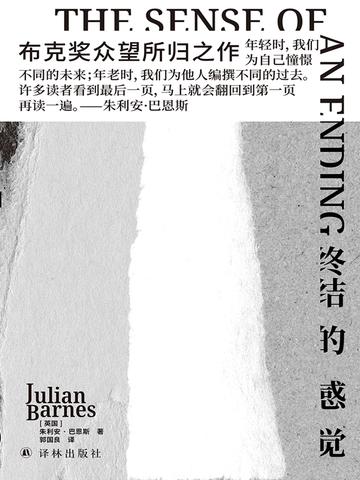
Middle-aged Tony is very satisfied with his life. He had a career, was married, maintained a good relationship with his ex-wife and daughter, and never tried to hurt anyone else. However, a will from the mother of his old girlfriend shattered all this, forcing Tony to re-explore the mysteries of his youth, and the memories he once believed in became full of doubts.
He could sense an ending coming, but the story was completely different.
Reader comments
This book is like a mysterious puzzle that makes people keep thinking while reading. Tony's life seemed perfect, but it was triggered by the will. The author's character creation is very delicate, especially Tony's doubts and explorations made me empathize with him. The plot of the story unfolds like a thread is peeling off a cocoon, and the ending is unexpected. What a wonderful novel!
For dozens of years, if someone really calms down and thinks about the end of life and the terrifying loneliness of being so small in the universe,
Most likely he will fall into madness or be completely defeated by a sense of nothingness. He may ask himself why he spends so much effort, why he has to work so hard to make a living while composing a symphony, or even why he has to love someone.
After all, we are just microorganisms on dust, fleeting in the vast universe. Those who are forced to view life from this perspective due to their sensitive nature, those who realize that existence has no preset meaning, and that meaning is so small in the galaxy that no one cares about it, are easily swallowed by ultimate anxiety.
And even for people who have only a vague understanding of the brevity of life, this subconscious awareness is quietly stripping away the meaning of life.
This is the source of most people's despair in peace, and why we feel that life and death are equally void.
The world's religions, with all their limitations, once provided an endoscope for this existential pain, but now clergy proclaim the death of God;
As Arnold said, the sea of faith ebbs with a long and pitiful roar, and mankind loses all support.
Even irrational hopes cannot be overcome. The impact caused by the recognition of the meaning of death is actually the root cause of mental illness far beyond the recognition of psychiatrists. If life is meaningless,
Do you still think it is worth living? It is precisely the meaninglessness of life that forces humans to create their own meaning. Children are born with untainted curiosity.
To experience pure joy from the life of a green leaf.
But as they grow up, their awareness of death and decay gradually invades their consciousness, quietly eroding their passion for life and
Idealism and an instinctive childhood belief in immortality.
When a person matures and sees death and pain everywhere, he begins to question the ultimate possibility of human nature being good.
But if he is tenacious and lucky enough, he can break out of the twilight of his soul and usher in the rebirth of his passion for life.
Because we are well aware of the meaninglessness of life, we can forge new beliefs in survival. We may not be able to regain the pure curiosity we had when we were born.
But it can build a more resilient and supportive meaning of life. The most frightening thing in the universe is not hostility.
But absolute indifference.
But if we can reconcile with this indifference and accept the challenges of life within the boundaries of death, no matter how humans define it, these boundaries will have real meaning as a species.
Even if the darkness is endless, we still need to be our own light.
From birth to death.
…? This author's style is really unified. The first half of the first-person narrative is a bland recollection of the past, which made me feel like I was watching Kazuo Ishiguro. However, Ishiguro's protagonists often deceive themselves and try their best to escape, and his writing style tends to be aesthetic. However, this author's protagonist is always thinking about problems and analyzing himself. The writing focuses on logic, and there is also a kind of cold humor. Is it a problem of translation? I feel that this kind of humor is quite advanced. The end of each book seems to have been cut in half. Every time I see the end, I can't believe it's really gone. I didn't understand what I really wanted to express. Overall, it's pretty good-looking.
A very good book😋, the contrast between the grand historical narrative and the personal micro-narrative, the double confirmation, the middle-class hypocrisy and Freudian repression of the protagonist, the dilemma of memory ethics and the foreshadowing that history is the survivor's self-narration and "the inaccessibility of the truth" constitute a great work. After reading the whole book, I really realized that not a single plot is redundant, and the greatness of existential philosophy😘
Queshi is good [like]
"History is actually the memory of those survivors. They are neither winners nor losers."
So, for example, if Tony hadn't sent me that letter
A very interesting book.
A very interesting short story, with several unexpected twists and turns.




This book is like a mysterious puzzle that makes people keep thinking while reading. Tony's life seemed perfect, but it was triggered by the will. The author's character creation is very delicate, especially Tony's doubts and explorations made me empathize with him. The plot of the story unfolds like a thread is peeling off a cocoon, and the ending is unexpected. What a wonderful novel!
For dozens of years, if someone really calms down and thinks about the end of life and the terrifying loneliness of being so small in the universe, Most likely he will fall into madness or be completely defeated by a sense of nothingness. He may ask himself why he spends so much effort, why he has to work so hard to make a living while composing a symphony, or even why he has to love someone. After all, we are just microorganisms on dust, fleeting in the vast universe. Those who are forced to view life from this perspective due to their sensitive nature, those who realize that existence has no preset meaning, and that meaning is so small in the galaxy that no one cares about it, are easily swallowed by ultimate anxiety. And even for people who have only a vague understanding of the brevity of life, this subconscious awareness is quietly stripping away the meaning of life. This is the source of most people's despair in peace, and why we feel that life and death are equally void. The world's religions, with all their limitations, once provided an endoscope for this existential pain, but now clergy proclaim the death of God; As Arnold said, the sea of faith ebbs with a long and pitiful roar, and mankind loses all support. Even irrational hopes cannot be overcome. The impact caused by the recognition of the meaning of death is actually the root cause of mental illness far beyond the recognition of psychiatrists. If life is meaningless, Do you still think it is worth living? It is precisely the meaninglessness of life that forces humans to create their own meaning. Children are born with untainted curiosity. To experience pure joy from the life of a green leaf. But as they grow up, their awareness of death and decay gradually invades their consciousness, quietly eroding their passion for life and Idealism and an instinctive childhood belief in immortality. When a person matures and sees death and pain everywhere, he begins to question the ultimate possibility of human nature being good. But if he is tenacious and lucky enough, he can break out of the twilight of his soul and usher in the rebirth of his passion for life. Because we are well aware of the meaninglessness of life, we can forge new beliefs in survival. We may not be able to regain the pure curiosity we had when we were born. But it can build a more resilient and supportive meaning of life. The most frightening thing in the universe is not hostility. But absolute indifference. But if we can reconcile with this indifference and accept the challenges of life within the boundaries of death, no matter how humans define it, these boundaries will have real meaning as a species. Even if the darkness is endless, we still need to be our own light. From birth to death.
…? This author's style is really unified. The first half of the first-person narrative is a bland recollection of the past, which made me feel like I was watching Kazuo Ishiguro. However, Ishiguro's protagonists often deceive themselves and try their best to escape, and his writing style tends to be aesthetic. However, this author's protagonist is always thinking about problems and analyzing himself. The writing focuses on logic, and there is also a kind of cold humor. Is it a problem of translation? I feel that this kind of humor is quite advanced. The end of each book seems to have been cut in half. Every time I see the end, I can't believe it's really gone. I didn't understand what I really wanted to express. Overall, it's pretty good-looking.
A very good book😋, the contrast between the grand historical narrative and the personal micro-narrative, the double confirmation, the middle-class hypocrisy and Freudian repression of the protagonist, the dilemma of memory ethics and the foreshadowing that history is the survivor's self-narration and "the inaccessibility of the truth" constitute a great work. After reading the whole book, I really realized that not a single plot is redundant, and the greatness of existential philosophy😘 Queshi is good [like]
"History is actually the memory of those survivors. They are neither winners nor losers."
So, for example, if Tony hadn't sent me that letter
A very interesting book.
A very interesting short story, with several unexpected twists and turns.