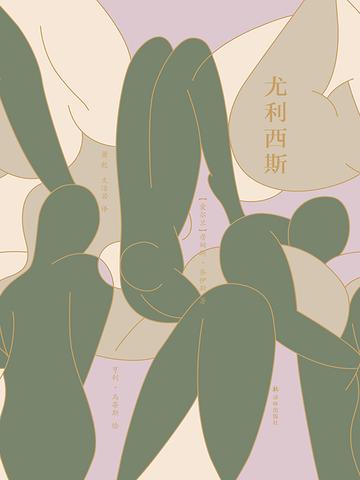
"Ulysses" takes chronological order and describes the lives of three ordinary Dubliners during the day and night on June 16, 1904. Joyce compared the protagonist Bloom's one-day wandering on the streets of Dublin to Odysseus' ten-year wandering overseas. By describing the events that happened to an ordinary person in one day, he portrayed people's senses, desires, words and deeds to the extreme, and used the technique of stream of consciousness to construct an intertwined and messy time and space, showing people a microcosm of human society. June 16th every year is designated as "Bloom's Day", which is the most important holiday in Ireland after the National Day.
Reader comments
After picking it up and putting it down within six years, I finally went from "laborious" to "free". When I first read it, I found it boring and the content was incoherent. It was so strenuous that I put it down. When I read it again, I felt that it was the writer's pretentiousness - Joyce was clearly showing off his literary skills on purpose, and everything was deliberately designed. It wasn't until the third time that I fully realized that it was Joyce's resistance to traditional realism. There was no need to understand it, as long as one was self-involved and allowed one's own consciousness to collide and merge with the subconscious in Joyce's writings, creating infinite free associations and abandoning all logical reasoning.
Everyone's inner world is a novel. It is as if you are in a world where groups of people gather without limit, and you feel the pain carried by each character. Accept these pains through feeling - because the human mind is always striving for eternity and perfection, while the human body is always struggling and trembling to bring out some beauty from its own darkness.
A day in the life of Stephen Dedalus and Bloom forms a holographic map of Dublin in 1904, among the "moveless figures" and "ghostly" beings. In the confusing language, we see people in the biological sense, but not in the human sense. Stephen's philosophy and Bloom's kindness are all fighting against mediocrity, and the soul seeks eternity. Molly's desire turns from the physical body into struggle, the rancid smell of the funeral, and the noise of the bar are "beautiful things brought out from the darkness."
Thanks to Xiao Qian and Wen Ruojie for their translation. Be interested every moment and be ready to accept anything; something unexpected will happen every moment. Even during the long and intense speech, which contains the most names of things, the reader remains interested. It is their translation that allows Chinese readers to enter this language maze without getting lost.
The final chapter is truly a carnival sonata that enters Dublin's collective consciousness. Joyce's description of the chattering, uninterrupted way of speaking makes people marvel and admire it - how can a man's head present a woman's thoughts so vividly? What he relies on is not to "simulate" Faulkner, but to let his consciousness break free from the syntactic prison. The chattering undercurrent is exactly the "human collective subconscious".
What is their civilization? Huge, I admit; but dirty. Sewage, sewer. The Jews went into the wilderness and climbed to the top of the mountain and said: This is a suitable place. Let us build an altar to the Lord. The Romans, like the English who followed them, were bent on sewage wherever they set foot on new shores (which never reached our shores). He was wrapped in a Roman robe, looked around and said: This is a suitable place. Let's build a toilet. ——The Romans and the British brought sewers, but the "appropriateness" that the Jew Bloom was looking for in the wilderness was a futile desire for a spiritual home.
Because I belong to this place called Ireland... And he said: There is no way we can change the country. Let's change the subject. ——Yes, change the subject. But after it, your view of the world has quietly changed - with Bloom's stomachache and Molly's breathing.
The plot and characters of this book really stood out to me! Joyce uses the technique of stream of consciousness to depict the protagonist Bloom's day in such a delicate and realistic way. I particularly like the character of Bloom. His wandering on the streets of Dublin made me feel the various aspects of ordinary people's lives. This book is like a kaleidoscope, allowing me to see the complexity of human nature and the colorfulness of society. In short, "Ulysses" is a good book worth reading again and again!
Wow, Liang Wendao and Wen Jieruo, all the famous people gathered together. This version is very good


After picking it up and putting it down within six years, I finally went from "laborious" to "free". When I first read it, I found it boring and the content was incoherent. It was so strenuous that I put it down. When I read it again, I felt that it was the writer's pretentiousness - Joyce was clearly showing off his literary skills on purpose, and everything was deliberately designed. It wasn't until the third time that I fully realized that it was Joyce's resistance to traditional realism. There was no need to understand it, as long as one was self-involved and allowed one's own consciousness to collide and merge with the subconscious in Joyce's writings, creating infinite free associations and abandoning all logical reasoning. Everyone's inner world is a novel. It is as if you are in a world where groups of people gather without limit, and you feel the pain carried by each character. Accept these pains through feeling - because the human mind is always striving for eternity and perfection, while the human body is always struggling and trembling to bring out some beauty from its own darkness. A day in the life of Stephen Dedalus and Bloom forms a holographic map of Dublin in 1904, among the "moveless figures" and "ghostly" beings. In the confusing language, we see people in the biological sense, but not in the human sense. Stephen's philosophy and Bloom's kindness are all fighting against mediocrity, and the soul seeks eternity. Molly's desire turns from the physical body into struggle, the rancid smell of the funeral, and the noise of the bar are "beautiful things brought out from the darkness." Thanks to Xiao Qian and Wen Ruojie for their translation. Be interested every moment and be ready to accept anything; something unexpected will happen every moment. Even during the long and intense speech, which contains the most names of things, the reader remains interested. It is their translation that allows Chinese readers to enter this language maze without getting lost. The final chapter is truly a carnival sonata that enters Dublin's collective consciousness. Joyce's description of the chattering, uninterrupted way of speaking makes people marvel and admire it - how can a man's head present a woman's thoughts so vividly? What he relies on is not to "simulate" Faulkner, but to let his consciousness break free from the syntactic prison. The chattering undercurrent is exactly the "human collective subconscious". What is their civilization? Huge, I admit; but dirty. Sewage, sewer. The Jews went into the wilderness and climbed to the top of the mountain and said: This is a suitable place. Let us build an altar to the Lord. The Romans, like the English who followed them, were bent on sewage wherever they set foot on new shores (which never reached our shores). He was wrapped in a Roman robe, looked around and said: This is a suitable place. Let's build a toilet. ——The Romans and the British brought sewers, but the "appropriateness" that the Jew Bloom was looking for in the wilderness was a futile desire for a spiritual home. Because I belong to this place called Ireland... And he said: There is no way we can change the country. Let's change the subject. ——Yes, change the subject. But after it, your view of the world has quietly changed - with Bloom's stomachache and Molly's breathing.
The plot and characters of this book really stood out to me! Joyce uses the technique of stream of consciousness to depict the protagonist Bloom's day in such a delicate and realistic way. I particularly like the character of Bloom. His wandering on the streets of Dublin made me feel the various aspects of ordinary people's lives. This book is like a kaleidoscope, allowing me to see the complexity of human nature and the colorfulness of society. In short, "Ulysses" is a good book worth reading again and again!
Wow, Liang Wendao and Wen Jieruo, all the famous people gathered together. This version is very good