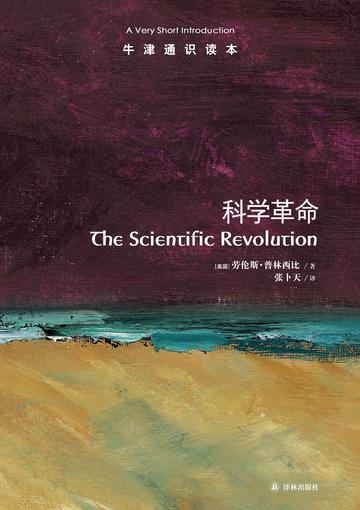
In the 16th and 17th centuries, people began to enthusiastically explore the natural world, which was the period of the "Scientific Revolution". Either out of religious fervor, out of practical needs, out of the prospect of fame and fortune, or simply out of a desire for knowledge, thinkers and doers of all kinds explored and re-examined the world around them. Copernicus, Galileo, Newton, the most dazzling stars in the entire history of human science, and many other names that are less famous but equally important, have been constantly given, discarded, and given various explanation systems.
In this minimalist introduction, Laurence Principe explores the exciting innovations and developments in the fields of astronomy, earth science, the sciences of matter and motion, and the life sciences during the Scientific Revolution. In the narrative, the author adopts the perspective of the historical figures themselves, highlighting their background, environment, reasoning and motives, and breaking through all kinds of obsolete fog in the history of science.
Reader comments
I especially like the descriptions of the great scientists in the book, their stories are really fascinating. Moreover, the author uses the perspective of historical figures to narrate, which makes me feel as if I am immersed in the scene and feel their thinking and exploration process. Recommended to anyone interested in science!
The content of this book is very interesting and interesting. Different from history, physics textbooks, etc. For example, the discussions of Copernicus, Galileo, Newton and others allow us to view their images from different perspectives.



I especially like the descriptions of the great scientists in the book, their stories are really fascinating. Moreover, the author uses the perspective of historical figures to narrate, which makes me feel as if I am immersed in the scene and feel their thinking and exploration process. Recommended to anyone interested in science!
The content of this book is very interesting and interesting. Different from history, physics textbooks, etc. For example, the discussions of Copernicus, Galileo, Newton and others allow us to view their images from different perspectives.