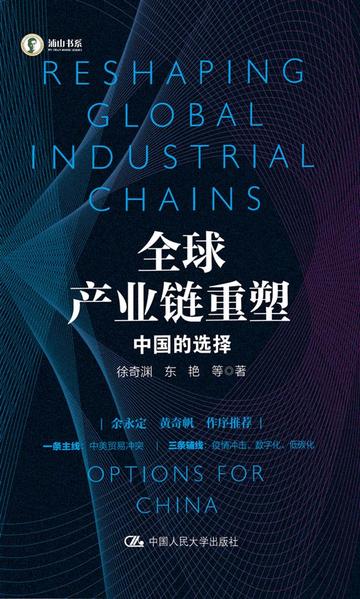
In the process of reshaping the global industrial chain, my country faces challenges such as interception in the front, pursuit in the back, swaying countries in the middle, and internal transformation difficulties. At the same time, the global balance of power is rising in the east and falling in the west. My country's domestic ultra-large-scale market advantages are highlighted and industrial upgrading is gaining momentum. As a result, my country's hub position in the global industrial chain has been further strengthened. Against this background, how can my country leverage its strengths and avoid its weaknesses, reshape its competitiveness and open up new development space in the restructuring of the global industrial chain?
In order to answer this question, this book takes the Sino-US trade conflict as the main line of analysis, and also takes the impact of the epidemic, digitalization, and low-carbonization as three auxiliary lines. On this basis, the binary paradox between the international competitiveness of the industrial chain and complete autonomy and control is theoretically extracted, and a series of policy and practice discussions with practical significance are conducted.
This book is the research result of the Shanghai Pushan New Financial Development Foundation's project "Global Industrial Chain Restructuring and China's Response."