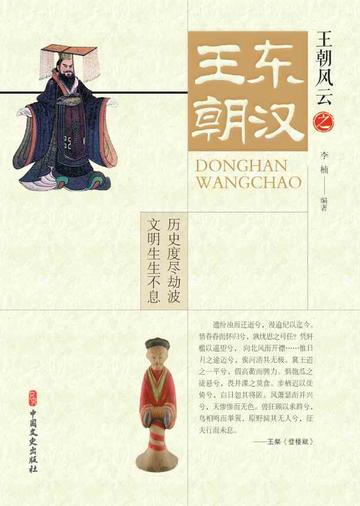
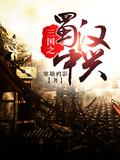
This book tells the historical story of the entire Eastern Han Dynasty from the time when Liu Xiu proclaimed himself emperor in 25 AD to when Emperor Xian of Han abdicated the throne in 220 AD.
Emperor Guangwu, Liu Xiutai, was a bachelor. At the beginning of the founding of the People's Republic of China, he retired from the service and became a civil servant. He used a large number of Confucian scholars to assist the government. Confucianism flourished during the Eastern Han Dynasty.
Beginning with Emperor Liu Zhao, relatives and eunuchs disrupted the government, causing social unrest and the Yellow Turban Rebellion broke out.
After that, Dong Zhuo, Yuan Shao, Yuan Shu, Cao Cao, Liu Biao and other heroes came together, and the Eastern Han Dynasty regime seemed to be swaying in the wind and rain.
In 196, Cao Cao "took the emperor to order the princes" in Xuchang. The Eastern Han Dynasty existed in name only, and history gradually transitioned to the Three Kingdoms period.
Reader comments
The politics of the Eastern Han Dynasty were characterized by the interference of foreign relatives and eunuchs in politics. In addition, most emperors were young in their reign, which resulted in the weakening of imperial power. The history of the Eastern Han Dynasty does not seem to have many exciting aspects. Except for the founding of the country by Emperor Guangwu Liu Xiu in the early period, the Zhangjiao Yellow Turban Uprising and the warlords' struggle for supremacy in the later period. These major events may attract readers more. Although there is nothing to talk about the history of the Eastern Han Dynasty, the culture and science and technology of the Eastern Han Dynasty have been developed. Cai Lun improved papermaking, Zhang Heng invented the seismometer and armillary sphere, in mathematics "Nine Chapters of Arithmetic", in medicine Zhang Zhongjing's "Treatise on Febrile and Miscellaneous Diseases" and Hua Tuo's Ma Fei San, Wu Qin Xi, etc. These achievements in science, medicine, and mathematics have a profound impact on later generations. In literature, there are many masters of Han Fu and calligraphy. The Eastern Han Dynasty also strengthened exchanges and connections with the countries in the Western Regions, eliminated the threat of the Huns, and the Silk Road developed better.
This book is like a long historical scroll, vividly showing the rise and fall of the Eastern Han Dynasty. Reading is like watching a play, with various characters taking turns appearing on the stage of history. It reminds me of "The Romance of the Three Kingdoms", which is also an era of heroes and changes. And you can also learn a lot of historical knowledge from the book! It feels like having a conversation across time and space with the ancients. I plan to recommend this set of books to my brother who is a history buff. He will definitely like it.
The politics of the Eastern Han Dynasty were characterized by the interference of foreign relatives and eunuchs in politics. In addition, most emperors were young in their reign, which resulted in the weakening of imperial power. The history of the Eastern Han Dynasty does not seem to have many exciting aspects. Except for the founding of the country by Emperor Guangwu Liu Xiu in the early period, the Zhangjiao Yellow Turban Uprising and the warlords' struggle for supremacy in the later period. These major events may attract readers more. Although there is nothing to talk about the history of the Eastern Han Dynasty, the culture and science and technology of the Eastern Han Dynasty have been developed. Cai Lun improved papermaking, Zhang Heng invented the seismometer and armillary sphere, in mathematics "Nine Chapters of Arithmetic", in medicine Zhang Zhongjing's "Treatise on Febrile and Miscellaneous Diseases" and Hua Tuo's Ma Fei San, Wu Qin Xi, etc. These achievements in science, medicine, and mathematics have a profound impact on later generations. In literature, there are many masters of Han Fu and calligraphy. The Eastern Han Dynasty also strengthened exchanges and connections with the countries in the Western Regions, eliminated the threat of the Huns, and the Silk Road developed better.
This book is like a long historical scroll, vividly showing the rise and fall of the Eastern Han Dynasty. Reading is like watching a play, with various characters taking turns appearing on the stage of history. It reminds me of "The Romance of the Three Kingdoms", which is also an era of heroes and changes. And you can also learn a lot of historical knowledge from the book! It feels like having a conversation across time and space with the ancients. I plan to recommend this set of books to my brother who is a history buff. He will definitely like it.
Just be close to the historical facts