Will the scholar encounter a gentle, virtuous fox immortal, or a fox demon that feeds on human essence and blood?
A beautiful woman who seems to be offering herself to you may actually be a ghost out to take your life!
Immortals, spirits, ghosts, and strange beings feature in one fascinating tale after another in Strange Tales from a Chinese Studio. It turns out they, too, experience joy and anger, sorrow and happiness, partings and reunions.
Are these stories mere illusions, or do they speak of the real world's descent into ruin? They tell of ghosts and monsters, but are they really talking about reality?
Illusion or truth?
In his preface to Strange Tales from a Chinese Studio, the Old Master Pu lamented, “Those who understand me, perhaps they are among the green woods and dark beyond!” If the Old Master Pu could know what happened after his death, he would realize that those who understand him are now spread across the whole world.
By chance, I bought a copy of Strange Tales from a Chinese Studio with no annotations or translation. I hadn't read classical Chinese in a long time, and honestly, reading this unabridged original was pretty exhausting.
But I'd already bought the book, so I had no choice but to grit my teeth and keep reading. To make sure I finished it, I came up with the harebrained idea of translating as I read. And since I'd translated it anyway, I figured I might as well post it somewhere for more people to see. So here it is.
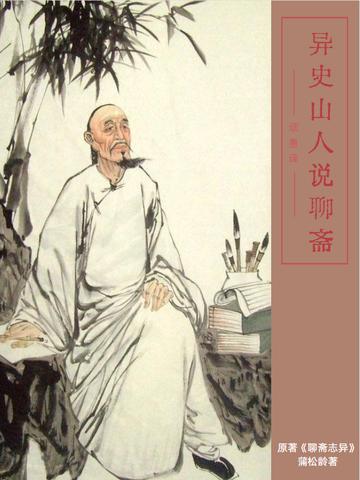
When I went to post the novel, I found that the submission form required the protagonist's name. But Strange Tales from a Chinese Studio is a collection of short stories, so what protagonist? The Old Master Pu referred to himself in the book as the Historian of the Uncanny. Clever as I am, inspiration struck, and I entered Yi Shi Shan Ren as the protagonist's name. Once I'd filled that in, he obviously had to appear in the story, so I came up with the framing device of Yi Shi Shan Ren telling these fantastical tales. I hope my dear readers don't mind.
I have read Mr. Songling's Strange Stories from a Chinese Studio and loved it over and over again. The author used Mr. Songling's skeleton, added words from today's society, and paired it with the cute little monk, creating a warm scene of a master leading his apprentice. It is slowly warm and mixed with the compactness of the story. It is really realistic. It is one of the better works in this article, and you can read it again and again. Mr. Songling's story, looking at today, is still brilliant. Human nature will always exist. No matter how the times change, there is the glory of human nature, and there is also the ugliness of human nature. It remains unchanged from ancient times, just like what Teacher Luo Xiang said about human nature. It coincides with each other.
Liaozhai is restored. Very pretty.
This story is fascinating and I love it.