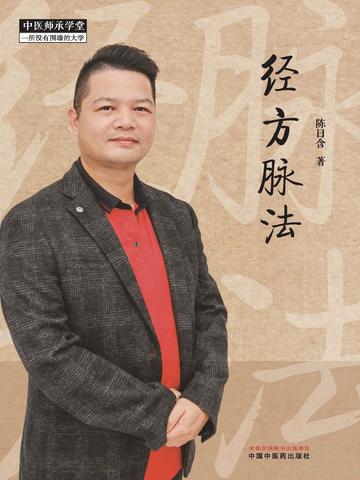
This book advocates that traditional Chinese medicine attaches great importance to pulse diagnosis. It takes "distinguish... Disease pulses" as the outline of the outline of "Treatise on Febrile Diseases" such as "Distinguish Taiyang Disease Pulse Syndrome and Treat..." And so on. The interpretation starts from pulse diagnosis and returns to the origin of "Treatise on Febrile Diseases". Based on clinical practice, this paper summarizes the "eight principles and six meridians method" to interpret the "six meridians syndrome differentiation" of "Treatise on Febrile Diseases". He created the "Macro Pulse Diagram" and "Micro Pulse Diagram" of the "Eight Gangs and Six Meridians Method" to interpret the square pulses in "Treatise on Febrile Diseases". Classification is carried out with the "Eight Cardinal Guides and Six Classics" as the outline and the "Jingfang" as the heading. The macroscopic pulse pattern is used to differentiate the eight cardinal principles and six meridians of "Treatise on Febrile Diseases", and the microscopic pulse pattern is used to identify the cause, pathogenesis, qi, blood, yin and yang, pathological decoction, etiology, and pathology of "Treatise on Febrile Diseases" for prescription syndrome differentiation and disease diagnosis. In order to achieve the diagnosis and treatment scene of "diagnosing the pulse and knowing the disease" and "one pulse and one side". The book provides detailed pulse diagnosis and interpretation for each commonly used "Jing Fang" under the classification of the six meridians, and decomposes the internal pulse connotation of the "Jing Fang". Readers can have an in-depth understanding of the pathogenesis and composition of the "Jing Fang" based on the pulse, and can make flexible decisions based on the similarities and differences of different "pulse conditions". Achieve "clarification at the fingertips and understanding in the heart".
Reader comments
The microscopic pulse method is too difficult to learn [crying]. I waited quietly for a long time and didn't feel anything except cold and heat. It is easier to identify the six diseases by using the Yingqi mouth pulse method, and together with the symptoms, it is easier to compare and judge the prescriptions and syndromes.
By the way, the pictures in Tomato's book are in color, which is better than the physical book.
This book is very interesting! It emphasizes the importance of pulse diagnosis in traditional Chinese medicine and uses the "Eight Cardinal Links and Six Meridians Method" to interpret "Treatise on Febrile Diseases", which is quite innovative. I like the detailed pulse diagnosis interpretation of commonly used "Jingfang" in the book, which gives people a deeper understanding of "Jingfang". However, I don't like some of the overly theoretical content. It would be nice if there were more practical examples. Overall, this is a Chinese medicine book worth reading.



The microscopic pulse method is too difficult to learn [crying]. I waited quietly for a long time and didn't feel anything except cold and heat. It is easier to identify the six diseases by using the Yingqi mouth pulse method, and together with the symptoms, it is easier to compare and judge the prescriptions and syndromes. By the way, the pictures in Tomato's book are in color, which is better than the physical book.
This book is very interesting! It emphasizes the importance of pulse diagnosis in traditional Chinese medicine and uses the "Eight Cardinal Links and Six Meridians Method" to interpret "Treatise on Febrile Diseases", which is quite innovative. I like the detailed pulse diagnosis interpretation of commonly used "Jingfang" in the book, which gives people a deeper understanding of "Jingfang". However, I don't like some of the overly theoretical content. It would be nice if there were more practical examples. Overall, this is a Chinese medicine book worth reading.