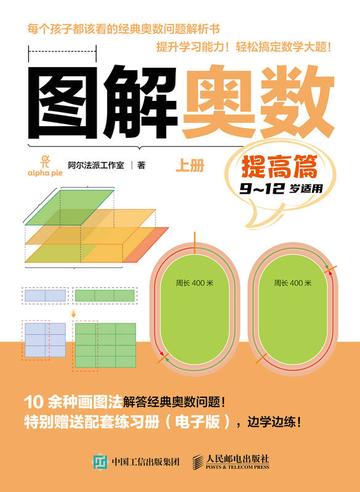
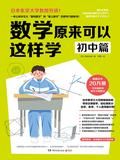
How to develop children's mathematical thinking and improve children's learning efficiency? How to train children's mathematical application ability? How to lay the foundation for children's interdisciplinary learning through mathematics learning? These are the questions this book seeks to address.
The purpose of this book is to train children's modeling thinking and number-shape thinking. This book introduces 11 drawing methods, including box diagrams, line segment diagrams, area diagrams, lists, inclusion and exclusion diagrams, mind maps, geometric figures, fan diagrams, bar diagrams, line diagrams and butterfly diagrams. Through practical learning, it helps children form a combination of number-shape thinking and modeling thinking, and improves children's mathematical application ability and interdisciplinary learning ability. This series of books is divided into two parts: lower grade and upper grade. It covers most of the application questions at the elementary school level, and uses visual methods to improve children's learning efficiency and prevent children from falling into the dilemma of rote memorization.
Reader comments
But this book uses interesting illustrations to make mathematics easy to understand and make it easier for children to become interested in mathematics. Moreover, the drawing methods introduced in the book are very practical and can help children better understand and solve problems. I think this book is not only helpful for children's mathematics learning, but also for their thinking development. I plan to recommend it to my students to try!



But this book uses interesting illustrations to make mathematics easy to understand and make it easier for children to become interested in mathematics. Moreover, the drawing methods introduced in the book are very practical and can help children better understand and solve problems. I think this book is not only helpful for children's mathematics learning, but also for their thinking development. I plan to recommend it to my students to try!