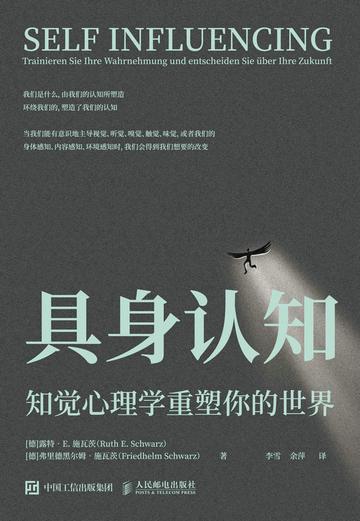
Rather than passively accepting the influence of the environment, people are more eager to exert their autonomy and actively influence the future. However, if you don't understand yourself and how you are affected by the environment, you will easily fall into misunderstandings, and your decisions and actions are likely to have the opposite effect.
So, how to effectively exert autonomy? Based on experimental research on embodied cognition, the principle of neuroplasticity of the brain, the law of perception being affected by the environment, and perceptual training, this book explores the possibility of sustainable development of the self and the possibility of independent decision-making in the future. Through this book, readers can learn how we are affected by our environment, how to train our perceptions to promote positive influence, how to weaken external influences, and make ourselves the masters of our lives as much as possible.
This book is suitable for all readers who are eager to explore themselves, change, realize their potential, and create their own future. The subversive and interesting knowledge points in the book will encourage readers to think deeply.
Reader comments
2025.8.9.00
The various cognitions are described in great detail, including touch and vision, although they are very basic cognitions. But many people still don't think about it or understand it.
There are also some test papers and questions and answers. Each chapter is a place where there is something to absorb and learn. The text is also concise, clear and neat. It does not take off the water and does not last long. It is a very good learning book.
Cognition is not accomplished by the brain alone, but is the result of the dynamic interaction of the body, brain, and environment.
Our physical sensations, such as touch, posture, and movement, and environmental experiences, such as space, temperature, and interactions with others, all participate in shaping thinking, emotions, and decision-making.
In fact, cognition without the body does not exist.
Just as you cannot understand red through the word red, you must relate it to the color red you once saw with your naked eyes.
Our understanding of the world always relies on physical experience.
The body is the source of cognition, and we rely on the body to understand the world.
Environment
As explained above about the relationship between the body and cognition, the body's actions in the environment will also affect cognition.
Our thinking does not occur entirely inside the brain; the environment is part of the cognitive system.
We use external tools, spatial arrangements, and social culture to host cognition and solve problems.
Summary
Our bodies think, our emotions are linked to posture, and our cognition is affected by movement.
When we are surrounded by anxiety and internal friction, we don't have to think about what we need to think to be happy or how we can get out.
The best thing to do is to really go out, adjust your posture, do some movements, go out and change the environment.
Stop dreaming and initiate real change through concrete, hands-on new actions.
The embodied cognition mentioned in this book is very interesting and reminds me of every aspect of married life. Our behavior and decisions are influenced not only by our brains, but also by our bodies and environment. By understanding this, we can better understand ourselves and others, which can go a long way toward keeping our marriages together. The author's research is very enlightening, and the knowledge points in the book can also trigger in-depth thinking. I recommend it to friends who want to explore themselves and improve their lives.
There may be many very abstract theories, but it does not prevent you from understanding some truths. Feel it, feel it.
It's my second brush. In this impetuous social environment, it is rare to be able to calm down and experience it.
There are many abstract theories in this book. You have to think about the ideas conveyed in each sentence. From the deep self-centered perception to the external environment, all constitute "I", so how I feel also determines me.
Clear and easy to understand, worth reading. Know yourself and reshape your life.
This book provides a concrete explanation for us to understand ourselves
Good book, I have to leave a mark so that I can come back and continue reading.
Watched it several times, woke up again and again
A very interesting book that explores in detail the role of the senses and their influence on human perception, thinking and behavior.




2025.8.9.00 The various cognitions are described in great detail, including touch and vision, although they are very basic cognitions. But many people still don't think about it or understand it. There are also some test papers and questions and answers. Each chapter is a place where there is something to absorb and learn. The text is also concise, clear and neat. It does not take off the water and does not last long. It is a very good learning book.
Cognition is not accomplished by the brain alone, but is the result of the dynamic interaction of the body, brain, and environment. Our physical sensations, such as touch, posture, and movement, and environmental experiences, such as space, temperature, and interactions with others, all participate in shaping thinking, emotions, and decision-making. In fact, cognition without the body does not exist. Just as you cannot understand red through the word red, you must relate it to the color red you once saw with your naked eyes. Our understanding of the world always relies on physical experience. The body is the source of cognition, and we rely on the body to understand the world. Environment As explained above about the relationship between the body and cognition, the body's actions in the environment will also affect cognition. Our thinking does not occur entirely inside the brain; the environment is part of the cognitive system. We use external tools, spatial arrangements, and social culture to host cognition and solve problems. Summary Our bodies think, our emotions are linked to posture, and our cognition is affected by movement. When we are surrounded by anxiety and internal friction, we don't have to think about what we need to think to be happy or how we can get out. The best thing to do is to really go out, adjust your posture, do some movements, go out and change the environment. Stop dreaming and initiate real change through concrete, hands-on new actions.
The embodied cognition mentioned in this book is very interesting and reminds me of every aspect of married life. Our behavior and decisions are influenced not only by our brains, but also by our bodies and environment. By understanding this, we can better understand ourselves and others, which can go a long way toward keeping our marriages together. The author's research is very enlightening, and the knowledge points in the book can also trigger in-depth thinking. I recommend it to friends who want to explore themselves and improve their lives.
There may be many very abstract theories, but it does not prevent you from understanding some truths. Feel it, feel it. It's my second brush. In this impetuous social environment, it is rare to be able to calm down and experience it. There are many abstract theories in this book. You have to think about the ideas conveyed in each sentence. From the deep self-centered perception to the external environment, all constitute "I", so how I feel also determines me.
Clear and easy to understand, worth reading. Know yourself and reshape your life.
This book provides a concrete explanation for us to understand ourselves
Good book, I have to leave a mark so that I can come back and continue reading.
Watched it several times, woke up again and again
A very interesting book that explores in detail the role of the senses and their influence on human perception, thinking and behavior.