Stats
9.5Score
30Chapters
Tags
Synopsis
Reader comments
In booklists 4





Nobel Prize for Literature, Mao Dun Literature Prize, Lu Xun Literature Prize and Other Literary Works
I want to read a book similar to "One Sentence is Worth Ten Thousand Sentences: Collector's Edition".
122.1MViews701Books3dUpdated





I Just Deleted All the Bookshelf😱😭😭
Does anyone have any high-scoring books to save the poor children😭😭
36MViews1.3kBooks13hUpdated





Books to Improve Awareness
5.2MViews617Books1dUpdated




Are There Any American Horror Stories with Two Male Protagonists ᐢᵒ̴̶̷̤³ᵒ̴̶̷̤ᐢ
I would like to read a book similar to "The Survival Guide of the Beautiful Cannon Fodder in Comprehensive Horror". Any type can be used, but it needs to be one with two male protagonists, two male protagonists, and two male protagonists (。•o•。∩)
1.5MViews85Books1dUpdated
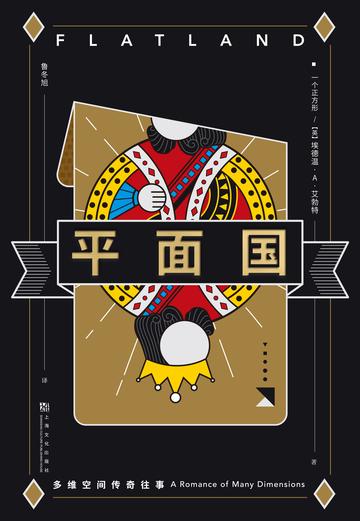
A very interesting book that leaves a lot of room for imagination. When I read this book, it always reminded me of "The Three-Body Problem", in which I discovered the existence of unexpected creatures in my own world. It was only in the postscript that I discovered that this book also belongs to the science fiction theme. This book actually explores many things, not only the existence of alien creatures and multi-dimensional space. At the same time, the classes in Flatland and the division of labor between men and women in the book also reflect many situations in our reality. It is a good book that is easy to read and worth reading.
Rationality and curiosity are the noblest qualities of human beings. I believe that many of the distressing things in today's world—such as division and opposition—are not terminal illnesses. The only thing that can really cause a "dimension-reducing blow" to human beings is ignorance and isolation. That's why we should never give up thinking and exploring. No "belief" or "value" should become a seal that closes the eyes and hinders speculation. May exploration expand our imagination. May the desire and pursuit of higher dimensions lead us to fly to higher places. June 20, 2020 in California ——Berkeley (The above comes from the postscript of the translation of this book)
The book "Flatland" is simply amazing! Edwin Albert's ideas were truly novel and bold. The two-dimensional world described in the book opened my eyes. I thought it was incredible when I first read it. The more I read, the more interesting it became. It not only talks about a strange world, but also makes us think about many things, such as dimensions and social phenomena. While reading, I seemed to be following the protagonist on an adventure in that wonderful two-dimensional country, experiencing all kinds of novel things. It was very enjoyable! I really recommend everyone to read it!
It's very interesting. After watching it, I really got to know the fourth dimension again. It's a wonderful experience. It feels a bit like Orwell's 1984. It's both ironic and true. I hope that as the postscript says, each of us should not be like the king of the country. He only sees himself but cannot see others, and even denies others when he does not understand them. That is prejudice.
It is the only serious book I have read on Tomato. It has been added to the bookshelf of other reading software for a long time. It is a classic indeed. Almost every paragraph has something to think about. This may be the difference between delicacies and home-cooked meals. I don't know if I have read other science fiction novels before and have some concept of multidimensional space, but I still feel that this book's description of two dimensions is very clear, just like a senior professor explaining things in simple terms. When reading, I feel that each polygon on the paper has life, living according to the laws of their world, just like a flower and a world. The protagonist of this book is a square, and I think it also represents the author of three dimensions. The square's exploration of the fourth dimension after being brought to the third dimension by a ball is just like the author's thinking about higher dimensions in the real world. If you can see all of two-dimensional objects in three dimensions, then you must be able to see all of three dimensions in higher dimensions, right? The author is also a pastor. He wrote this book in 1884. His thinking about the world is really advanced. It should be painful. The world of genius is really lonely and sober. Another thing that surprises me is that although the author is from the Victorian era, he also respects women. He writes about the situation of many women in the book, but I can feel that it is an objective description without any natural arrogance or derogation. He even sincerely hopes to improve the situation of women. He is really a warm person who wants to make friends with others. This may also be the meaning of books.
There is no need to say more about this masterpiece. The first half of the book contains biting satire, and what's even more ironic is that the satire of 1884 is still applicable today. The second half is about the understanding of dimensions. Really awesome. It directly convinced me of the existence of the fourth dimension. For example, when a two-dimensional creature looks at an "object", it sees a straight line, but if this straight line has no "thickness" (that is, the third dimension), how can it be "seen"? The same goes for three-dimensional creatures. What we see is a "face", but perhaps our eyes and "face" themselves also have "X degree" (the name of the fourth dimension) in the fourth dimension, so they can be observed by us.
[Laughs] [Laughs] [Laughs] Very good. I rarely read this type of film, but I think this one is very interesting, with both pictures and text.
This book is very interesting! The characters in it have very distinct personalities. I particularly like that square. His experience is so special! But I don't like the ball inside. He always laughs at others. This book gave me a new understanding of the world in different dimensions. It turns out there are so many things we don't know!
Three-dimensional space, what is the fourth dimension? Inspiring ideas, enlightening nectar, is the fourth dimension internal and external? Or is it the past and the future? Or is it both? The four dimensions must exist, but what about the five dimensions? What is the fifth dimension? This book is so shocking. I am very excited to read this book. Although the first articles are a bit boring, the following articles make my blood boil. This is simply an enlightenment of my thinking. It makes me understand that life originally existed, and there is no distinction between the present and the past. All things are similar and integrated. All things are one, and there is no limit to eternal life. Crazy, crazy, my thoughts are wandering in my mind, my emotions are flowing in the dimensions, I am a mayfly in the sea, I can see the sun, moon and stars, I am one and the end, everything in the world has no beginning and no end. It's so mysterious, so mysterious, I can't believe it.
The 19th-century theologian Abbott reinterpreted the Utopia, advising you not to believe in God, to expand dimensions, space, and imagination, to criticize class differences, and to encourage the spread of education... Everyone in a closed country thinks they are living a good life. The dialogue between the cube and the ball is particularly brilliant. His religious beliefs did not stop Abbott from thinking and questioning, and the times could not constrain his imagination and critical power. There is always more than one world outside the human world. The only things that can really cause a "dimension-reducing blow" to human beings are ignorance and isolation. You can imagine our world as a giant piece of paper. On this piece of paper, line segments, triangles, squares, pentagons, hexagons, and various other shapes can be moved freely. However, these figures can neither float from the surface of the paper nor sink below the surface of the paper. They can only move in the plane represented by the paper (we people in Flatland will say "in the plane" instead of "on the plane" because we have no concept of "up" or "down". We only have this one plane, and everything is in this "plane").
This article is the story told by "Flatland Resident Square". The first half talks about "common sense of Flatland", but we in the three-dimensional world all know that there are many mistakes in those "common senses"; the second half talks about the glimmering of squares in other dimensional worlds, including condescension in the face of one and zero dimensions, and embarrassment and anger in the face of three dimensions, as well as inferences about the fourth dimension after understanding three dimensions, and this also reflects us in the three-dimensional world like a mirror. This translator has won my heart, and a lot of things have been said for me in the chapter "Postscript".
Very good. It is hard to imagine that this work was written in the 1880s. It is very ironic. It was actually written by a pastor. I am deeply shocked.
Book friends can take a look at the information I compiled myself: The author is Edwin A. Abbott, from England. This book was written in 1884, when Britain was in the late Victorian era. The description of Flatland society in the book alludes to Britain. At that time, high-dimensional geometry was entering the public eye from the abstract theory of mathematicians. Thinkers enthusiastically discuss the possibility of a "fourth dimension." Shape determines status, directly satirizing Britain's rigid class hereditary system. There is also the oppression of women, who are "line segments" with low status, limited movement, and are considered dangerous. This attacked the severe gender inequality in Britain at the time. Up, not north.
As an undergraduate majoring in mathematics, I happened to see the name "Flatland" in the foreign textbook "Linear Algebra Done Right" when I was studying linear algebra. I was driven by curiosity to read it, and it was really eye-catching. There were two moments in the entire book that stood out to me. The first time was when Square dreamed and met the King of Straight Line Kingdom, and tried to convince him of the existence of the plane. Square himself could not accept three dimensions at first, and the sphere told him the closed loop formed between the three-dimensional existence. The detailed descriptions and illustrations of each dimension in the book gave me a further understanding of the concept of "N-dimensional space", and also made my feelings about the objective fact of "why low dimensions cannot understand high dimensions" more concrete. The second time was when the three-dimensional sphere faced the "enlightened" square and kept asking questions about the space above the three dimensions, but the sphere looked frustrated when it couldn't answer. This is indeed thought-provoking. When the sphere is on a higher plane than the square, looking at it from a high position and even spreading the "truth" with pity, is it itself an existence despised by the four-dimensional space? In addition to the inspiration of linear space in mathematics, the various social metaphors in the book are also very high-level. There are also various descriptions of two-dimensional space previously, which are all very novel perspectives, such as how light changes, colors and other factors can help the two-dimensional world distinguish each other. Overall, you will have some thoughts and gains after reading it with patience. Finally, I quoted my favorite sentence from the book as my final review: "Up, not north."
I can't believe this was written by a pastor in 1884 AD! This pastor is not as old-fashioned and ignorant as the pastors I know. Instead, he advocates science very much, and he advocates that schools allow women to attend schools and allow women to have degrees, which makes him feel like he has traveled to the past in modern society! [Praise]
It's very interesting. The first half was spent explaining the world of Flatland to everyone (I thought it was a bit boring), but the climax of the book started in the middle and late stages, which made me excited. Finally, the translator also expressed his thoughts. I think he was also explaining for some people who couldn't understand. Even if we all live in a space country, in reality, there are many people who have no concept of space in their brains, such as "apple". Some people think of the word "apple" in their heads, and some people think of a flat apple. For those who can understand, a three-dimensional apple will appear in their brains, which will make it easier to understand the concepts in this book.
I originally thought that the reason why this book was still widely promoted even though it was written very early was that it created a certain world view setting, or as a science fiction novel, it provided a precise and wonderful fantasy about the future. After opening it, I discovered that it is not only an excellent science fiction novel, but also an excellent satirical novel. When this book describes the linear world, the flat world, and the three-dimensional world, it allows readers to immerse themselves in it and think along with the protagonist. It can even trigger readers' imagination about the four-dimensional world: What is that dimension that we cannot see? In the dozen or so chapters before this part of the science fiction content, there is the author's description of the "Flatland" setting, which is full of ignorant and backward gender ideas, so much so that I thought it was the author using the protagonist to express his feelings. It was not until I read the translated postscript and learned about the author's life that I realized that this was the author's satire. The full text is not long, so it is suitable for reading in leisure time. Although it is a science fiction genre, it does not require a lot of brain power.
Because it is science fiction, I have been putting off reading it, thinking it was just a popular science about geometry. Unexpectedly, the author balances geometry and humanities very well. It is not only a science fiction work, but also a classic that is still timeless even if I read it now.
Even after nearly two centuries, this book still qualifies as science fiction. Can arouse readers' imagination and thinking. To borrow a sentence from the translator: The only things that can really cause a "dimension-reducing blow" to human beings are ignorance and isolation.
This book talks about people's class, gender, latitude and other aspects, and fully demonstrates people's ignorance and arrogance. Then I hope that girls will come and read it, but not to say that after reading it, I will feel that the ideas in it are so lofty. I hope that after reading it, I can use my brain to think more deeply.
I have read this book twice. The first time I swallowed it a bit, but not much useful content came out. After reading it slower the second time, I can find the fun of the book and the irony of real society. For example, there is a serious class differentiation in this flat country, and the status of women and monks is low... I don't dare to judge it without permission after reading it. In short, I think this is a very good book.
Complacency is ugly and ignorant, and desire and ambition are much better than ignorant and powerless happiness.
Until 2025+, men will still use two kinds of rhetoric towards women. When they want to get the benefits of women, they will talk about love and responsibility, but when they want to belittle them, they will use another language.
Occasionally I read books on my mobile phone and buy paper books if I think I like them. Although I have seen some good books so far, there are only two that surprised me, "Flatland" and "The Drunkard". I bought them both.
What shocked me was that the world I saw was all flat. I was used to seeing them as three-dimensional, but they were actually the effects of perspective, light and shadow calculated by the brain. We may not just live in a three-dimensional world, but a stack of zero-dimensional, one-dimensional, two-dimensional, three-dimensional, and unknown dimensions coexist. The world is so interesting.
It's so beautiful. The imagination of zero-dimensional, one-dimensional and two-dimensional physics is very enjoyable. The social reality of Flatland also accurately satirizes the current situation of Spaceland. It's great.
There is no doubt that this is a very good book that will take you to understand the multidimensional world from a different perspective. It does not tell you what the multidimensional world is like, but it tells you how people in the low-dimensional world perceive the world and how they view high dimensions.
All boys and girls should read this book
Weakness and ignorance are not obstacles to survival, arrogance is
Everyone has their own imagination about dimensions. Reading the descriptions of Flatland and Straight Lineland in the book, I also had my own ideas and began to imagine what the four dimensions are like. This kind of imagination is also a special kind of fun.