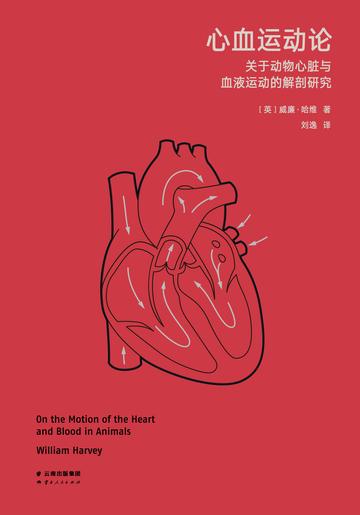
"On the Movement of the Heart" is a book published in 1628 by William Harvey, a British physiologist and one of the founders of experimental biology theory. In this book, he "compared the heart to a pump" and proposed that blood circulates and the rhythmic continuous beating of the heart is the driving force for blood circulation throughout the body. Quan, and through personal anatomical experiments, a large amount of experimental materials, scientific hypotheses, specific results, and the use of daily life language, he demonstrated and explained the movement of the heart and blood by inferences, fundamentally overturning the classic views on the movement of the heart and blood that have dominated people's minds for thousands of years.
Although we now all know that blood circulates throughout the body through arteries and veins, this understanding was not always present. Before Harvey, most people believed in the views of the ancient Roman medical scientist Galen, who believed that after food is absorbed by the body, it is converted into blood in the liver, which is transported to various parts of the body through arteries and veins for absorption by the body. Through his own anatomy practice, Harvey refuted many of Galen's erroneous claims and unveiled the mystery of blood circulation movement for the first time. The publication of this book marked the birth of modern physiology and was of great significance to the development of modern medicine.
Reader comments
Harvey told us through anatomy experiments that blood circulates and the heart is the "pump of the human body." I especially like the vivid metaphors in the book, which make complex physiological knowledge simple and easy to understand. Moreover, Harvey also compared the heart to the king, saying that the king is the heart of the country. This metaphor is really wonderful! In short, this book is of great significance to the development of medicine, recommended!





Harvey told us through anatomy experiments that blood circulates and the heart is the "pump of the human body." I especially like the vivid metaphors in the book, which make complex physiological knowledge simple and easy to understand. Moreover, Harvey also compared the heart to the king, saying that the king is the heart of the country. This metaphor is really wonderful! In short, this book is of great significance to the development of medicine, recommended!