Stats
Tags
Synopsis
Reader comments
In booklists 13
Masterpiece! ! ! a Chinese and Foreign Classic Book! ! !


I Beg You to Read Secretly During the Summer Vacation, and Book That Will Kill Your Classmates at the Beginning of the School Year.


Psychology! ! I Really Like It, Please Read It! Girls Like Psychology
I want to read a book like "Murphy's Law: Learn a little bit of psychology every day". Please recommend some psychological articles. I really like them. I hope to recommend some psychological books. I really like to read them. Please, guys! ! !

Why Not Read Classics?
Recommend some good books that are meaningful, influential and well-written.


Learning Books
If you are tired of reading romance, just read it to learn. Everything is OK. Focus on learning! ! !

Looking for Some High-Quality Books Where You Can Learn Knowledge
I want to read a book similar to "The Pyramid Principle". There is no limit to the content. Reading it can broaden your horizons, increase your knowledge, and learn something.
CCTV Night Reading Recommended Books📚
I want to read a book similar to "The Food of the World". Reason for recommendation: As the title of the book says, reading the entire personal state will make you feel full! Must-remember the golden saying: "What really matters is your gaze, not what you see in front of you."
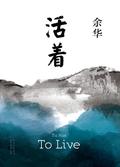
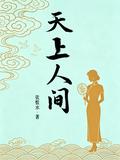
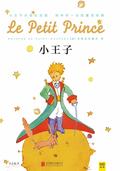

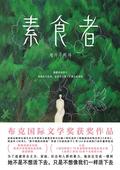
Nobel Prize in Literature Works with a Score of 9.0 or Above
I Am Looking for Books to Improve Myself, Whether It Is About Knowledge or How to Deal with People.
I want to read a book like "Rich People Think Differently from You".


Books to Improve Awareness
Does Tomato Have Any Philosophy Books?
I have become more interested in philosophy recently. Are there any high-quality introductory books on philosophy? : D

Literature Books, I Want Literature Books! ! !
Family members, I want to read literature books, books that can improve my writing skills or increase my knowledge. Beg on your knees!





Do You Have Any Good Book Recommendations?
I would like to read a book similar to "Return: The Street Slut in the Hand of Reinvention". I don't have any good book recommendations. I want to read 9 fanfics. Is there any brother who can give me some books? Thank you.
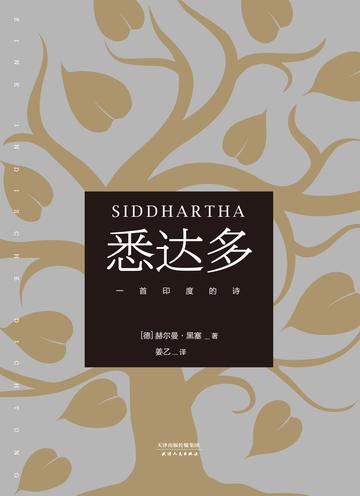
After reading this book, I feel like I have gained a lot of brainpower, and I feel like I have awakened. It is a very profound book, and it is worth reading again and again. What I understand now is not to doubt the authenticity of the world, and to love the world well. "Tao" is the path of one's life, and "true self" is me. No past, no future. Everything is essence and now.
It's much better than expected. In fact, it doesn't feel like a rigid missionary. The story is very interesting. Siddhartha is good at thinking, waiting and fasting. I am good at thinking (random thoughts) and waiting (procrastination) but I can't starve [grievance], so I am... Mr. Siddhartha [thinking]
"Siddhartha" is a profound and philosophical work. The protagonist Siddhartha comes from a privileged background, but embarks on an arduous path of spiritual practice in pursuit of the truth. He experienced asceticism, worldly love and the temptation of wealth, and found himself in constant exploration and loss. Hesse used poetic language to deeply analyze the desires and confusions of human nature, and showed Siddhartha's spiritual journey from confusion to enlightenment. The book conveys in-depth thinking on the meaning of life and self-understanding, inspiring readers to find inner peace and the true self in a complicated world. It is not only a person's growth story, but also a journey of exploring the true meaning of life, which is worth savoring again and again.
It's very beautiful, and the writing is really poetic and makes you want to keep reading. Reading the whole book seems to follow Siddhartha throughout his life. Siddhartha has a complete growth trajectory. He was once sober, once questioned, once fell, and finally bottomed out at the lowest point of his life and finally reached perfection. There are many things in the article that I don't understand, but that doesn't stop me from being deeply touched. Before this book, I had never thought about life, wisdom, self and other issues. These seemed far away from my life, but when I think about it carefully, they are reflected in every moment of my life. I accept the confused and anxious me in the past, and the uncertain me in the future. I love myself and my current life even more. The world is complete and harmonious, and so are all the creatures living in the world. They look at everything with kindness and understanding and integrate into the world. I think the proposition that runs through Siddhartha's life is thinking. Siddhartha has been thinking all his life, even when he fell into gambling. It is precisely because he keeps thinking that he feels pain in silence. I will also learn to think, think inward, and wait for my inner voice to speak.
It is a book that everyone will say after reading it: This will not be the last time I read it. Worth savoring again and again. We must love concrete people and things rather than abstract people and things, do not indulge in "literary nature", and do not fall into nihilism. If you have always wanted to pursue something, it is easy to feel that life is meaningless and worthless, that life is illusory, and that love is illusory. However, this book tells us that illusion is not important, because if life is illusory, love is illusory, then "I" is also illusory, but reality breeds illusion, and illusion also contains reality. These are not important. It is not important whether it is meaningful. The final result is not important, only the feeling To feel, you only need love - love a stone because it is a stone, not because it can be made into a house - love learning because of learning itself, love reading because of reading itself, love "living" because of "living" itself, and then you can get peace, happiness, warmth, and a smile like Siddhartha's.
This book is written in great depth. I think it is different in different age groups because of different personal experiences and insights. What impressed me most is that Buddha told Siddhartha not to be too smart. The more you pursue, the more you will get lost in your own path.
The last poetic description of sentient beings, namely the Buddha, is really shocking. The whole book is actually a story about a wise and proud man of heaven who was born as a Samana, giving up everything about himself and pursuing the path wholeheartedly. There have been legitimate prides, there have been explorations, there have been desires, there have been depravities and addictions, there have been lives towards death, there have been attachments, let go of everything, accept everything, and suddenly realize the true meaning of life: all things are me, I am all things, and all living beings are Buddha. Wisdom is not knowledge, let alone empty thoughts. Wisdom cannot be expressed in words, and wisdom cannot be given. It means the same thing as the Chinese Tao: Tao cannot be conveyed in words, Tao cannot be dedicated, Tao cannot be borrowed, and Tao cannot be described with limbs. Because everything has to be understood by everyone from their own experience, and everyone's experience is vastly different. The wisdom you hear may not be completely correct. If you believe it all, you may not believe it all. If you believe it all, you may not understand it all. If you understand it all, you may not be able to do it all. If you do it all, you may not do it all right... Siddhartha is actually the character of a wise awakened person. He is aware of the existence of me who has always been dissatisfied and unable to feel perfection. He follows my guidance and enters the mortal world to find me. He indulged me, corrupted me, lost me, killed me, found me again, accepted me, accepted everything, and finally had an epiphany. This is the path that most enlightened beings need to go through. In fact, most people in the world who long for liberation and perfection are more like Govinda. They are superstitious about all kinds of teachings that make them happy, lose themselves in too many ideas passed down orally, and are always in a state of being blinded by knowledge. They feel that they are in wisdom but don't realize that they are always ignorant. They only seek answers from others and never see my needs and responsibilities. At the end, the author uses mythical transformations of sentient beings to concretely display wisdom in front of Govinda's eyes. Isn't it a helpless and beautiful hope of the author, hoping that readers can understand wisdom and understand the Tao, and that the wisdom he has learned can be given to all living beings struggling in the sea of suffering, but it is just an unrealistic extravagant hope.
The translation is smooth and very good! I read this book because I saw someone saying that people who like Shi Tiesheng will also like Hesse, so I came here. This book made me feel real, alive, and "alive". I hope I can no longer be confused and take my time.
I finally finished watching "Siddhartha" for the second time. After reading a few pages the first time, I found it very difficult to understand and boring, so I put it away. Later I read it on other platforms and found it very interesting, especially after seeing other people's reading notes and insights in large sections, I became even more interested. So I decided to read it. This sentence: "Just like when I was a child, I have nothing and can do nothing, standing in the sun powerless and ignorant." Is the most popular. It is Siddhartha's realization after experiencing love and desire in the world. From then on, he became a "child". Insights and self-understanding from the boatman and the river. This translation is very poetic and beautiful, I recommend it. This is the second Hesse book I have read. The first was "Klingsor's Last Summer" which I read three years ago. It is also a highly recommended book about life and nature. Hesse's books are suitable for reading slowly and quietly. If you are not interested at first, you might as well stop and read again when the time is right. No wonder he is the winner of the Ruobel Literature Prize!
2025.2.10 This is the third book by Hesse that I have read. It is as poetic as ever and full of Hesse's love for all things in the world. Siddhartha once stubbornly escaped into Samana, eager to understand Atman ideologically, and eager to use the light of reason to illuminate the way to appease the thirsty soul, so as to complete his merits. This is the first stage. However, what Siddhartha did not understand was where his desire and lack came from - so in the second stage, he was addicted to wine and sex, and he gradually abandoned his thoughts and was almost swallowed by the black hole of desire. He hopes to meet himself, he hopes to touch and recognize himself under his most primitive desire, instead of escaping from the subject of thought in his thoughts and blindly chasing the light of thought. So he tends to sensual desires. But when this desire allowed him to experience love in the most real way, he also felt pain with the most real feeling. Indulgence and pain almost became twins, which made him on the verge of collapse with his only remaining rationality and begging for death. At this time, the most extreme experiences in thought and feeling made him understand, or it was the young apprenticeship that made his subsequent experience of the sensory world so full and so polarized. It also allowed him to understand the principles of how the world works, allowing him to integrate into the world instead of blocking the real world with his thoughts, and to love everything in the world instead of comparing the pain of the real world with the perfect world he created, so as to elevate his thoughts and stay away from the world. In fact, the biggest difference between before and after is: I accepted the imperfection of the world, and I accepted my inner desire for desire. This is Hesse's journey of healing the soul, but we cannot regard it as his sophistry in order to survive. We should do the same in the world, as it is written in Dune: When fear strikes, let it penetrate you. In reality, we often complain, are often dissatisfied, are often anxious, and think that the world is not good enough. In fact, looking at it from another perspective, it is because when we live in this world, the fantasy when we are happy makes us cruelly compare it with the real world, so as to think that it is the fault of the world, so as to protect ourselves from spiritual harm and blows. What if you change the perspective? We treat suffering and happiness equally, close our eyes and feel fatigue, anxiety and other negative emotions while experiencing happiness, and feel all the wonderful reactions in this world. This is actually the best way for us to not paralyze the real world with mental illusions. But it's hard, really hard.
The German poet Hesse's "Siddhartha" must be read several times. This book is concise and not lengthy. There is no right or wrong in the world. Every step you take is the one you should take. There is nothing to complain about, just accept everything!
A thought provoking book From being born in the world to joining the world, to being tired of the world, then being born again, and finally to joining the world without being tied to the world, controlling desires without indulging in them. The growth process of the protagonist Siddhartha is like a green lotus reborn after being "washed" in the mud. After all kinds of things, after countless awakenings and falls, after countless "beliefs" and "doubts"... He chose to stick to his heart and would rather be a comet in the sky than a falling leaf. I have been dealing with me for a long time, and I would rather be me. Find your own track and move forward unswervingly, and you will eventually be "reborn".
At first I thought it would be boring, but the more I read, the more I wanted to continue reading. I thought about many issues that I had never thought about before, such as life and death, the past and the future. Of course, I still can't understand it, but it doesn't matter, everything is the best arrangement.
Hesse talks about wisdom and a perfect life in Siddhartha's voice! When I saw the ending, my scalp exploded and I got goosebumps all over my body. The master is the master, full of Eastern philosophy, I love Hesse☺️
It's quite good. The scenes described can be presented like a cartoon. In just a few hundred pages, a person's life-changing thoughts are written down. The article also expresses religious piety. The protagonist's life may be the reincarnation of his descendants, and reincarnation involves many topics that cannot be avoided by religion. The content is worth thinking about. Even if the things we have experienced let us know what is a pitfall and what is a road, we cannot just rely on experience to teach future generations to avoid pitfalls. We should let future generations experience each stage of it personally.
Reading the text of this book made me feel very comfortable. Between the lines, I walked through Siddhartha's youth, prime and old age. Many of the discussions in the book often made me feel suddenly enlightened. However, perhaps due to my own experience and lack of thinking, I was not able to realize the enlightenment in many places. The world I expected and the world I imagined in my mind were both illusory. I look forward to a world of peace and no chaos, but wherever there is good, there will be evil. There are pure lands of peace and there are also war-filled wastelands, because this is the world. There is no absolute, and everything has two sides. Therefore, we must focus on what is in front of us, on the present moment, on everything we can see, feel and know: the bright sunshine in the morning, the gentle breeze in the air, the breathing of the city in our ears... They are all beautiful. We must be good at understanding and accepting the world we live in, because it is beautiful in itself.
Cultivation is not just being isolated from the world in deep mountains and dense forests - listening to your inner voice and living every day well is also cultivation. This is "refining the heart in the world of mortals". Some people ask, life is born to be miserable, why should we still be human? Continuously expand the width of life in a limited life, to have, to lose, to love and to separate. The ups and downs are all experiences. "The essence of life is a process life is wilderness Let's experience the spring and scenery ten thousand times in life."
I came here after seeing the recommendation, which is a must-read list for INFJs. Perhaps due to my short-term practical experience, most of Siddhartha's feelings for me were not deep. I'm more like witnessing a person's growth. From looking down on the world at first, to becoming a worldly person, to drawing a clear line with the world, and finally truly loving the world. What really shocked me was the last chapter, the dialogue between Siddhartha and Govinda. The opposite is still true. The only thing is to love this world. Accept yourself, accept all things, love yourself and the world.
The book "Siddhartha" is not to promote specific religious teachings. Its special mission is to reveal the truth that "wisdom cannot be taught and can only be obtained by personal experience." It guides readers towards the awakening of the unity of self and destiny. It denies dependence on the Pope and proves that no doctrine can be taught directly. It establishes the supremacy of experience and advocates that knowledge can be shared. Pursue the unity of life, transcend the binary opposition of good and evil, soul and body, and enter and exit the world, and realize the harmonious coexistence of all things in the image of the river. Teach readers a sense of self-motivation to reach the top of their own souls and reach the ultimate wisdom.
A sentence on Douyin, the ending is so shocking. I came here to read it in the middle of the night. It was really shocking. I wanted to praise it a bit, but I didn't know where to start. I'd like to share with you a hopeful sentence from the book: For me, love is the top priority. Examining the world, explaining the world, or despising the world may be a matter for thinkers. My only thing is to love this world. Don't despise the world, don't hate the world and myself, embrace love, gaze at everything that exists and myself with wonder and awe.
Very beautiful! I opened this book with a question that had troubled me for a long time, and read anxiously with full purpose. But in the middle of reading, I slowly got into Siddhartha, and went through nirvana with him again and again. After reading the last chapter, I also let out a long "Om". Maybe I didn't get the answer, maybe I didn't accomplish my goal, but when I recovered from this spiritual climax, I felt a long-lasting sense of comfort and satisfaction, as if I had spent a lifetime. I think I can now embrace my life in a new, curious, and enthusiastic state, and this book has rekindled my love for life!
The writing is very beautiful. Although I don't know much about Indian religion, it does not affect my reading. The whole book is really beautiful. The author and translator are both great. When reading, my emotions will rise and fall with Siddhartha's experience. Fortunately, he found his way in the end. In fact, my feelings about this book are rather vague. I only have vague feelings after reading it once, but I feel that it is very suitable to read when I am confused, because I will feel peaceful after reading it.
With a poetic touch, he writes about his mental journey from seeing mountains as not mountains to seeing mountains as mountains, and then seeing mountains as neither mountains nor not mountains. He feels that the way to seek perfection is to return to life, return to oneself, immerse yourself in it without being attached.
This is a treasure book that I will definitely read again. The writing is beautiful and there are many plots that touch my heart and make me burst into tears! There are too many agreed-upon views in the book: love this real and harmonious world; fast, wait, and think; experience it yourself, make mistakes, and wake up!
The philosophy in this book is very profound, just like Govinda couldn't understand Siddhartha's words but could feel the divinity, which was very shocking. I couldn't think of words to express it for a while. When Siddhartha began to enter the world, I observed it from a God's perspective and saw him satisfied, sinking, and falling. This is what I also experienced, and I felt like I was seeing myself. In today's society, I am very confused. I have a lot of things I want but can't get anything, and everything will fall in whichever way the wind blows. I couldn't wait to see how he cracked it, but it was too fast for me to understand. I slowed down and started again. At the end, I was silent. I realized that I was spinning in circles and had not yet understood myself. Am I too impatient? Shall I wait? This is what should be considered now. The realm of "Om" is still too far away, and it will take me a lifetime to experience it. I will read this book again in the future.
Siddhartha had a high starting point and had advantages in birth, appearance, health, wisdom, and education. From despising the world and practicing asceticism to listening to Gautama's preaching, he keenly discovered that the Buddha did not have the answer he wanted.
In "Siddhartha", Hesse writes about the traveler who is unable to find answers, about loneliness, confusion, and the suffering of asking for but not getting. He has walked through prosperity, experienced pain, struggled repeatedly in the secular world and spiritual practice, and asked the meaning of life again and again, but he has never found his destination. But he said: True awakening is never found in other people's teachings, but in one's own suffering and journey. It's not because the pain is worth indulging in, but because, after tasting all the futility of the world and seeing clearly that life has no solution, we still choose to accept ourselves, still choose to sink our feelings, and still choose to move forward along the inner river. The calmness of facing loneliness, the sobriety of neither clinging nor blind obedience, and the calmness of reconciling with oneself after going through hardships are the confidence for a person to resist the desolation of time. As he wrote: I no longer compare this world with the perfect world I expect and shape, but accept this world, love it, and belong to it.
Only by reading this book will you know that feelings can only be imagined but cannot be expressed in words. It allowed me to see the life of a practitioner, from the pride and confusion when seeking knowledge, to the awakening after being exposed, to re-examining one's "self", to being addicted to greed, anger and ignorance after entering the secular world, and the words of a partner that awakened the delusion in dreams. A friend in his youth and a mentor in old age, Siddhartha is lucky. He has firm ideals and beliefs to support him in moving forward, but this road is destined to be lonely.
2025.4.22 13:00 I looked at it, but found that it was already the end Looking back at all the content, I don't know where to start. What touches me most is: Siddhartha finally realized after experiencing worldly things At thirty you stand firm; at forty you have no doubts; at fifty you know your destiny; at sixty your ears are attuned; at seventy you follow your heart's desires Or, we can only think and feel something after experiencing it Perhaps, you don't need to pursue something too persistently. If you feel and live seriously, you will naturally gain something. "Every life is unique in the universe, and the picture of each person's life should be drawn by himself with the brushstrokes of experience and the colors of his thoughts. Every form of life, happy, painful, beautiful, ugly, real, hypocritical, silent, and wild, is an integral part of it and deserves to be cherished and respected."
Siddhartha, a famous book full of wisdom. Siddhartha's business experience is his wisdom as a spiritual practitioner. He is honest with others and can be a heart-to-heart friend even if the business fails. He does not let losses and business failures affect his emotions. He said that there is no point in blaming and accusing, and worrying about facts that cannot be changed is the stupidest thing in the world. Instead, I have a child-like positive and optimistic attitude. Those lovely people in the next rice season will definitely think of me as a friendly friend. This is where we modern people should learn from Siddhartha. Siddhartha's sincerity, he never concealed his thoughts and desires, he learned the true meaning of love from a famous prostitute, and it was these experiences that established Siddhartha's status as a spiritual master.