Stats
5.8Score
Synopsis
No synopsis yet.
We haven’t got an English blurb for this one. It appears once the source description has been translated.
Reader comments
In booklists 3

An Internal Essay About Killing a Classmate. as Long as You Can Learn Knowledge
26.7MViews618Books2dUpdated


Are There Any Books That Girls Can Read That Can Improve Their Status?
2.4MViews681Books1dUpdated
Is There Any Book About High School Knowledge? the Inner Volume Must Be Memorized.
Chinese, mathematics, English, politics, physics, chemistry, history, geography, biology
1.4MViews521Books15hUpdated
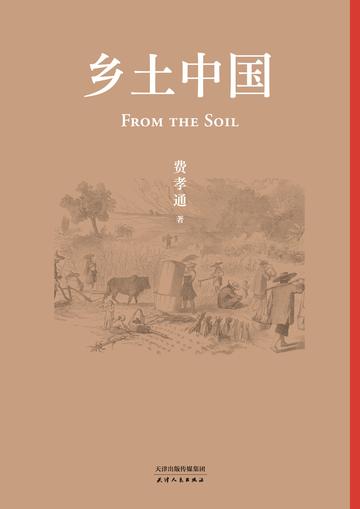
It is a tiring book, and I thought about it while reading it. Sometimes I had different views from the author, and sometimes I was immersed in the author's ideological system. After reading the postscript, it seems that the author is probably a person with a good memory and is very sincere. He can accept opinions that are completely opposite to his own and include them as the preface of his book. What impressed me most was the "differential order pattern", which takes the self as the core and deduces a series of relationships between people from close to distant, like the ripples of a stone thrown.
Most of the audience are students. I think it is more appropriate to express it in more concise words. Overly obscure vocabulary will make people unable to grasp the content of the book. Unless they really like it, not many people will spend a lot of time to understand the content. Personally, there is a lot of content that I cannot understand, including the elusive behavior of people from different eras. However, there are also many highlights in the book that resonate with me. I hope to have the kind of words that can communicate directly with readers so that I can better understand the author's mood.
The novel has 100,000 words: why are there so few? Is the update so slow? Rural China has 80,000 words: why are there so many [crying].
This "Country China" is indeed a rare and good book. First of all, it is very clear in expressing the author's point of view, and is good at appropriately interweaving vivid metaphors into the discussion, making it very interesting to read. Secondly, the series of social phenomena and in-depth analysis proposed by the author in this book are logically rigorous and highly readable.
It's okay. It's not that obscure. Why is 81,000 words so many? I don't read novels like this. Tell me it's false.
The author's analysis is profound and at the same time easy to understand. After reading, you will gain a new understanding of social groups. A great book worth reading.
[Awkward laugh][Awkward laugh][Awkward laugh] What can I say, there are some parts that I can't understand hahaha, but some parts are indeed very logical. I hope I can have deeper insights in the future.
After reading Professor Fei Xiaotong's "Russian China", I came to the following concepts or opinions. 1. The grassroots level of Chinese society is rural. Countryside people depend on the land. The population is not mobile. Rural communities are isolated and separated, forming a mature society. 2. The lack of use of characters in rural society is reasonable. Because it is a face-to-face community, characters have limitations in conveying emotions. 3. China's rural society adopts a differentiated order structure and uses kinship ethics to organize communities. The concepts of family and family are different, and families have a clan character. 4. Rural society is a society governed by etiquette, etiquette is a recognized and appropriate code of conduct, and the norms that maintain etiquette are traditions, which is different from a society governed by law. But I beg to differ with the second point. From an individual point of view: writing can demonstrate status and is a symbol of knowledge. If someone in the family needs to write or read a letter when going out, or needs to keep accounts when doing small business, writing can play a role. From the perspective of social development trends: With the development of the times, rural society is gradually being affected by the outside world. Communication with the outside world becomes increasingly frequent, and the demand for writing will gradually increase. We cannot ignore the future changes and potential demand for writing just because rural society was relatively stable and closed at that time.
Some passages had to be read several times before I could understand them, which burned up my CPU. Really read it completely.
The chapter "The True Colors of Countryside" is the beginning of the book. It puts forward the most important concept of the book - rural society, and points out the nature of grassroots society across the country. Second, the discussion of its causes in three chapters further elaborates the connotation and characteristics of rural society, laying a solid historical foundation for the following key contents, such as "The Pattern of Differential Orders" and "Order of Rites and Rules". Rural society is a society among acquaintances, which gives us the freedom to do as we please without violating the rules. Mr. Fei Xiaotong believes that rural society generally does not have "writing", and the inheritance of social culture can be passed down from generation to generation through word of mouth and words and deeds. At this level, there can be language without writing, so writing is not necessary for a stereotyped rural society.
As the author said, only outsiders can keenly observe social structure and social changes. The rituals of Confucianism run through the monoline differential order pattern, that is, the patriarchal hierarchy. There are differences between men and women in the order of elder and younger. The main axis is father and son, and the couple is the supporting axis. Ritual and law are contradictory unity of opposites. Ritual requires hierarchy, while law requires equality for everyone. Based on this, it becomes much clearer to observe social phenomena and legal systems. I don't know enough about it yet but it's worth reading again.
This book reveals the nature of China's rural society in simple and easy-to-understand language. Many views in the book gave me a deeper understanding of Chinese society. For example, "From the grassroots level, Chinese society is rural." This sentence really hit the nail on the head! It made me understand the deep roots of Chinese traditional culture. In short, "Hometown China" is a good book worth reading again and again!
A very detailed explanation of the relationships in today's society [Like]
Good, great good, great good
Inspiring books
Profound, read carefully
The content is good and accurately describes China's rural character.
Who said this book is very introductory? What matters in getting started is the length, not the content. You still need to read it intensively.