As World War II came to an end, there were two questions before the United States: Will Japan surrender? Can we use the same method against Germany as we did against Japan?
In order to make the final decision, the U. S. Government mobilized experts from various fields to study Japan and provide information and opinions, including the author of this book, anthropologist Benedict.
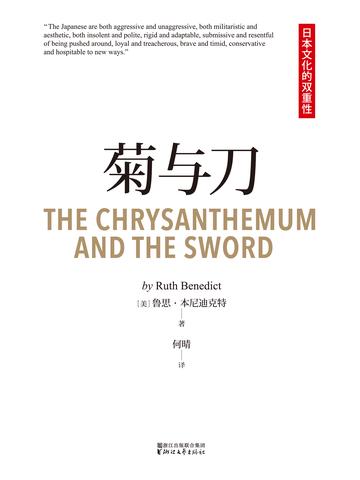
Some behaviors that are unreasonable in the eyes of Americans or more Westerners are exactly the templates Benedict uses to analyze the essence of Japanese culture. The "Chrysanthemum" in the title of the book is the emblem of the Japanese royal family, and the "sword" is the symbol of samurai culture. The combination of "chrysanthemum and sword" symbolizes the contradictory characters of the Japanese (such as beauty and martial arts, courtesy and aggression, novelty and stubbornness, obedience and rebelliousness, etc.).
Benedict wrote "The Chrysanthemum and the Knife" after World War II. "The Chrysanthemum and the Sword" has a total of 13 chapters: starting from the views on war, talking about the Meiji Restoration, and then describing Japanese customs, moral concepts, how to "self-train" (cultivation) and how to educate children. The book is a mixture of narratives and discussions, putting aside sensational descriptions of cherry blossoms, tea ceremonies, bushido, etc., And more of a sketchy comparison of family relationships and spiritual beliefs, such as the different concepts of Americans and Japanese regarding health, material, war propaganda, family relationships, etc.
"The Chrysanthemum and the Sword" directly affected the United States' policy toward Japan. The success of the United States' postwar policy toward Japan also proved the success of the research on the Japanese in "The Chrysanthemum and the Sword." Since then, an upsurge in Western research on Japanese culture has also begun.
Reader comments
He Qing's version of the translation is more warm and the language is fluent, especially the postscript she left behind when she translated the book. It can be felt that she was not just a translator, but also completed it with an understanding and knowledge of the content of the book.
Japan's hierarchical concepts of loyalty, giri, the emperor, and education within Japanese families, these values are different from Chinese cultural customs, which really broadened my horizons.
It also made me think about how individuals gather into groups and are affected by groups and rulers' values.
Very good book, made my mind spin
I like the analysis of the contradictory characters of the Japanese in the book, such as their love of beauty and martial arts, and their politeness and aggression. This contradiction makes the characters come alive. The book also mentioned a lot about Japanese customs and moral concepts, which opened my eyes. I think this book is very helpful for studying Japanese culture, and I recommend it to friends who are interested in this aspect.
Almost eighty years have passed since this book was written. From the Showa to the Reiwa era, Japanese people have become very different from before. What is impressive is that the author classifies Japanese culture as a "culture of shame", which is precise and to the point.
I'm commenting just to see how many hours I've been watching
I think the author's translation is really good, but I have to read it a hundred million times! ! !
I like it very much. It writes very thoroughly about Japanese culture.
The analysis is very clear, and the text is relatively easy to understand. As the old Chinese saying goes, 'Know yourself and the enemy, and you will never be in danger in a hundred battles.'
Although large cultural disciplines are difficult to completely break, individuals can still choose how to live.
"Chrysanthemum" and "sword" are almost harsh contradictions. For example, they both pay attention to the ultimate etiquette and advocate the staunchness of the Bushido.
Although it was Japan decades ago, it provides us with a basic idea and starting point for understanding Japan.
The evaluation of Japan is very profound and thought-provoking, and one can find many similarities with China and other Asian countries.
Anthropology, great, needless to say
Very good very good good good
Profound and thorough. We can also get a glimpse of the author's care for human beings from the text.
He Qing's version of the translation is more warm and the language is fluent, especially the postscript she left behind when she translated the book. It can be felt that she was not just a translator, but also completed it with an understanding and knowledge of the content of the book.
Japan's hierarchical concepts of loyalty, giri, the emperor, and education within Japanese families, these values are different from Chinese cultural customs, which really broadened my horizons. It also made me think about how individuals gather into groups and are affected by groups and rulers' values. Very good book, made my mind spin
I like the analysis of the contradictory characters of the Japanese in the book, such as their love of beauty and martial arts, and their politeness and aggression. This contradiction makes the characters come alive. The book also mentioned a lot about Japanese customs and moral concepts, which opened my eyes. I think this book is very helpful for studying Japanese culture, and I recommend it to friends who are interested in this aspect.
Almost eighty years have passed since this book was written. From the Showa to the Reiwa era, Japanese people have become very different from before. What is impressive is that the author classifies Japanese culture as a "culture of shame", which is precise and to the point.
I'm commenting just to see how many hours I've been watching
I think the author's translation is really good, but I have to read it a hundred million times! ! !
I like it very much. It writes very thoroughly about Japanese culture.
The analysis is very clear, and the text is relatively easy to understand. As the old Chinese saying goes, 'Know yourself and the enemy, and you will never be in danger in a hundred battles.'
Although large cultural disciplines are difficult to completely break, individuals can still choose how to live. "Chrysanthemum" and "sword" are almost harsh contradictions. For example, they both pay attention to the ultimate etiquette and advocate the staunchness of the Bushido.
Although it was Japan decades ago, it provides us with a basic idea and starting point for understanding Japan.
The evaluation of Japan is very profound and thought-provoking, and one can find many similarities with China and other Asian countries.
Anthropology, great, needless to say
Very good very good good good
Profound and thorough. We can also get a glimpse of the author's care for human beings from the text.