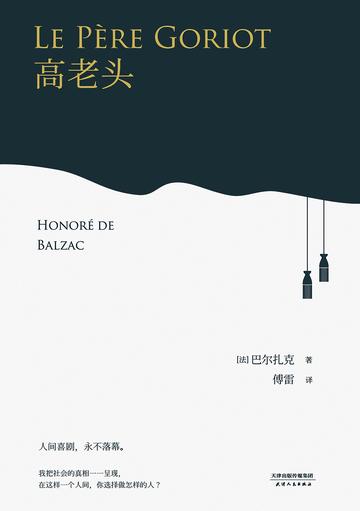
"Petro Goriot" is the foundation work of Balzac's masterpiece "The Comedy Humane".
Paris, 1819, the Napoleonic era has just ended. Behind the prosperity of the upper class, ladies are worried about lovers and debts, nobles are weighing wealth and love, and wealthy businessmen are planning speculation and business. In a low-income apartment in the lower society, various characters are inextricably linked to the upper class: the upstart Goriot was squeezed dry by his two daughters and died in a shabby corner; the mainland young man Rastignac was determined to rise to prominence and urgently needed to learn many rules of the upper class; the gang leader Vautrin was dormant in the dark, waiting for an opportunity to declare war on the secular society... The human relationships and world affairs of the society during the transition period were played out in turns in this human comedy.
Reader comments
The biggest impression that "Old Man Goriot" gave me is that it is rough and complex.
It is said to be rough because many of its plots are very impulsive and possess the openness and enthusiasm that is customary in Western society. At the same time, Balzac's own rough writing style also contributed to this impression.
It is complex because the book's insight into human nature is outrageous. Reading the whole book, almost none of the main characters are one-sided and innocent: Rastignac has the kindness of a young man, but he wants to get into the upper class society. He seems enthusiastic but is actually cowardly. He likes to settle for the status quo and find a place within the existing system; Goriot seems to have great fatherly love, but he is very blind and good at self-deception. This kind of self-motivating dedication and extreme love affair with women. It directly led to his death; as for Old Man Gao's two daughters, they were deviant and unfilial sons on the surface. In fact, when Old Man Gao was about to die, the two sisters still hoped to die for him (although this wish was not strong at all, but it was still a full-fledged portrayal of negative characters), but they were both bound by their families. Anas was domestically abused by her husband, while her sister had a fever and was placed under house arrest by her husband.
This is the depth of Balzac's insight into human nature. I was extremely surprised by the fullness of these four main characters, not to mention the other secondary characters in Vauquer's apartment. The ultimate description of these characters is the biggest feature of this book, and it is also the most amazing thing for me.
It is precisely because of Balzac's profound insight into human nature that there was an ending that would go down in history: Rastignac buried Goriot with his greatest compassion and conscience, then put away his compassion and went to Mrs. Nucingen's house for dinner with a vengeance, and Balzac used the modification as "a challenge to society", how ironic! It is not so much a "challenge to society" as Rastignac's challenge to himself and his betrayal of himself. The passion and cowardice of the young man are vividly displayed here. He passionately wants to "launch a challenge to society", but this challenge turns out to be to eat with his mistress in order to squeeze into the upper class. It is really ridiculous. The sharpness and ruthlessness of Balzac's writing style can also be seen here.
Another advantage that is enough to be talked about is that while maintaining a very high-quality description of the characters, the author also has an in-depth portrayal of the entire society, which is almost penetrating. The revelry of Paris is vividly expressed in the tragedy of one character; and the author also tells a relatively complete story that is very consistent with the social theme.
Of course, this book is not without its shortcomings. As mentioned above, the opening pace is too slow, and it often jumps out of the novel's narrative and instead talks directly to the reader in the author's voice - this undoubtedly destroys the sense of immersion, and Balzac's writing itself is not very sophisticated. In addition, in terms of story arrangement, some of the side characters' stories in the novel seem to have not yet been told, such as the aftermath of Vautrin's arrest, and the aftermath of the daughter who inherited her father's property (she has already expressed her friendship with Rastignac, hasn't she? It stands to reason that after inheriting the inheritance, she should have a more exciting interaction with Rastignac, but this part was abandoned in the article for the sake of the final climax).
However, these minor problems do not affect "Petro Goriot" from becoming a classic work of realist literature and Balzac's most talked-about work. Balzac has created for us an extremely real world, where darkness, wealth and wealth occur, and tragic stories are staged one after another, which makes people admire and admire them.
This book is so wonderful! Balzac's writing style is very unique, his words are sharp, and he portrays various characters in Paris's upper class society penetratingly. I particularly hate Old Man Goriot's two daughters. They are selfish and greedy. They drained their father's money and left him alone. However, the character of Rastignac is quite admirable. He is ambitious and has the courage to pursue his dreams. Overall, this book is worth reading and gives people a deeper understanding of society and human nature.
How can I be so kind to society and people? I thought Rastignac would choose the path of Vautrin.
It's so ironic, Balzac wrote it so well, the characters are so vivid, and the ending is so amazing




The biggest impression that "Old Man Goriot" gave me is that it is rough and complex. It is said to be rough because many of its plots are very impulsive and possess the openness and enthusiasm that is customary in Western society. At the same time, Balzac's own rough writing style also contributed to this impression. It is complex because the book's insight into human nature is outrageous. Reading the whole book, almost none of the main characters are one-sided and innocent: Rastignac has the kindness of a young man, but he wants to get into the upper class society. He seems enthusiastic but is actually cowardly. He likes to settle for the status quo and find a place within the existing system; Goriot seems to have great fatherly love, but he is very blind and good at self-deception. This kind of self-motivating dedication and extreme love affair with women. It directly led to his death; as for Old Man Gao's two daughters, they were deviant and unfilial sons on the surface. In fact, when Old Man Gao was about to die, the two sisters still hoped to die for him (although this wish was not strong at all, but it was still a full-fledged portrayal of negative characters), but they were both bound by their families. Anas was domestically abused by her husband, while her sister had a fever and was placed under house arrest by her husband. This is the depth of Balzac's insight into human nature. I was extremely surprised by the fullness of these four main characters, not to mention the other secondary characters in Vauquer's apartment. The ultimate description of these characters is the biggest feature of this book, and it is also the most amazing thing for me. It is precisely because of Balzac's profound insight into human nature that there was an ending that would go down in history: Rastignac buried Goriot with his greatest compassion and conscience, then put away his compassion and went to Mrs. Nucingen's house for dinner with a vengeance, and Balzac used the modification as "a challenge to society", how ironic! It is not so much a "challenge to society" as Rastignac's challenge to himself and his betrayal of himself. The passion and cowardice of the young man are vividly displayed here. He passionately wants to "launch a challenge to society", but this challenge turns out to be to eat with his mistress in order to squeeze into the upper class. It is really ridiculous. The sharpness and ruthlessness of Balzac's writing style can also be seen here. Another advantage that is enough to be talked about is that while maintaining a very high-quality description of the characters, the author also has an in-depth portrayal of the entire society, which is almost penetrating. The revelry of Paris is vividly expressed in the tragedy of one character; and the author also tells a relatively complete story that is very consistent with the social theme. Of course, this book is not without its shortcomings. As mentioned above, the opening pace is too slow, and it often jumps out of the novel's narrative and instead talks directly to the reader in the author's voice - this undoubtedly destroys the sense of immersion, and Balzac's writing itself is not very sophisticated. In addition, in terms of story arrangement, some of the side characters' stories in the novel seem to have not yet been told, such as the aftermath of Vautrin's arrest, and the aftermath of the daughter who inherited her father's property (she has already expressed her friendship with Rastignac, hasn't she? It stands to reason that after inheriting the inheritance, she should have a more exciting interaction with Rastignac, but this part was abandoned in the article for the sake of the final climax). However, these minor problems do not affect "Petro Goriot" from becoming a classic work of realist literature and Balzac's most talked-about work. Balzac has created for us an extremely real world, where darkness, wealth and wealth occur, and tragic stories are staged one after another, which makes people admire and admire them.
This book is so wonderful! Balzac's writing style is very unique, his words are sharp, and he portrays various characters in Paris's upper class society penetratingly. I particularly hate Old Man Goriot's two daughters. They are selfish and greedy. They drained their father's money and left him alone. However, the character of Rastignac is quite admirable. He is ambitious and has the courage to pursue his dreams. Overall, this book is worth reading and gives people a deeper understanding of society and human nature.
How can I be so kind to society and people? I thought Rastignac would choose the path of Vautrin.
It's so ironic, Balzac wrote it so well, the characters are so vivid, and the ending is so amazing