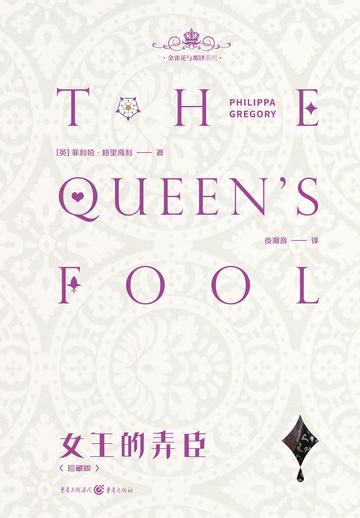
"The Queen's Fool" is written from the first point of view of the court jester Hannah Green, but the real central character is Mary I. The end of the Tudor Dynasty was one of the most intense periods of competition for the British throne. Henry VIII's three children: Mary, Elizabeth, and Edward became kings one after another. The succession of thrones continued due to early death and childlessness. Even the Gray family and Mary of Scotland, who were closely related to the Tudor family, also joined in the fight for power. Although Mary and Elizabeth were half-sisters, they fought against each other for power throughout their lives.
Readers who want to understand the history of the Tudor Dynasty can feel the intensity of the various struggles surrounding the throne of England at that time from the book.
Reader comments
Henry VIII had three children:
Mary (born by Catherine of Aragon)
Elizabeth (born by Anne Boleyn)
Edward VI (born by Jane Seymour)
Jane Grey's mother was Frances Brandon, the daughter of Mary Tudor, sister of Henry VIII.
Therefore:
Jane Gray is Henry VIII's niece (ie, sister's granddaughter) encyclopedia.
Edward VI was the son of Henry VIII.
Therefore, Jane Gray and Edward VI are cousins (but not the cousin mentioned in the article), and he should be called uncle (because Edward is her mother's cousin).
Hannah is a prophecy and destiny. Fate comes to everyone, and everyone accepts his own destiny and pushes it to others.
Edward is frail and sick, like a manipulated doll; Mary is kind and sincere, but has lost her love and children; Elizabeth is beautiful and proud, but she is too cunning, but she lives a good life; Robert attracts attention and is a powerful minister who controls everything.
Hannah sympathizes with Edward's misery, admires Mary's tenacity, and learns from Elizabeth's charm. She fell in love with Robert and was attracted to other people.
Mary and Edward eventually came to the same ending. Kingship changed and fate was entangled. Perhaps the ending was already doomed from the beginning. Robert and Elizabeth have been in love for a long time, Jane is just a puppet, and Mary, who loves and protects her sister, is a victim, and Elizabeth will not die at all. Seducing her stepfather, pestering her brother-in-law, and Robert among them, it has to be said that people like Elizabeth will live well, and she never escapes her desires.
The writing is delicate and the descriptions are spot-on, as if time has gone back and we are personally in that long-gone dynasty. The power struggle in the palace, the rebellion between sisters, the mutual hatred and killings between religions and the intrigues between relatives, just like the Tudor rose, the blood of Lancaster dyed the white rose of York red, all of these are curses born from the blood of the family.
The storyline of this book is very exciting, showing the power struggle and complex relationships of the Tudor dynasty through the perspective of Hannah the Fool. The author's writing style is vivid and delicate, making people feel like they are in the palace. For those who like history and palace stories, this is a good book worth reading.
I really like the art described in it. The various beautiful emotions made me want to call others my dear all the time. Whether it is feelings or other things, of course I feel very sincere, but I think his description is very real, which makes me understand and understand the status of women at that time. This is a very good work, so you can understand it from thousands of angles.
If I wish her to find herself instead of being a good wife and mother
Henry VIII had three children: Mary (born by Catherine of Aragon) Elizabeth (born by Anne Boleyn) Edward VI (born by Jane Seymour) Jane Grey's mother was Frances Brandon, the daughter of Mary Tudor, sister of Henry VIII. Therefore: Jane Gray is Henry VIII's niece (ie, sister's granddaughter) encyclopedia. Edward VI was the son of Henry VIII. Therefore, Jane Gray and Edward VI are cousins (but not the cousin mentioned in the article), and he should be called uncle (because Edward is her mother's cousin).
Hannah is a prophecy and destiny. Fate comes to everyone, and everyone accepts his own destiny and pushes it to others. Edward is frail and sick, like a manipulated doll; Mary is kind and sincere, but has lost her love and children; Elizabeth is beautiful and proud, but she is too cunning, but she lives a good life; Robert attracts attention and is a powerful minister who controls everything. Hannah sympathizes with Edward's misery, admires Mary's tenacity, and learns from Elizabeth's charm. She fell in love with Robert and was attracted to other people. Mary and Edward eventually came to the same ending. Kingship changed and fate was entangled. Perhaps the ending was already doomed from the beginning. Robert and Elizabeth have been in love for a long time, Jane is just a puppet, and Mary, who loves and protects her sister, is a victim, and Elizabeth will not die at all. Seducing her stepfather, pestering her brother-in-law, and Robert among them, it has to be said that people like Elizabeth will live well, and she never escapes her desires.
The writing is delicate and the descriptions are spot-on, as if time has gone back and we are personally in that long-gone dynasty. The power struggle in the palace, the rebellion between sisters, the mutual hatred and killings between religions and the intrigues between relatives, just like the Tudor rose, the blood of Lancaster dyed the white rose of York red, all of these are curses born from the blood of the family.
The storyline of this book is very exciting, showing the power struggle and complex relationships of the Tudor dynasty through the perspective of Hannah the Fool. The author's writing style is vivid and delicate, making people feel like they are in the palace. For those who like history and palace stories, this is a good book worth reading.
I really like the art described in it. The various beautiful emotions made me want to call others my dear all the time. Whether it is feelings or other things, of course I feel very sincere, but I think his description is very real, which makes me understand and understand the status of women at that time. This is a very good work, so you can understand it from thousands of angles. If I wish her to find herself instead of being a good wife and mother