★Charming and weird mountain stories hidden deep in childhood memories
★A Japanese folk literature classic as famous as "The Tale of Tono"
★Highly recommended by Shu Zuoren, Ryunosuke Akutagawa, Shimazaki Fujimura, and Yanagida Kunio
[About the author] Kotaro Hayakawa, Japanese folklorist and painter. Born in Aichi Prefecture, Japan. He studied under the guidance of the painter Matsuoka Eigaoka, and later met Yanagida Kunio and became a folklore researcher. He has conducted on-the-spot investigations into agricultural and mountainous rural folk customs in many places, and has written works such as "Satoyama Strange Beast Tales" which collects folklore from Mikawa, Yokoyama and other areas, "Flower Matsuri" which studies the Okumikawa Folk Festival in Aichi Prefecture, "Sanshu Yokoyama Dialect", "Collection of Folk Songs from Nomi County", and "Illustrated Records of Hago flying to the island". There is also "The Complete Works of Kotaro Hayakawa" (twelve volumes) published by Miraisha.
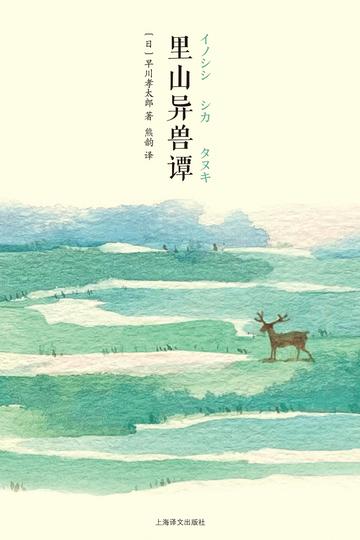
[Introduction] This book is a classic work by Japanese folklorist and painter Kotaro Hayakawa. It is as famous as "The Tale of Tono" as a Japanese folk literature classic. This book collects stories about wild beasts in the mountains told by veteran hunters in Mikawa, Yokoyama and other areas of Japan. It mainly focuses on anecdotes about wild boars, deer and civet cats. It also includes oral stories from hunters and mountain people, such as the story of a hunter who shot a large wild boar weighing more than 90 tons. The story of a fawn that followed a doe after it was killed, suspicious incidents in the village that were suspected to be pranks by civet cats... There are also widely circulated folk legends, such as Joruri-hime and the deer, the bungama teapot transformed by the civet cat, etc., As well as a unique traditional world composed of folk anecdotes. It is a folklore classic created with vivid expressions taken from daily life and the author's careful word processing. Its style is simple and mellow in content. It has long been loved by many writers and literature lovers. Zhou Zuoren, Ryunosuke Akutagawa, Kunio Yanagida and others all spoke highly of it. The book also contains several hand-drawn illustrations by the author.
Reader comments
This book is very interesting and reminds me of the mysterious stories I heard told by my elders when I was a child. The content in the book is not only imaginative, but also gave me a deeper understanding of Japanese folk culture. The author's words are concise and exquisite, just like the narration of my seaside farmer and long-term worker, full of life. I am going to recommend it to my children and share these wonderful stories together.

This book is very interesting and reminds me of the mysterious stories I heard told by my elders when I was a child. The content in the book is not only imaginative, but also gave me a deeper understanding of Japanese folk culture. The author's words are concise and exquisite, just like the narration of my seaside farmer and long-term worker, full of life. I am going to recommend it to my children and share these wonderful stories together.