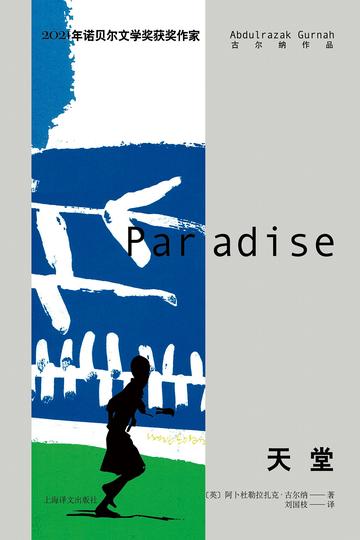
The story takes place in Zanzibar, East Africa, which was under the shadow of German colonization a hundred years ago. This is an ancient land where multiple civilizations blend and multiple religions coexist. The boy Yusuf was mortgaged by his father to the merchant Aziz to pay off his debt. From then on, he traveled with the caravan to foreign lands and experienced the difficulties of survival. He is confused by the unpredictable nature of Aziz, the guide in his coming-of-age ceremony; he is curious about the sobs and whispers of the mad woman who is locked behind the garden; he is obsessed with the towering cliff like a wall of flames during the journey, which is like the door to heaven, opening his eyes: Should he endure humiliation and live quietly, holding on to a small shop and become a small shopkeeper, or should he become as strong as iron in a cruel world and find a paradise for the poor with gardens and fountains, and more freedom and dignity?
"Paradise" was published in 1994 and is one of Gurner's masterpieces. The author uses the unworldly and unfiltered perspective of a young man to embed a boy's growth story in the context of social turmoil and historical changes. By writing about the past lives of a generation of immigrants, the author "strives to preserve that memory and retrieve those moments and stories that people rely on to live and recognize themselves."
Reader comments
"They gave me their freedom as a gift. She did. Who told her she had the right to do this? I know the freedom you're talking about. I've had that freedom from birth. When these people say you belong to me, I own you, it's like the rain comes and the sun shines, or the sun sets on the day. The next morning, whether they like it or not, the sun rises. Since The same goes for you. They can lock you up, put you in chains, and trample on all your little wishes, but freedom is not something they can take away. Even if they destroy you, they will still be far from having you, just like the day you were born. Do you understand? This is the job they gave me. What can the person inside give me more freedom?
This book shows a boy's growth process from a unique perspective, and Gurna's writing is very touching. I really like Yusuf, he still maintains his curiosity about the world in difficult circumstances. Gurna's portrayal of the characters was spot on and made me feel the complexity of each character. I hate Aziz, though, and his uncertainty creates a lot of confusion for Yusuf. This book gave me a deeper understanding of Gurna's writing style and a more intuitive understanding of the history of the colonial period.
The literary quality of the Nobel Prize in Literature is guaranteed, although the story is not my favorite.


"They gave me their freedom as a gift. She did. Who told her she had the right to do this? I know the freedom you're talking about. I've had that freedom from birth. When these people say you belong to me, I own you, it's like the rain comes and the sun shines, or the sun sets on the day. The next morning, whether they like it or not, the sun rises. Since The same goes for you. They can lock you up, put you in chains, and trample on all your little wishes, but freedom is not something they can take away. Even if they destroy you, they will still be far from having you, just like the day you were born. Do you understand? This is the job they gave me. What can the person inside give me more freedom?
This book shows a boy's growth process from a unique perspective, and Gurna's writing is very touching. I really like Yusuf, he still maintains his curiosity about the world in difficult circumstances. Gurna's portrayal of the characters was spot on and made me feel the complexity of each character. I hate Aziz, though, and his uncertainty creates a lot of confusion for Yusuf. This book gave me a deeper understanding of Gurna's writing style and a more intuitive understanding of the history of the colonial period.
The literary quality of the Nobel Prize in Literature is guaranteed, although the story is not my favorite.