★Winning works of Japan's 68th Mainichi Publishing Culture Awards Special Prize
★Reproduce the turmoil of France in the eighteenth century with the rigor of a historian and the romance of a novelist
★From conception to completion, it took 20 years to complete a long historical novel. There may be no better read about the French Revolution than this one.
★Mirabeau, Robespierre, Desmoulins, Marat, Danton... Risked their lives, reputations and lives to pursue the ideal France in the name of freedom, equality and friendship.
[About the author] Kenichi Sato was born in 1968 in Tsuruoka City, Yamagata Prefecture, Japan. He made his debut in 1993 with "The Man Who Changed" and won the 6th Novel Subaru Newcomer Award. In 1999, "The Queen's Divorce" won the 121st Naoki Award, and in 2014, "The Story of the French Revolution" won the Mainichi Publishing Culture Award Special Award. He is the author of "Pierre the Mercenary", "The Two-Headed Eagle", "The Nobunaga", "The Black Queen", etc.
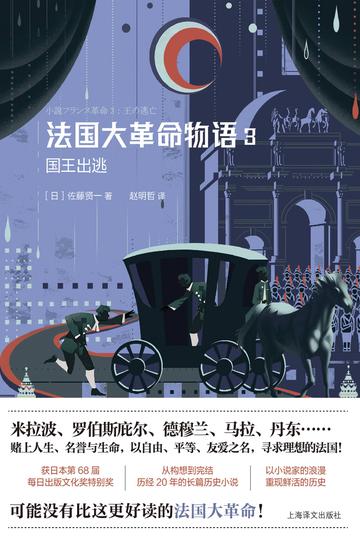
[Introduction] Mirabeau, the "Lion of the Revolution", was terminally ill and his ambition was hard to achieve. On his deathbed, he was thinking about Robespierre, who had parted ways. The two talked for the last time, and Mirabeau's last words were like a prophecy...
Without Mirabeau, his mediator with Parliament, King Louis XVI felt even more isolated. The revolution became increasingly radical, and Louis XVI decided to flee France with his family.
This dramatic "flight of the king" would have a profound impact on the direction of the French Revolution.
Reader comments
However, I kind of hate King Louis XVI in the book. At the critical moment, he only thinks about running away instead of facing the problem bravely. In contrast, Mirabeau's image makes me admire him very much, and his last words before his death are also impressive. This book gave me a deeper understanding of the French Revolution, and I recommend you read it too!




However, I kind of hate King Louis XVI in the book. At the critical moment, he only thinks about running away instead of facing the problem bravely. In contrast, Mirabeau's image makes me admire him very much, and his last words before his death are also impressive. This book gave me a deeper understanding of the French Revolution, and I recommend you read it too!