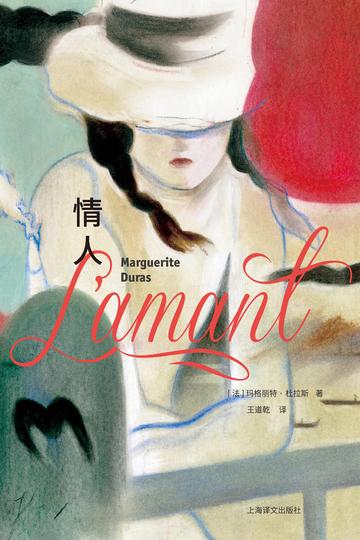
"The Lover" is an autobiographical work. It is based on the life of French colonists in Vietnam. It describes the deep and hopeless love between a poor French girl and a wealthy Chinese young master. The writing touches on some of the most fundamental and secret qualities of human nature, which is thought-provoking. The emotional power that surges from beginning to end in the novel even surpasses the superb writing skills and is extremely contagious. "The Lover" won France's highest literary award, the Prix Goncourt.
Reader comments
If there are any unnecessary words, the critics have already said that to judge a writer's work is not to see how well he writes, but to see what he brings to the table. Because writing is always the work of a translator, and whether it is good or bad is also the level of the translator. I first learned about Duras-style writing from the retreat notes. Compared with the stream of consciousness, it is not conscious enough, and compared with the traditional narrative, it is not linear enough. I think writers are not skilled craftsmen, so first write this One writes another, and there is no accurate logical line. Therefore, there are too few outstanding writers in modern China. They convey a message of the times intentionally or unintentionally. This kind of fragmented, postmodern, original, and rare writing that is separated from commodity exchange is the root reason why modern China cannot produce great writers.
It is stated before and after this article that the book "The Lover" is the most easily understood and accepted by the public among all the works of Margaret Duras. After reading it, I feel that "the easiest to read" is just that compared to Duras's other more fractured and anti-narrative works, "The Lover" is still a high-temperature stream-of-consciousness malaria. It stirs the heat of the colony, the decay of the family, and the precocious desire into a soup of fragmented time. If the reader insists on looking for a "story", he will only be scalded to the point where his tongue blisters. The second section of "Black Hair and Blue Eyes" is like a silent film suddenly inserted: the camera focuses on a young boy's face, but keeps flashing back to his mother, brother, and the turbid waves of the Mekong River. The emotions evaporate in the out-of-focus close-up, leaving behind an unrecognizable mass of salt and frost. Duras doesn't want you to "understand" at all, she wants you to immerse yourself in the tide of language, like the fifteen-year-old girl who occasionally caught a piece of driftwood called "self" between the waves, only to find that it had long been hollowed out. Therefore, the most honest way to read "The Lover" is to give up looking for "what happened", and instead let yourself be drunk by the sentences with extremely high alcohol concentration, and wake up with a hungover blankness - that blankness is the legacy that the novel really wants to give.
The words in "Lover" are like clear tears, clear yet obscure, and the emotions inside are complex yet sad.
2026.5.1
The girl stood there upright, as if it was her turn to commit suicide by throwing herself into the sea. Later, she cried because she thought of the man on the embankment, because she could not tell for a moment whether she had ever loved him, whether she loved him with a love she had never seen before, because he had disappeared into history, just like water disappears into the sand, because it was only now, at this moment, from the sound of music thrown into the sea that she discovered him and found him.
This book resonated with me very much, just like the experience of a friend of mine. Love can really transcend race and wealth. Although the girl and the young master in the book have very different statuses, their love is so sincere. Duras's words are very contagious and made me feel the deep and hopeless love. I think everyone can find something of themselves in this book. This is a good book worth reading again and again.
The magic of love can have many magical explanations, or it can be simply said because it hurts.
There is always someone waiting in front to love you and care about you. No matter how it ends, it is a beautiful memory.
Beautiful. Humid, colorful Southeast Asia. Poetic language, very aesthetic. In fact, it is somewhat similar to the language style of "Lolita", in that the beauty and artistic conception are greater than the plot. The reading progress may be slower, and this writing method is relatively niche.
There's no way to understand it, you can only experience it. As another comment said, it's too hard to read the storyline. It's easier to read the emotions.
Your advertisement is too long, twenty seconds or thirty seconds will do. The book is nice, but the advertisement for getting gold coins is too long.



If there are any unnecessary words, the critics have already said that to judge a writer's work is not to see how well he writes, but to see what he brings to the table. Because writing is always the work of a translator, and whether it is good or bad is also the level of the translator. I first learned about Duras-style writing from the retreat notes. Compared with the stream of consciousness, it is not conscious enough, and compared with the traditional narrative, it is not linear enough. I think writers are not skilled craftsmen, so first write this One writes another, and there is no accurate logical line. Therefore, there are too few outstanding writers in modern China. They convey a message of the times intentionally or unintentionally. This kind of fragmented, postmodern, original, and rare writing that is separated from commodity exchange is the root reason why modern China cannot produce great writers.
It is stated before and after this article that the book "The Lover" is the most easily understood and accepted by the public among all the works of Margaret Duras. After reading it, I feel that "the easiest to read" is just that compared to Duras's other more fractured and anti-narrative works, "The Lover" is still a high-temperature stream-of-consciousness malaria. It stirs the heat of the colony, the decay of the family, and the precocious desire into a soup of fragmented time. If the reader insists on looking for a "story", he will only be scalded to the point where his tongue blisters. The second section of "Black Hair and Blue Eyes" is like a silent film suddenly inserted: the camera focuses on a young boy's face, but keeps flashing back to his mother, brother, and the turbid waves of the Mekong River. The emotions evaporate in the out-of-focus close-up, leaving behind an unrecognizable mass of salt and frost. Duras doesn't want you to "understand" at all, she wants you to immerse yourself in the tide of language, like the fifteen-year-old girl who occasionally caught a piece of driftwood called "self" between the waves, only to find that it had long been hollowed out. Therefore, the most honest way to read "The Lover" is to give up looking for "what happened", and instead let yourself be drunk by the sentences with extremely high alcohol concentration, and wake up with a hungover blankness - that blankness is the legacy that the novel really wants to give.
The words in "Lover" are like clear tears, clear yet obscure, and the emotions inside are complex yet sad.
2026.5.1 The girl stood there upright, as if it was her turn to commit suicide by throwing herself into the sea. Later, she cried because she thought of the man on the embankment, because she could not tell for a moment whether she had ever loved him, whether she loved him with a love she had never seen before, because he had disappeared into history, just like water disappears into the sand, because it was only now, at this moment, from the sound of music thrown into the sea that she discovered him and found him.
This book resonated with me very much, just like the experience of a friend of mine. Love can really transcend race and wealth. Although the girl and the young master in the book have very different statuses, their love is so sincere. Duras's words are very contagious and made me feel the deep and hopeless love. I think everyone can find something of themselves in this book. This is a good book worth reading again and again.
The magic of love can have many magical explanations, or it can be simply said because it hurts. There is always someone waiting in front to love you and care about you. No matter how it ends, it is a beautiful memory.
Beautiful. Humid, colorful Southeast Asia. Poetic language, very aesthetic. In fact, it is somewhat similar to the language style of "Lolita", in that the beauty and artistic conception are greater than the plot. The reading progress may be slower, and this writing method is relatively niche.
There's no way to understand it, you can only experience it. As another comment said, it's too hard to read the storyline. It's easier to read the emotions.
Your advertisement is too long, twenty seconds or thirty seconds will do. The book is nice, but the advertisement for getting gold coins is too long.