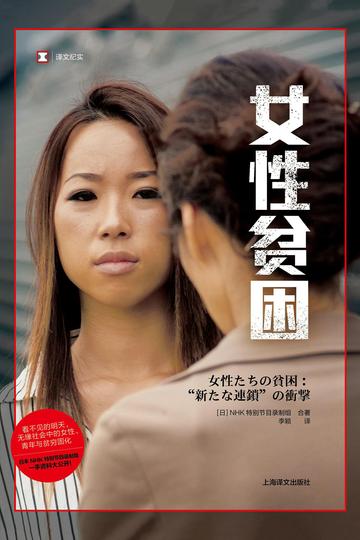
Domestic violence, debt, oppression, neglect... Beneath the exquisite makeup is a miserable and collapsed world. Following "The Working Poor", we are once again pursuing "women's invisible poverty". What is eating away at the future of young women? The NHK recording team has released first-hand information to delve deeply into hot issues such as women, youth and the persistence of poverty in Japanese society.
This book is compiled from programs such as "Can't See Tomorrow - The Increasing Serious Poverty of Young Women" produced by the special reporting team of Japan's NHK TV station. It focuses on the increasingly serious social problems in Japan such as female and child poverty, single-mother and child families, and the intergenerational transmission of poverty. It is very worthy of Chinese readers' understanding, reflection and lessons.
Reader comments
I finished reading it in a hurry. To summarize in a nutshell, poor women mainly live in single-parent families. Including coming from a single-parent family and forming a single-parent family. Intergenerational transmission of poverty. Most of these women work hard, even very hard, but the current situation is still unsatisfactory and they can't even see the future.
The first is that cognition is limited. Giving birth to a child without being financially and mentally independent puts a constraint on oneself, which makes one run into obstacles in society. Secondly, there is the issue of the social environment. Women in single families will be discriminated against whether they are employed or have children, which can easily form a vicious cycle of poverty. Furthermore, there is something wrong with the social safety net. Expensive tuition fees have caused many women who have improved their academic qualifications to change their current situation to fall into debt crisis again. As a result, my academic qualifications have not improved, my debts have not been paid off, and I am working odd jobs here and there.
What's a pity is that they work very hard themselves, so there is no reason to accuse them of being lazy. However, there is just no way out of the situation. It's very disappointing.
This is not a human problem, but a country and society problem.
Do not get married, get pregnant, or have children easily. Girls, please protect yourself
Poverty does not deserve to have children.
Women's poverty is not inherent, but is caused by the imbalance of social distribution and division of labor. In particular, in addition to problems with the distribution mechanism, both men and women are prone to falling into poverty, and the most frightening thing is that poverty can be inherited from generation to generation. Poverty is a disease, and society must find ways to treat it. This book provides an in-depth analysis of the current situation and causes of female poverty. It is very sharp and worth reading. [Top post]
It deeply exposes the ugliness of Japanese society and the poverty of women. I believe that the cause of female poverty is the extreme inequality between men and women. Women are not treated equally in society, which has a lot to do with Japanese culture. The most fundamental reason is the nature of capitalist society. With the improvement and development of technology, old enterprises and factories that could not keep up with the development of society have been eliminated, and many people have become unemployed. Although new technologies have created jobs, most labor and high-tech labor have been replaced by machines, employment has decreased, and employment requirements have become lower and lower. Repeatedly, there are fewer and fewer jobs, more surplus laborers, and wages have been suppressed less and less. In addition, the capitalist government only serves capitalism, and in a male-dominated society, it is conceivable that women can survive in Japan. In my opinion, women's status lies in women's economic strength.
The wave of feminism is promoting women's pursuit of "autonomy," and the increase in divorce rates can be said to be a product of it. Women's self-will continues to improve, but social systems and well-being are far from reaching a level that can match them. Poverty is only a microcosm of this era.
It's a pretty good book. It includes interviews with many poor women and interviews with several families around the theme of intergenerational transmission. What follows is data and documentary evidence on these poverty issues.
Pretty good. One of the bad things is that a male reporter praises a child who will be a good wife and mother? Um? This male reporter's vision is still stuck, and his professional ability is very limited.
It talks about the fate of Japanese women at the bottom who cannot escape, and makes them feel very depressed. People who know how to read and think will try to avoid this kind of life, but people who really need to avoid this kind of life cannot read this book.
The essence of this is the same as that of the poor and busy high school students. There is no one in the poor family who can give clear academic and career guidance, and the teachers in the school do not play the role of educating and pointing out the direction, allowing these children to make wrong choices again and again as they grow up. Women are also naturally at risk of giving birth, which further increases the cost of living.
I may not quite understand why those single mothers take care of their children. Maybe they are really soft-hearted, but how can they take good care of their children if they can't take care of themselves well?
Although this book is about the situation in Japan, some of the reports on the situation of women are probably common in Asia.
"Is the historical perspective on the poverty issue too narrow? Is the analysis of the problem too weak? Is it too protective of the interviewees..." I don't know if they have done a good enough job in reflecting on these points in the book, but it is worthy of recognition for being able to self-reflect on this aspect. All conclusions are unfounded, and the best way to speak is to use data. The last few chapters of this book also list and analyze various data, so you have a certain say in the authenticity.
Through a few words, I can feel the warmth of reporter Muraishi, and other reporters and staff are also very dedicated and sincere. Although I am not sure what the actual situation is (after all, sometimes what we see is what they want us to see), but at least I think so after reading this book. When I saw some of the interview cases in the book, my reaction was as dumbfounded as the reporter's. There are all kinds of people struggling to live in the world.
In the field of people's livelihood and society, this book is quite large in scale. It is commendable to have the courage to expose the cruel facts behind the country's glamorous appearance, raise questions to relevant departments, and call on the country to take action.
I resonate with the idea that you need to have the courage to talk to your interviewees.
This book truly shows the current situation of female poverty, which is heart-wrenching. The writing style is concise and easy to understand, and the examples cited are very vivid, such as "In fact, scholarships are also liabilities", which is true and cruel. I think every young person should read it to understand the other side of society.
I personally think this is a must-read book for those in love!
Look at the fate of women at the bottom.
Case after case is shocking. In such a wealthy modern Japan, there are people who cannot even guarantee food and accommodation.
A very good book that exposes the current difficulties faced by women
At first I thought it was about Chinese rural women, but I didn't expect it was about Japanese women. It seems that women are in a different situation all over the world.
Poverty is like having your legs stuck in the quagmire and you can't get out.
Although it is a small life, it is too hard for us to be women.
I saw the difficult life of Japanese women and felt their perseverance. No matter where they are, life is not easy for the people at the bottom, but they are still struggling.
Very well written. Many examples do reflect Japan's reality. [Praise]
Looking at our country's elderly care industry in this way, it doesn't work either.
Look in. Translated from Japanese to Chinese, I felt a very simple narrative, and the plot inside made me deeply moved. Because of the author's sincerity. Worth three brushes.
Is the situation of women so difficult?
Not bad, impressive
After reading it, I felt very mixed, with sadness mixed with anger.
When there is no way to change the general environment, you must think carefully about getting married and having children. Eat and clothe yourself first and then think about spiritual matters.
Objectively explain and use factual interviews to confirm that the causes of women's plight are multifaceted and not just a single one.
I have written many cases, which truly reflect the existing social phenomena. I hope that there will not be too many similar situations in China.





I finished reading it in a hurry. To summarize in a nutshell, poor women mainly live in single-parent families. Including coming from a single-parent family and forming a single-parent family. Intergenerational transmission of poverty. Most of these women work hard, even very hard, but the current situation is still unsatisfactory and they can't even see the future. The first is that cognition is limited. Giving birth to a child without being financially and mentally independent puts a constraint on oneself, which makes one run into obstacles in society. Secondly, there is the issue of the social environment. Women in single families will be discriminated against whether they are employed or have children, which can easily form a vicious cycle of poverty. Furthermore, there is something wrong with the social safety net. Expensive tuition fees have caused many women who have improved their academic qualifications to change their current situation to fall into debt crisis again. As a result, my academic qualifications have not improved, my debts have not been paid off, and I am working odd jobs here and there. What's a pity is that they work very hard themselves, so there is no reason to accuse them of being lazy. However, there is just no way out of the situation. It's very disappointing. This is not a human problem, but a country and society problem.
Do not get married, get pregnant, or have children easily. Girls, please protect yourself
Poverty does not deserve to have children.
Women's poverty is not inherent, but is caused by the imbalance of social distribution and division of labor. In particular, in addition to problems with the distribution mechanism, both men and women are prone to falling into poverty, and the most frightening thing is that poverty can be inherited from generation to generation. Poverty is a disease, and society must find ways to treat it. This book provides an in-depth analysis of the current situation and causes of female poverty. It is very sharp and worth reading. [Top post]
It deeply exposes the ugliness of Japanese society and the poverty of women. I believe that the cause of female poverty is the extreme inequality between men and women. Women are not treated equally in society, which has a lot to do with Japanese culture. The most fundamental reason is the nature of capitalist society. With the improvement and development of technology, old enterprises and factories that could not keep up with the development of society have been eliminated, and many people have become unemployed. Although new technologies have created jobs, most labor and high-tech labor have been replaced by machines, employment has decreased, and employment requirements have become lower and lower. Repeatedly, there are fewer and fewer jobs, more surplus laborers, and wages have been suppressed less and less. In addition, the capitalist government only serves capitalism, and in a male-dominated society, it is conceivable that women can survive in Japan. In my opinion, women's status lies in women's economic strength.
The wave of feminism is promoting women's pursuit of "autonomy," and the increase in divorce rates can be said to be a product of it. Women's self-will continues to improve, but social systems and well-being are far from reaching a level that can match them. Poverty is only a microcosm of this era.
It's a pretty good book. It includes interviews with many poor women and interviews with several families around the theme of intergenerational transmission. What follows is data and documentary evidence on these poverty issues. Pretty good. One of the bad things is that a male reporter praises a child who will be a good wife and mother? Um? This male reporter's vision is still stuck, and his professional ability is very limited.
It talks about the fate of Japanese women at the bottom who cannot escape, and makes them feel very depressed. People who know how to read and think will try to avoid this kind of life, but people who really need to avoid this kind of life cannot read this book.
The essence of this is the same as that of the poor and busy high school students. There is no one in the poor family who can give clear academic and career guidance, and the teachers in the school do not play the role of educating and pointing out the direction, allowing these children to make wrong choices again and again as they grow up. Women are also naturally at risk of giving birth, which further increases the cost of living.
I may not quite understand why those single mothers take care of their children. Maybe they are really soft-hearted, but how can they take good care of their children if they can't take care of themselves well?
Although this book is about the situation in Japan, some of the reports on the situation of women are probably common in Asia. "Is the historical perspective on the poverty issue too narrow? Is the analysis of the problem too weak? Is it too protective of the interviewees..." I don't know if they have done a good enough job in reflecting on these points in the book, but it is worthy of recognition for being able to self-reflect on this aspect. All conclusions are unfounded, and the best way to speak is to use data. The last few chapters of this book also list and analyze various data, so you have a certain say in the authenticity. Through a few words, I can feel the warmth of reporter Muraishi, and other reporters and staff are also very dedicated and sincere. Although I am not sure what the actual situation is (after all, sometimes what we see is what they want us to see), but at least I think so after reading this book. When I saw some of the interview cases in the book, my reaction was as dumbfounded as the reporter's. There are all kinds of people struggling to live in the world. In the field of people's livelihood and society, this book is quite large in scale. It is commendable to have the courage to expose the cruel facts behind the country's glamorous appearance, raise questions to relevant departments, and call on the country to take action. I resonate with the idea that you need to have the courage to talk to your interviewees.
This book truly shows the current situation of female poverty, which is heart-wrenching. The writing style is concise and easy to understand, and the examples cited are very vivid, such as "In fact, scholarships are also liabilities", which is true and cruel. I think every young person should read it to understand the other side of society.
I personally think this is a must-read book for those in love! Look at the fate of women at the bottom.
Case after case is shocking. In such a wealthy modern Japan, there are people who cannot even guarantee food and accommodation.
A very good book that exposes the current difficulties faced by women
At first I thought it was about Chinese rural women, but I didn't expect it was about Japanese women. It seems that women are in a different situation all over the world.
Poverty is like having your legs stuck in the quagmire and you can't get out.
Although it is a small life, it is too hard for us to be women.
I saw the difficult life of Japanese women and felt their perseverance. No matter where they are, life is not easy for the people at the bottom, but they are still struggling.
Very well written. Many examples do reflect Japan's reality. [Praise]
Looking at our country's elderly care industry in this way, it doesn't work either.
Look in. Translated from Japanese to Chinese, I felt a very simple narrative, and the plot inside made me deeply moved. Because of the author's sincerity. Worth three brushes.
Is the situation of women so difficult?
Not bad, impressive
After reading it, I felt very mixed, with sadness mixed with anger.
When there is no way to change the general environment, you must think carefully about getting married and having children. Eat and clothe yourself first and then think about spiritual matters.
Objectively explain and use factual interviews to confirm that the causes of women's plight are multifaceted and not just a single one.
I have written many cases, which truly reflect the existing social phenomena. I hope that there will not be too many similar situations in China.
Focusing on a lot of bottom layers, real