Beijing is an ancient cultural city with a history of more than 3,000 years. It is one of the six ancient capitals. City gate archways, royal residences, alleys, pagodas and temples... What time has left to this city is a lingering ancient charm. Every inch of land and every corner seems to be telling a legend. This is a city with stories, a book that makes people feel inadequate, and a rich cultural treasure house that is worth digging, exploring, and interpreting. Only by understanding its rich cultural heritage and historical origins can we truly appreciate the essence of this city. Why did Emperor Yongle Zhu Di of the Ming Dynasty move the capital to Beijing? Does the Forbidden City really have 9,999 and a half rooms? Why is Zhongnanhai called "Sea"? What is the use of the door piers on both sides of the courtyard gate in Beijing? Where is the ghost market in old Beijing? You can find the answers to all these interesting topics in this book.
Reader comments
It reminds me of Lao She's "Camel Xiangzi", which also tells the story of old Beijing, but in a different style. The book also mentioned the reason why Zhu Di moved the capital to Beijing, which reminded me of a sentence in "Those Things in the Ming Dynasty": "What can be changed is called a shortcoming; what cannot be changed is called a weakness." Emperor Yongle Zhu Di moved the capital to Beijing, perhaps just to change the situation of the Ming Dynasty and find new development opportunities. This book is really a good book to understand Beijing culture!
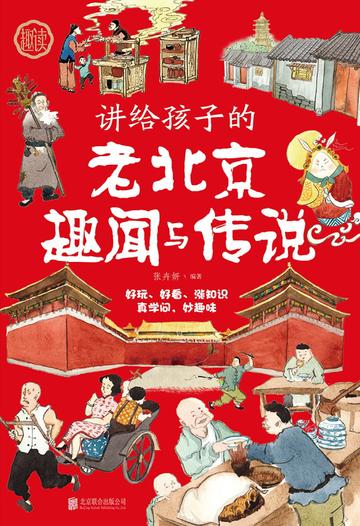
It reminds me of Lao She's "Camel Xiangzi", which also tells the story of old Beijing, but in a different style. The book also mentioned the reason why Zhu Di moved the capital to Beijing, which reminded me of a sentence in "Those Things in the Ming Dynasty": "What can be changed is called a shortcoming; what cannot be changed is called a weakness." Emperor Yongle Zhu Di moved the capital to Beijing, perhaps just to change the situation of the Ming Dynasty and find new development opportunities. This book is really a good book to understand Beijing culture!