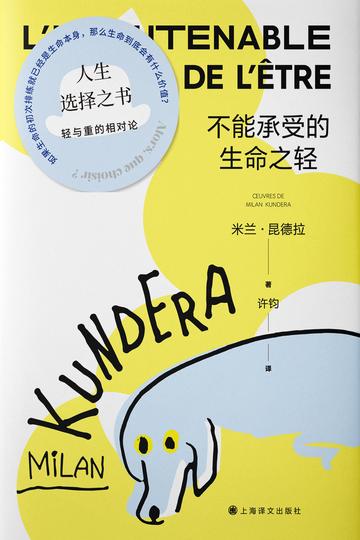
Unbearable Lightness of Life
不能承受的生命之轻
- Status
- Completed
- Length
- 161k Words
- Updated
- 3y ago
- Source
- Fanqie
Stats
Tags
Synopsis
Reader comments
In booklists 12
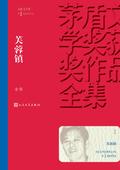
Nobel Prize for Literature, Mao Dun Literature Prize, Lu Xun Literature Prize and Other Literary Works
I want to read a book similar to "One Sentence is Worth Ten Thousand Sentences: Collector's Edition".
Worth Reading Literary Works
Keep it for the record and look at it again when you have time.
I Want a Book with Frequent Golden Sentences
The author writes very well in this book, every sentence is full of copywriting
Looking for Literary Works That Can Improve My Writing Skills! ! !
Like Literary Classics
I want to read a book similar to "La Traviata". I think this book is well written. I recommend it.
Nice Masterpiece
It's not just foreign or Chinese, it doesn't matter, as long as it's beautiful and meaningful
Literature Books, I Want Literature Books! ! !
Family members, I want to read literature books, books that can improve my writing skills or increase my knowledge. Beg on your knees!
Classic Literature, Masterpieces, Put Them on the Bookshelf and Read Them Slowly
I want to read books similar to "The Dust Has Settled (Mao Dun Literature Award Winner)". Recommended to each other, classic literary novels. A masterpiece with depth and aftertaste. A book that makes people want to read it again and again. When you encounter difficulties in life, remembering the teachings in the book can help you
Classic Novel Collection
Just something more classic
I Want Be Stories, Not Brainless Stories, Not Double-Male (Female) Stories!
I want to read a book similar to "She Stops Coaxing Him". I want the kind of text that makes people cry, not too long, and I want to read it at night. I'm a big fan of be text! Thank you all! (´⌣`ʃƪ)



Asking for Books, Asking for Good Books
I want to read a book similar to "Dark Fairy Tale: I Am the Mad Little Red Riding Hood (Night Fairy Tale)". Do you have any good novels to recommend recently? I've been looking through them recently and can't find any good ones.
Recommend a Short Story That You Think Is Good
I want to read content similar to "Don't believe that woman who looks exactly like my mother." Are there any good short stories? Hehe
"If people are still young and their life movements have just begun, then they can create melody together and exchange motives (like Thomas and Sabina who exchanged the motivation for the bowler hat). However, when they meet at a more mature age and their respective life movements have almost been completed, then in each person's music, every word and every object has a different meaning." A book rich in philosophy. There are many wonderful chapters in the book, and the unique perspectives are fascinating. Because philosophical discussions have to be analyzed in isolation from time to time, which leads to "diversion", the author goes back and forth on the content and plot to help readers think more coherently and deepen their impressions. After reading the article, the "deviations" in the article are very close to the content, allowing people to deepen their understanding. While understanding the philosophy, they are happily led by the author...
I like this book very much. There are few authors who can write about human nature, death, love, romance and philosophy so vividly. To say it is a masterpiece is too popular. It makes me truly understand what love is. It is comparable to the existence of God. God is a holy and inviolable thing. This book gives me the feeling that it has written the most human love with the most literary words. Death and love are understood. It writes the evil of human nature and the romance and helplessness of love in an extremely specific way, as if it is a terrible philosophy. This book is like the woman's painting, a very realistic painting stained with bloody paint. At this time, it is no longer an ordinary painting, but a fusion of two worlds. This book also mixes a very human realism subject with a surreal romance like Teresa. Once there is invincible love in the deepest part of human nature, it is a hidden eternal summer. The second brush is back, and I suddenly thought of a sentence in the movie: Human beings' excessive exploration of the spiritual world will lead to nihilism. If they cross the line of reality, they will yearn to be close to death. This is why it is said that people must fall in love with something. The bond will form a kind of grasping force to keep the lover in this world.
The "light" and "heavy" in life, love and desire, loyalty and betrayal. Thomas is torn between freedom and responsibility, Teresa is torn between love and insecurity. Every choice in life carries an unpredictable weight. "The Unbearable Lightness of Being" is a classic work that deeply explores life and existence. "Light" seems beautiful, but makes people lose their foundation and fall into emptiness; although "heavy" brings pressure, it also gives life a real texture. It takes a little time and a little life experience to see the in-depth exploration of human nature and life from the superficial description of responsibility, freedom, and sex in this article, and to enter that virtual world to understand a different life. Main characters Thomas: Doctor, his attitude towards life represents "lightness", pursuing freedom and resisting responsibility, but he also feels lost and empty because of it. His relationships with multiple women exemplify his avoidance of commitment and responsibility. Teresa: Thomas's wife, represents "heavy", her love for Thomas is full of responsibility and dependence. The weight of Teresa's life stems from her desire to be faithful to Tomas and her sacrifice in love. Sabina: Thomas's lover, represents the ultimate "lightness", she pursues freedom, art and an unfettered life. Sabina refused any form of restraint and ended up alone and away from everyone with whom she had a relationship. Franz: Another lover of Sabina, his life is full of the pursuit of idealism, but his love for Sabina fails to find a practical response. Franz symbolizes the "heavy" aspect of life, the conflict between ideals and reality. [Three core questions] 1. Why can't I bear the lightness of life? : Because "lightness" in life means not being bound by responsibilities. It seems to be free, but in fact it is empty and meaningless, making people lose the weight and value of life. 2. How to define chance and necessity in love? : Accident is an unexpected encounter and burst of emotion, which must be the attraction of inner factors such as personality and values. 3. How to find the balance between light and heavy? : You need to clarify your own values and life goals, and do not blindly pursue extreme light or heavy. Content Sharing 1. "From now on, I start to choose my life carefully, and I will no longer let myself get lost in various temptations easily. I have heard the call from afar in my heart, and I no longer need to look back and care about all the rights and wrongs and discussions behind me. I have no time to care about the past, I want to move forward." 2. "People can never know what they want, because people can only live once. They can neither compare it with previous lives nor modify it in the next life." 3. "What disgusted her was far from the ugliness of the world, but the beautiful masks the world wore." 4. "If eternal recurrence is the heaviest burden, then our life, against this backdrop, can be revealed in all its brilliant lightness." 5. "Making love with a woman and sleeping with a woman are two completely different, even almost opposite, feelings. Love is not reflected through the desire to have sex (which can be the desire for countless women), but through the desire to sleep with her (which can only be the desire for one woman)."
The soul trembles in the naked, abandoned body.
It is a collision between soul and body. We all live in ordinary, real life. The mortal world is too heavy-bearing, making people unable to breathe. We will all endure or escape. Tolerance is the need of reality, and escape is the need of the soul. Then, I gradually discovered that everything is just a floating cloud and will turn into dust. Nothing matters except life and death.
To be honest, there are many parts that I don't particularly understand. Maybe it's due to cultural differences or the translation is too profound, or the book itself is a bit difficult to understand. I feel so tired after reading it.
"All past springs no longer exist, and even the most resilient and frenzied love is, in the final analysis, nothing more than a fleeting reality."
Needless to say, the straightforwardness and delicacy of the West are the highlights. The philosophical discussion and ironic rebellion are the highlights. The whole book is like an impressionist painting. I saw the colors in the shadows, which are mottled, ugly, and irresistible.
People can never know what they want, because people can only live once. They can neither compare it with the previous life nor modify it in the next life. There is no turning back in life, and people's destiny is fixed in the choices they make. May we have a refined mentality and live our true selves in this kitsch-loving world
Teresa, Teresa, why is your happiness so tortuous? You have to wait until Thomas is no longer as weak as you. I can't imagine how you spent the long days with Thomas and endured the countless pains and sufferings he brought to you. Seeing the future, I am getting more and more suffocated. I just want you to be happy and free. (┯_┯)What should I do? I don't know why I have a big crush on Teresa. No, I can't stand it. It's very uncomfortable after watching it😣
Even though Thomas and Theresa have opposing views on the relationship between love and sex, what is rare is that they both think about each other and finally make changes for each other. What this enlightens me is that love is not only reflected in the desire of the body, but also should be an in-depth exchange of each other's souls, and we must take actions that are self-examined and valued. We are all incomplete individuals, seeking our own place in our interactions with others. Only by coordinating the relationship between oneself and others, neither being humble nor being arrogant, and being passionate yet rational about treating those I love and those who love me, can we achieve the transformation of the "light" and "heavy" aspects of life. More importantly, the pain caused to you in the past cannot be eliminated. , But what you can bring to the other person now is a choice. Don't let yourself become the past self, and don't regret the current self in the future. You only have one life, and there is no chance to verify right or wrong, so make a choice with a clear conscience. 2025.1.14
The weight of life is a responsibility, the responsibility of parents to their children, the responsibility of children to their parents, the responsibility between lovers, the responsibility between work, countless responsibilities make up a person's life. The frivolity of life cannot be captured. You have indulged yourself, you have given up your responsibilities, and you are looking for freedom in the ethereal. It is obviously lighter than you and more relaxed, but you choose to be heavy. Death is lighter than a feather but heavier than Mount Tai. Light, because there are too many people, one person's life is insignificant, and people will die. Heavy, people have too many responsibilities and too many choices. You choose between light and heavy. Every time you choose, you create a past. Live heavily, die quietly, life is so light, life is so heavy, life is in balance, returns to its original position, and reincarnates again.
## "The Unbearable Lightness of Being": A soul torture about freedom and meaning Milan Kundera's "The Unbearable Lightness of Being" is not a love novel in the traditional sense, but a philosophical experiment that uses a scalpel to dissect the nature of human existence. In the historical folds of the Prague Spring, the four protagonists are like moths trapped in a glass cover, interpreting the eternal paradox of life with their respective survival postures. ### 1. The eternal paradox of lightness and weight Thomas sees life as a light dance. He resists the "heavy weight" of worldly responsibilities by constantly changing mistresses, but encounters existential cracks in Theresa's heavy tears. When the surgeon cuts human tissue with a scalpel, he is also cutting his own soul. When he is forced to sign a letter of repentance, the seemingly light career choice turns out to be the heaviest moral shackles. Kundera here reveals the most profound dilemma of modern people: the more we pursue freedom, the easier it is to be imprisoned by the illusion of freedom. Just like in Teresa's dream, the naked girl dances lightly by the pool, while she herself is carrying the weight of stones at the bottom of the pool. This is a cruel metaphor for the nature of existence. ### 2. The dialectical maze of spirit and flesh Teresa's monologue in front of the bathroom mirror can be called the most thrilling soul torture in modern literature. When she gazes at her naked body, she sees not an object of desire, but a fragile soul trapped in a physical prison. This girl, who is constantly chased by nightmares, attempts to capture the truth of the world through the lens of a camera, but ultimately discovers that "the irreconcilability of spirit and body is the truth itself." And Sabina's aesthetics of betrayal constitute pungent irony - she uses her body to deconstruct all noble values, and the intercourse under the black top hat is not only a declaration of resistance to kitsch, but also a proof of the nihility of existence. When Franz died for his illusory ideals on the streets of Bangkok, Kundera allowed readers to see that those who claim to be spiritually noble often fall into deeper absurdity. ### 3. Kitsch: the spiritual opium of modern people Sabina's queasy feeling at the parade peels back the splendid veneer of ideological kitsch. When Teresa cried while holding the dying Karenin, we suddenly realized: the ultimate way to fight against kitsch is not to deliberately rebel, but to accept the true fragility of life. Karenin's smile is moving precisely because it transcends mankind's endless artificial search for meaning. Kundera's profoundness lies in the fact that he not only criticizes the collective kitsch of totalitarianism, but also points the finger at the web of meanings woven by modern people with various isms and beliefs - are these seemingly noble webs not another kind of spiritual refuge? ### 4. The possibility of redemption in eternal recurrence In the narrative labyrinth of the novel, the German proverb "Einmal ist keinmal" (once means never) acts like a fateful pendulum. When the Thomases finally walked to the farm, the repetitive daily labor unexpectedly allowed them to touch the reality of existence. Teresa finally understood: the weight of life does not lie in the dramatic ups and downs, but in the aroma of bread in the morning and Karenin's staggering steps. Kundera completes the poetic transcendence of the paradox of existence here - when we stop the deliberate pursuit of "heavy" and stop the morbid obsession with "light", we may be able to see eternity in the ordinary. This novel, full of intellectual edge, is actually a love letter and eulogy to modern civilization. After deconstructing all the grand narratives, Kundera guides us back to the original scene of existence: Teresa's trembling camera, Thomas's blood-stained scalpel, Sabina's eternal migration suitcase, Franz's unfinished diary - these fragments flicker in the empty night sky, reminding us: the dignity of life does not lie in bearing the weight, but in always facing the abyss of existence, and the courage to remain gentle while awake. Source: deepseek
I feel like it's a rather esoteric read, but I still gained a lot, especially the concept of love.
Starting from where Kundera expressed his fondness for Nietzsche, he is pursuing a kind of pure shackles of the soul, which are bound by the profound trauma of human beings. Any existence that looks directly at its soul itself, in the face of the thrown reality, wants to obtain the perfection before being human, it needs to construct an pastoral that is unique to it, a symbol of happiness that is simply repeated and does not need variations, but it is worth mentioning. What's more, Kundera treats it as fear. For example, Teresa gets on an airplane in a dream. Before she gets the Eden-like relationship with animals, she has human fear, a concept that requires avoidance. This comes from the trauma of loss and the request from trauma. They are both the first and last pursuit of a soul. They are still the repetition of fate. Kundera calls it pastoral. I think it can also be said that it is something similar to a sacred form.
The first time I read this book was a long time ago. Which is more difficult to bear, the lightness or the heaviness of life? The weight of family responsibilities is as light as the relief of responsibilities, the weight of love and loyalty is as light as the betrayal of love, the weight of loyalty to the world is as light as the weight of betrayal of one's family and country. This is a book worth reading over and over again.
It's very profound and I didn't fully understand it, but many of the ideas in the book are interesting and I benefited a lot. I will read it again.
To me, all this is probably attractive. Every story is like this, beautiful and ugly, heavy and light. If this book needs marks, I'll give them full marks. If it's not necessary, I won't rate it.
I saw this movie a long time ago. I bought a lot of discs at that time, and would watch one disc after another at home on weekends. I couldn't understand it at that time, I just saw the affection and love between men and women. I don't really understand it when I read it, and I lack empathy. Re-reading it now, seeing the personal experiences and the fate of the country, I think of yin and yang in my mind. The country is heavy and yang; the individual is light and yin. If an individual's destiny is not supported by the country, it is like duckweed without roots.
This book made me think more deeply about the meaning of life. The discussion in the book about lightness and weight, spirit and flesh, reminded me of the life choices of myself and those around me. While we are pursuing freedom, are we also suffering from the lightness of life? This is a book worth reading again and again, and you will gain new insights every time.
Western culture always contains false romance, which is too artificial and makes people unrealistic.
Lightness and weight, flesh and spirit, are ultimately in vain.
It's a book that makes you reflect after reading it. Thinking is a very precious thing
The story begins with the Prague Spring. After learning a little about it, I discovered that there are many predecessors on the road of reform and exploration. The unfinished ideas at that time will be realized elsewhere. As for the love in this book, it is very complicated. Is the self-convinced love of a swinger important in the secular sense? Love exists in sex, but sex can pretend to be love. All sex done because of love, all love caused by sex, who can tell them apart? All the characters in the book seem to understand the world and themselves through sex. They achieve their goals and then easily regret it, like ignorant children whose personalities have not yet been formed. I often feel that people's thoughts in different cultures may be quite different. If you think too deeply about a piece of Western literature, you may become a slave to a certain thought. Don't fall into the trap of Western thoughts at this time. Let's encourage each other.
I have read a book for many years, and now I have a different experience when I re-read it. Life is like a movement. Under the guidance of beauty, accidental events are turned into a theme and recorded in the movement of life. However, many of this seemingly beautiful movements are not due to weight, but to lightness, which is the unbearable lightness of life.
A book that requires careful reading to understand.
The lightness and heaviness in life run through everyone's life. What is heavy and what is light? Maybe there is no difference in the first place.
In my opinion, Thomas possesses the beauty of the Apollinian orderliness and the Dionysian impulse of chaos, which are repeatedly pulled within his body until exhausted. His "choice" is actually "light", but his "giving up of choice" is "heavy". When a person removes all "must-dos", does the rest still count as a way of living?
Human beings are like this, they are always dissatisfied with their desires. Sometimes it's like a very popular question now, which one do you choose between 700 points and 7 million? Let me give an analogy, and then someone will definitely say that I want them all, that is, people are greedy and human nature is bad. But as written in this article, there is only one life. Those studies and experiments can have countless references for comparison. But as I just said, there is only one life. If you choose one, you will be greedy for the other. If I choose 700 points, then I will think crazy in your mind, what if I choose 7 million? I don't, I regret it, but you have no chance to choose again (I may not have expressed it clearly) and then continue, as I said before, the following paragraph is about Teresa's mother. He found that the man he chose had bad habits and she was bad. , Then think about the first, second, third, fourth, fifth, sixth, seventh, and eighth. All they say are advantages, but there are also disadvantages. It's just that they put the advantages in front of you. Once you make a choice, you should bear the consequences. There will be no pie in the sky.
I haven't finished watching it yet, but I'll share my thoughts. The meaning of writing includes analyzing social contradictions. Teresa is the epitome of her mother's influence. You can make reference to life from this absurdity. It's like the native family, East Asian parents, which is very popular on the Internet. Parents who hope their children will succeed are like Teresa's mother who extremely denies her past. Attribute your own failures to your children, such as "If I had not given birth to you, would our family be so poor?" "I have enrolled you in so many tutoring classes since you were a child, and you are still so bad." Put the meaning of your life on your children, so that your children will be born with a sense of guilt. This is the weight of life that the book talks about. In such an environment, people will constantly question themselves. There are still traces of parents after the change. But if you read more books and see more of the outside world, you will find that this is not the case. This makes sense. Become open-minded while reading. If you only read the book literally, it is not called reading. Use it in your life. Quite useful.