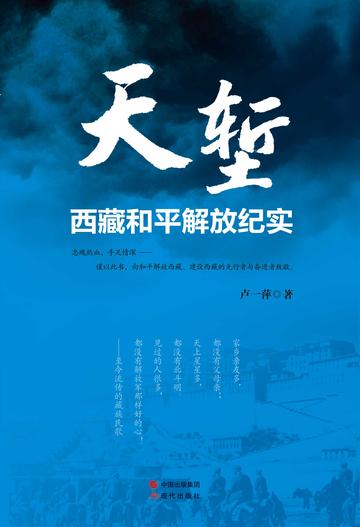
This book is a documentary literary work that reflects the peaceful liberation of Tibet. In the early 1950s, in order to complete the great cause of the reunification of the motherland and defend the southwest border, the People's Liberation Army, led by the 18th Army, marched into Tibet from Sichuan, Qinghai, Xinjiang, and Yunnan through multiple routes, crossed thousands of mountains and tens of thousands of giant ravines on the roof of the world, and overcame plateau hypoxia and glaciers. Despite the unimaginable difficulties in the world, including rapids, severe winds, snow and cold, deep cliffs and valleys, as well as disease and hunger, they walked more than 6,000 miles to conquer the roof of the world, completed the important task of peacefully liberating Tibet, and carried out counterinsurgency and democratic reforms, bringing Tibetan society into a new historical stage.
Reader comments
Documentary literature reproduces real history, is relatively objective, and has simple and unpretentious writing.
It's well written, read it carefully and understand the history, so you won't have any regrets.







Documentary literature reproduces real history, is relatively objective, and has simple and unpretentious writing.
It's well written, read it carefully and understand the history, so you won't have any regrets.