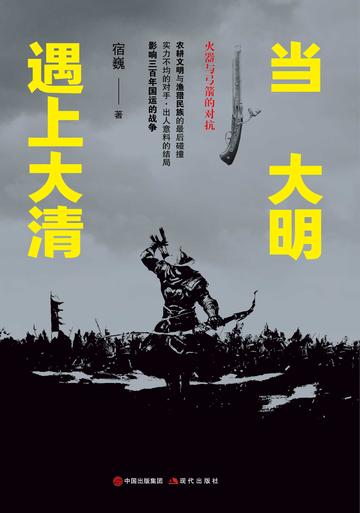
This book offers a comprehensive account of the wars between the Ming and the Qing, then known as Later Jin, from 1618 to 1644. It takes you back to the transition between the Ming and Qing dynasties, recounting little-known historical details and uncovering the truth behind wars that were deliberately obscured.
The war began with a surprise attack on Fushun. Nurhaci was as cunning as a fox and as fierce as a wolf. He favored launching attacks without warning and coordinating with forces inside enemy territory, often concentrating his troops to defeat larger armies. The Ming court initially paid little heed to the rapidly rising Later Jin, clearly underestimating its opponent. From Fushun to Sarhu, then from Shenyang and Liaoyang to Guangning, Nurhaci won victory after victory.
The lessons of the Battle of Sarhu forced the Ming to reassess its enemy. It shifted from strategic offense to strategic defense, using fortified cities and heavy artillery to successfully hold back the Later Jin cavalry, from the victory at Ningyuan to the battles of Ningjin. The Ningyuan-Jinzhou-Shanhaiguan defensive line became an impregnable chain of fortresses that Nurhaci and his son Hong Taiji, across two generations, struggled to overcome.
After more than a decade of fighting between the Ming and Qing armies, the decisive moment finally arrived. The Ming deployed its strongest forces, with Hong Chengchou as commander. The Ming army committed its main force in Liaodong, the Guan Ning cavalry, along with the elite troops from its nine frontier garrisons. The Qing also mobilized the full strength of the empire, and Hong Taiji, gravely ill, personally went to the front to take command.
This was a decisive battle neither side could afford to lose. Both fought with everything they had. Although the Ming army was badly weakened, it still had the strength to counterattack. But the rebel armies rising within the Ming realm brought the empire down. The Ming-Qing war ended in an unexpected way. Although the war between the Ming and the Qing court did not officially end until 1662, its outcome profoundly altered the course of Chinese history.
When the Ming faced the Qing, firearms clashed with bows and arrows, and an agrarian civilization collided with a hunting-and-fishing people. Between one dynasty’s decline and another’s rise, what other secrets remain unknown? History is never so simple.



Do you even need to say that? Isn't Nurhachi a pure villain? He eats what's in the bowl, thinks about what's in the pot, and rebels against Ming Dynasty by eating Ming's salary 🍉
I especially like the portrayal of the characters in the book, such as Nurhaci's cunning and ferocity, and Huang Taiji's wisdom and courage. The lessons of the Battle of Sarhu also made the Ming Dynasty realize the strength of Houjin, and the war situation became more tense and exciting. I feel like this book revealed a lot of historical secrets and gave me a deeper understanding of that era.
It's better to look at official history and feel more comfortable. 🙂 Very good