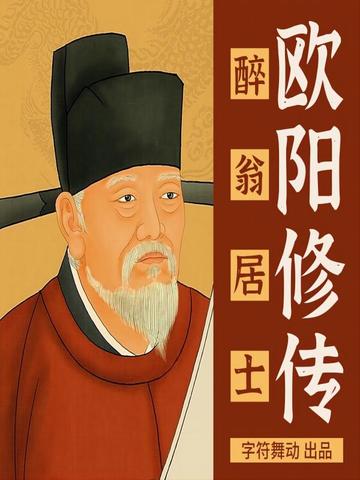
Ouyang Xiu (August 6, 1007 - September 22, 1072), courtesy name Yongshu, nicknamed Zuiweng, and later nicknamed Liuyi Jushi, was a native of Yongfeng, Luling, Jizhou, Jiangnan West Road (now Yongfeng County, Ji'an City, Jiangxi Province).
He was a literary sect of the generation, an outstanding debater, a person who understood current affairs, and an unparalleled epitaph writer in the past two thousand years.
He was a scandal-ridden politician who lived up to his integrity, a historian who crammed two history books into the Twenty-Four Histories, a feudal theorist who spent his life promoting orthodox theories, loyalty to the emperor, ideas of honor and integrity, and a sage full of secular atmosphere.
He is also a compassionate romantic, a hedonist who loves tea, wine and beauty, a nymphomaniac who loves peonies, an atheist, an archaeologist, a model of friendship between gentlemen, and a representative of literati and officials.
His life is an inspirational story of grassroots counterattack, a thousand-year legend that beats time.
Reader comments
Yingzong of Song Dynasty, posthumous name Emperor Xuanxiao of Song Dynasty, his mausoleum is Yonghou Mausoleum
The reign name of Emperor Yingzong of the Song Dynasty was Zhiping, which means governing the country and bringing peace to the world.




Yingzong of Song Dynasty, posthumous name Emperor Xuanxiao of Song Dynasty, his mausoleum is Yonghou Mausoleum The reign name of Emperor Yingzong of the Song Dynasty was Zhiping, which means governing the country and bringing peace to the world.